Passage Study
Remembering Redemption through Israel’s Feasts
Deuteronomy 16:1–16:22
Deuteronomy 16 orders Passover, the Festival of Weeks, the Festival of Booths, and the administration of just courts. Israel is to remember its rescue from Egypt, rejoice before the Lord with those who have little social power, and refuse bribery. These appointed times lead Christians to Jesus, the Passover Lamb and risen Lord, whose saving mission creates a grateful, generous, and truthful people.
- In this study
- 22 verses · 5 movements
Deuteronomy 16
16:1Observe the month of Abib, and keep the Passover to the LORD your God; for in the month of Abib the LORD your God brought you out of Egypt by night.
16:2You shall sacrifice the Passover to the LORD your God, of the flock and the herd, in the place which the LORD shall choose to cause his name to dwell there.
16:3You shall eat no leavened bread with it. You shall eat unleavened bread with it seven days, even the bread of affliction (for you came out of the land of Egypt in haste) that you may remember the day when you came out of the land of Egypt all the days of your life.
16:4No yeast shall be seen with you in all your borders seven days; neither shall any of the meat, which you sacrifice the first day at evening, remain all night until the morning.
16:5You may not sacrifice the Passover within any of your gates which the LORD your God gives you;
16:6but at the place which the LORD your God shall choose to cause his name to dwell in, there you shall sacrifice the Passover at evening, at the going down of the sun, at the season that you came out of Egypt.
16:7You shall roast and eat it in the place which the LORD your God chooses. In the morning you shall return to your tents.
16:8Six days you shall eat unleavened bread. On the seventh day shall be a solemn assembly to the LORD your God. You shall do no work.
16:9You shall count for yourselves seven weeks. From the time you begin to put the sickle to the standing grain you shall begin to count seven weeks.
16:10You shall keep the feast of weeks to the LORD your God with a tribute of a free will offering of your hand, which you shall give according to how the LORD your God blesses you.
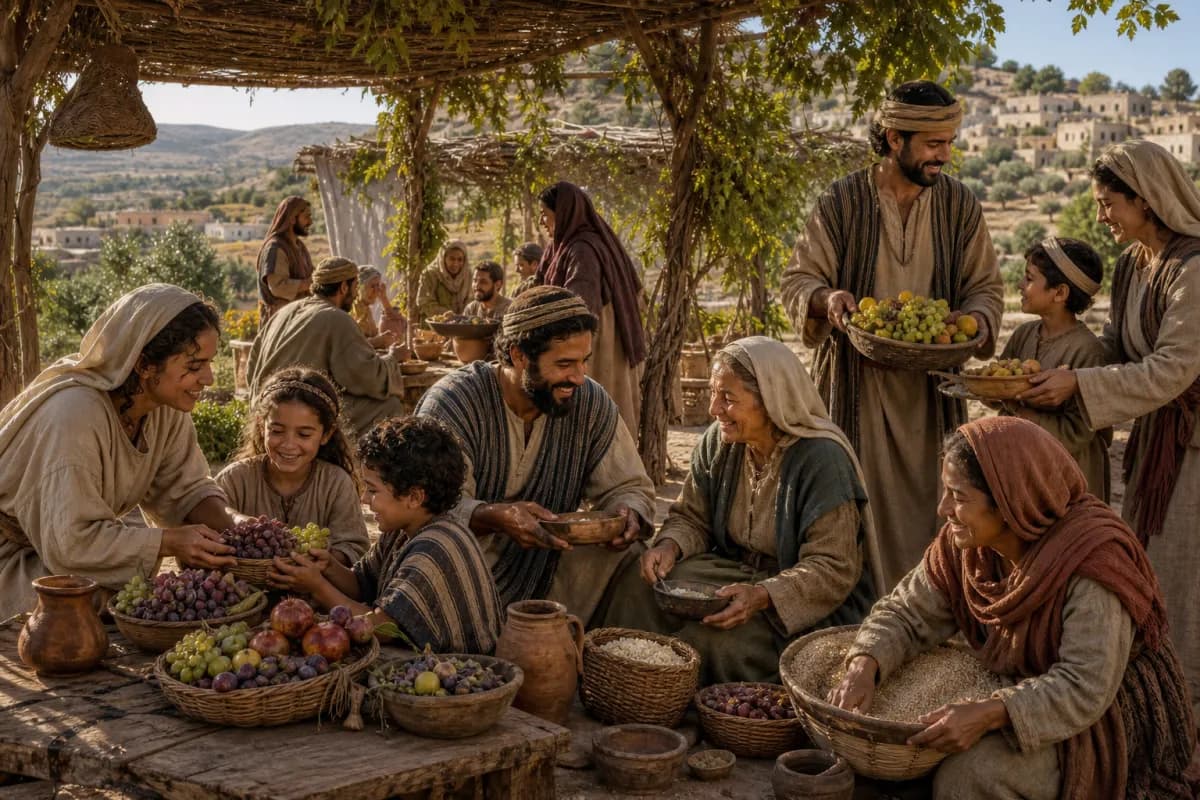
16:11You shall rejoice before the LORD your God: you, your son, your daughter, your male servant, your female servant, the Levite who is within your gates, the foreigner, the fatherless, and the widow who are among you, in the place which the LORD your God shall choose to cause his name to dwell there.
16:12You shall remember that you were a slave in Egypt. You shall observe and do these statutes.
16:13You shall keep the feast of booths seven days, after you have gathered in from your threshing floor and from your wine press.
16:14You shall rejoice in your feast, you, your son, your daughter, your male servant, your female servant, the Levite, the foreigner, the fatherless, and the widow who are within your gates.
16:15You shall keep a feast to the LORD your God seven days in the place which the LORD chooses, because the LORD your God will bless you in all your increase and in all the work of your hands, and you shall be altogether joyful.
16:16Three times in a year all of your males shall appear before the LORD your God in the place which he chooses: in the feast of unleavened bread, in the feast of weeks, and in the feast of booths. They shall not appear before the LORD empty.
16:17Every man shall give as he is able, according to the LORD your God’s blessing which he has given you.
16:18You shall make judges and officers in all your gates, which the LORD your God gives you, according to your tribes; and they shall judge the people with righteous judgment.
16:19You shall not pervert justice. You shall not show partiality. You shall not take a bribe, for a bribe blinds the eyes of the wise and perverts the words of the righteous.
16:20You shall follow that which is altogether just, that you may live and inherit the land which the LORD your God gives you.
16:21You shall not plant for yourselves an Asherah of any kind of tree beside the LORD your God’s altar, which you shall make for yourselves.
16:22Neither shall you set yourself up a sacred stone which the LORD your God hates.
CONTEXTUAL OVERVIEW
Deuteronomy 16 gives Israel a calendar shaped by grace. Passover keeps the night of departure from Egypt before the people; the Festival of Weeks turns harvest into thanksgiving; and the Festival of Booths gathers the nation after its produce is in. Time itself is ordered so that Israel does not become prosperous and forget the God who freed it.
The chapter’s joy is deliberately shared. Servants, Levites, resident aliens, orphans, and widows are repeatedly named among those who must rejoice. Israel may not celebrate redemption as a private achievement of secure households while the vulnerable are excluded from the table.
HISTORICAL AND LITERARY CONTEXT
These commands follow Deuteronomy 12’s instruction to bring sacrificial worship to the place the Lord chooses. The festivals are agricultural, but they are never merely seasonal. Passover remembers liberation, Weeks responds to provision with a freewill offering, and Booths joins harvest joy to the memory that Israel lived in temporary shelters after the exodus.
The final paragraph moves from worship to local courts. Gates were the ordinary place for public judgment in ancient Israelite towns. Moses binds judges to pursue justice without partiality or bribery, showing that pilgrimage and sacrifice cannot be separated from the way a community treats its neighbors.
SECTION-BY-SECTION ANALYSIS
- Bread of affliction · Deuteronomy 16:3Passover remembers the haste and hardship of Egypt so that freedom is received as God’s gift.
- Rejoice with them · Deuteronomy 16:11Festival joy includes people without land, household security, or inherited standing.
- Justice, justice · Deuteronomy 16:19The repeated command rejects both distorted verdicts and the social habits that make bribery seem normal.
CHRIST IN THIS PASSAGE
The New Testament explicitly calls Christ our Passover sacrifice, making the Passover connection stronger than a general resemblance. Jesus gives His life to deliver His people from slavery to sin and inaugurates the new covenant through His blood. Christians do not reproduce Israel’s sacrificial calendar as a condition of access to God, but they receive its redemptive memory as fulfilled in Him.
The festivals also train a people to rejoice in received grace and welcome those who lack status. Jesus gathers a table fellowship that crosses social boundaries, and His risen mission sends disciples to announce forgiveness to all nations. His saving work also establishes the moral seriousness that Deuteronomy requires: grace never makes partiality, exploitation, or false judgment acceptable.
REFLECTION
A crowded calendar can make gratitude thinner rather than deeper. Deuteronomy teaches believers to build practices of remembrance that interrupt self-sufficiency. The question is not whether every Christian must adopt Israel’s feast days, but whether Christ’s rescue has enough weight to shape the way we celebrate, give, and include others.
Consider one person who could easily be absent from your joy because of age, poverty, loneliness, immigration status, or lack of social standing. Thank Jesus for His deliverance, then make a concrete invitation, gift, or act of hospitality that reflects the welcome He has given you.
Original Hebrew Word Study
Deuteronomy 16:14
שִׂמְחָה
simchah · H8057
Usually translated: joy or rejoicing
Simchah is joy. The festivals call households, Levites, resident aliens, and vulnerable neighbors into shared rejoicing before the Lord.
Follow the Scripture trail
Remembering Redemption through Israel’s Feasts in the larger story
The connection: Israel’s festivals tell the story of rescue, provision, shared joy, and justice before the Lord. Jesus fulfills the deepest Passover hope through His saving death and forms a people who remember His grace as they welcome neighbors and bear truthful witness to the nations.
Respond to the passage
Thank Jesus for the specific rescue His death has accomplished for you. Then let that remembrance change one concrete practice: include someone who might be left out, give from what God has provided, or refuse a partial judgment that would advantage you.
- Why does Moses connect the feast calendar to Israel’s memory of Egypt rather than merely to the farming year?
- Who is intentionally included in the chapter’s rejoicing, and what does that reveal about covenant joy?
- How does Christ’s fulfillment of Passover deepen gratitude without requiring Christians to recreate Israel’s sacrificial system?
Prayer
Lord Jesus, thank You for giving Yourself to bring me out of slavery to sin. Keep Your rescue vivid in my memory. Make my gratitude generous, my celebrations welcoming, and my dealings with others truthful and just. Amen.