Passage Study
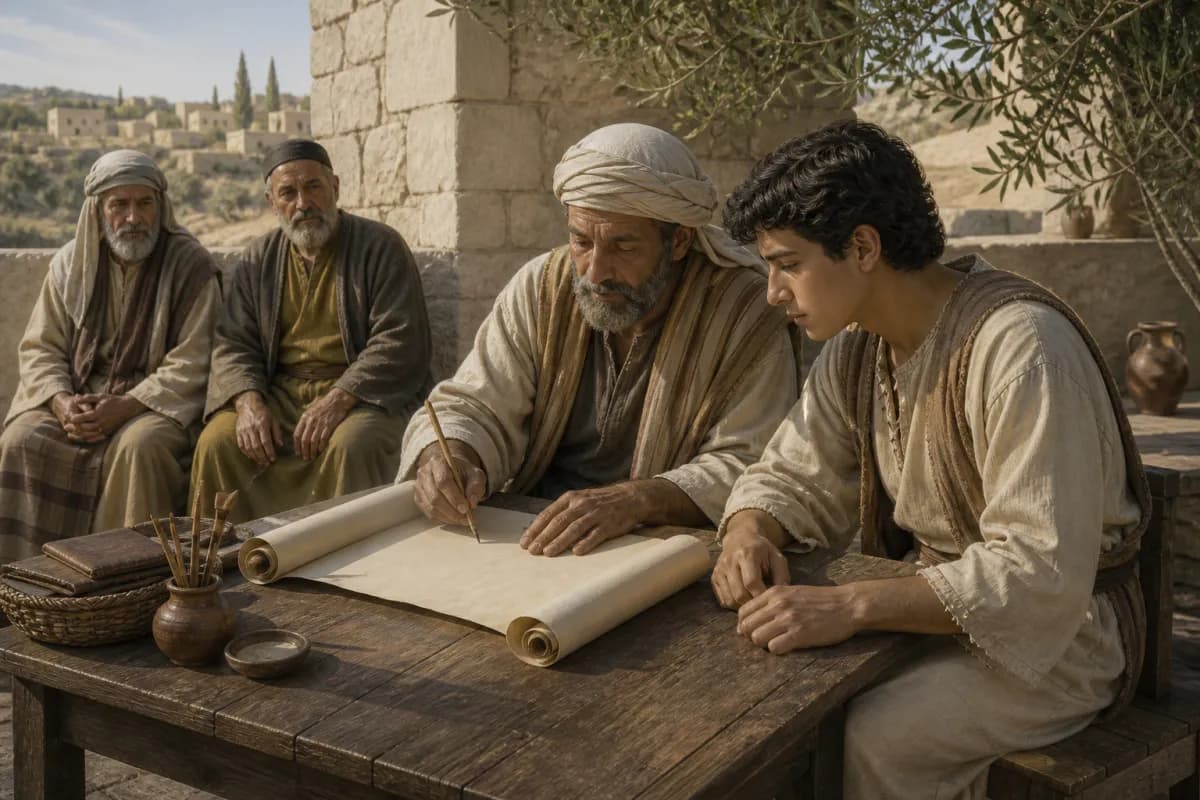
Justice beneath the King’s Copy of the Law
Deuteronomy 17:1–17:20
Deuteronomy 17 addresses unblemished worship, careful judicial inquiry, difficult cases brought before priests and judges, and a future king who must live under God’s instruction. Israel’s authority is never self-authorizing. The chapter points to Jesus, the righteous King who fulfills God’s law, judges with truth, and saves His people without the pride, accumulation, or coercion warned against here.
- In this study
- 20 verses · 5 movements
Deuteronomy 17
17:1You shall not sacrifice to the LORD your God an ox or a sheep in which is a defect or anything evil; for that is an abomination to the LORD your God.
17:2If there is found among you, within any of your gates which the LORD your God gives you, a man or woman who does that which is evil in the LORD your God’s sight in transgressing his covenant,
17:3and has gone and served other gods and worshiped them, or the sun, or the moon, or any of the stars of the sky, which I have not commanded,
17:4and you are told, and you have heard of it, then you shall inquire diligently. Behold, if it is true, and the thing certain, that such abomination is done in Israel,
17:5then you shall bring out that man or that woman who has done this evil thing to your gates, even that same man or woman; and you shall stone them to death with stones.
17:6At the mouth of two witnesses, or three witnesses, he who is to die shall be put to death. At the mouth of one witness he shall not be put to death.
17:7The hands of the witnesses shall be first on him to put him to death, and afterward the hands of all the people. So you shall remove the evil from among you.
17:8If there arises a matter too hard for you in judgment, between blood and blood, between plea and plea, and between stroke and stroke, being matters of controversy within your gates, then you shall arise, and go up to the place which the LORD your God chooses.
17:9You shall come to the priests who are Levites and to the judge who shall be in those days. You shall inquire, and they shall give you the verdict.
17:10You shall do according to the decisions of the verdict which they shall give you from that place which the LORD chooses. You shall observe to do according to all that they shall teach you.
17:11According to the decisions of the law which they shall teach you, and according to the judgment which they shall tell you, you shall do. You shall not turn away from the sentence which they announce to you, to the right hand, nor to the left.
17:12The man who does presumptuously in not listening to the priest who stands to minister there before the LORD your God, or to the judge, even that man shall die. You shall put away the evil from Israel.
17:13All the people shall hear and fear, and do no more presumptuously.
17:14When you have come to the land which the LORD your God gives you, and possess it and dwell in it, and say, “I will set a king over me, like all the nations that are around me,”
17:15you shall surely set him whom the LORD your God chooses as king over yourselves. You shall set as king over you one from among your brothers. You may not put a foreigner over you, who is not your brother.
17:16Only he shall not multiply horses to himself, nor cause the people to return to Egypt, to the end that he may multiply horses; because the LORD has said to you, “You shall not go back that way again.”
17:17He shall not multiply wives to himself, that his heart not turn away. He shall not greatly multiply to himself silver and gold.
17:18It shall be, when he sits on the throne of his kingdom, that he shall write himself a copy of this law in a book, out of that which is before the Levitical priests.
17:19It shall be with him, and he shall read from it all the days of his life, that he may learn to fear the LORD his God, to keep all the words of this law and these statutes, to do them;
17:20that his heart not be lifted up above his brothers, and that he not turn away from the commandment to the right hand, or to the left, to the end that he may prolong his days in his kingdom, he and his children, in the middle of Israel.
CONTEXTUAL OVERVIEW
Deuteronomy 17 holds worship, court procedure, and monarchy together because each concerns the fear of the Lord. A defective animal offered to God, a secret act of idolatry, an unsupported accusation, and a king who accumulates power all deny in different ways that God is the true ruler of Israel.
The chapter is remarkably realistic about authority. Israel will eventually ask for a king, but the king may not become a copy of surrounding rulers. He must be a covenant brother, limited in horses, wives, and wealth, and formed by a handwritten copy of the law rather than by his own appetite.
HISTORICAL AND LITERARY CONTEXT
This chapter follows the command to appoint judges at the gates and precedes instructions about priests and prophets. It describes a tiered judicial practice: local authorities investigate ordinary matters, while cases too difficult for a town are brought to the place the Lord chooses. The aim is not procedural sophistication for its own sake but public faithfulness to God’s justice.
The commands about kings anticipate Israel’s later monarchy without declaring monarchy inherently evil. The concern is royal imitation of Egypt and other nations: military self-reliance, multiplying wives for political alliances, and gathering silver and gold. Israel’s king must remain a learner under God’s word.
SECTION-BY-SECTION ANALYSIS
- Without blemish · Deuteronomy 17:12What Israel presents to the Lord must honor His holiness rather than dispose of what costs it little.
- Two or three witnesses · Deuteronomy 17:6Life-and-death judgments require corroboration, resisting the danger of suspicion becoming a verdict.
- Read it all his days · Deuteronomy 17:19The king’s durability depends on humble submission to God’s instruction, not on unchecked charisma or force.
CHRIST IN THIS PASSAGE
Deuteronomy’s king is not a direct portrait of Jesus in every detail, yet it establishes the standard by which Israel’s kings are measured. Many later kings fail precisely where this chapter warns them: they multiply wealth, military confidence, and divided loyalties. Jesus is the greater Davidic King whose heart is wholly obedient to the Father and whose rule does not rest on accumulating earthly power.
Jesus also joins righteousness and mercy without corrupting either. He bears the judgment sinners deserve, exposes false testimony, and will judge the world with truth. His saving mission produces citizens of His kingdom who value careful speech, fair processes, and leaders accountable to God rather than personalities exalted above their brothers and sisters.
REFLECTION
It is easy to recognize pride in distant rulers and difficult to see it in our own desire for control. Deuteronomy pictures healthy authority as deeply limited authority: it listens, investigates, receives correction, and stays under God’s word. That standard matters in homes, churches, workplaces, and civic life.
Bring to Jesus the place where power or influence has tempted you to stop listening. Ask Him to make you truthful with evidence, slow with accusations, and ready to serve rather than elevate yourself. If you lead others, establish a concrete habit of receiving Scripture and wise counsel before making consequential decisions.
Original Hebrew Word Study
Deuteronomy 16:18
מִשְׁפָּט
mishpat · H4941
Usually translated: justice or judgment
Mishpat is just judgment. Israel’s judges and future king are bound beneath God’s law, so authority serves righteousness rather than personal power.
Follow the Scripture trail
Justice beneath the King’s Copy of the Law in the larger story
The connection: Deuteronomy places sacrifice, court, and crown under the authority of the Lord’s word. Israel’s rulers repeatedly expose the need for a faithful King; Jesus fulfills that need by reigning in righteousness, bearing judgment for sinners, and gathering a people shaped by His truth.
Respond to the passage
Ask Jesus to reveal one place where you have treated influence as permission to avoid accountability. Receive His mercy, seek honest counsel, and take one action that makes your leadership or judgment more truthful and humble.
- Why does the chapter connect defective worship, idolatry, legal testimony, and royal authority?
- What protection does the requirement for multiple witnesses provide, especially in serious cases?
- How does the king’s written copy of the law challenge modern assumptions about leadership?
Prayer
King Jesus, You rule with perfect truth and humble strength. Forgive my desire to stand above correction. Teach me to honor You in worship, speak carefully about others, and use every measure of influence as a servant accountable to Your word. Amen.