Passage Study
The Word God Will Raise Up
Deuteronomy 18:1–18:22
Deuteronomy 18 provides for Levites who serve before the Lord, forbids Israel’s turn to occult practices, and promises a prophet like Moses through whom God will speak. Israel is not left to manipulate hidden powers; it must listen to the word God gives. The promise reaches its decisive fulfillment in Jesus, the greater Prophet who reveals the Father and calls the nations to repentance and life.
- In this study
- 22 verses · 5 movements
Deuteronomy 18
18:1The priests and the Levites—all the tribe of Levi—shall have no portion nor inheritance with Israel. They shall eat the offerings of the LORD made by fire and his portion.
18:2They shall have no inheritance among their brothers. The LORD is their inheritance, as he has spoken to them.
18:3This shall be the priests’ due from the people, from those who offer a sacrifice, whether it be ox or sheep, that they shall give to the priest: the shoulder, the two cheeks, and the inner parts.
18:4You shall give him the first fruits of your grain, of your new wine, and of your oil, and the first of the fleece of your sheep.
18:5For the LORD your God has chosen him out of all your tribes to stand to minister in the LORD’s name, him and his sons forever.
18:6If a Levite comes from any of your gates out of all Israel where he lives, and comes with all the desire of his soul to the place which the LORD shall choose,
18:7then he shall minister in the name of the LORD his God, as all his brothers the Levites do, who stand there before the LORD.
18:8They shall have like portions to eat, in addition to that which comes from the sale of his family possessions.
18:9When you have come into the land which the LORD your God gives you, you shall not learn to imitate the abominations of those nations.
18:10There shall not be found with you anyone who makes his son or his daughter to pass through the fire, one who uses divination, one who tells fortunes, or an enchanter, or a sorcerer,
18:11or a charmer, or someone who consults with a familiar spirit, or a wizard, or a necromancer.
18:12For whoever does these things is an abomination to the LORD. Because of these abominations, the LORD your God drives them out from before you.
18:13You shall be blameless with the LORD your God.
18:14For these nations that you shall dispossess listen to those who practice sorcery and to diviners; but as for you, the LORD your God has not allowed you so to do.
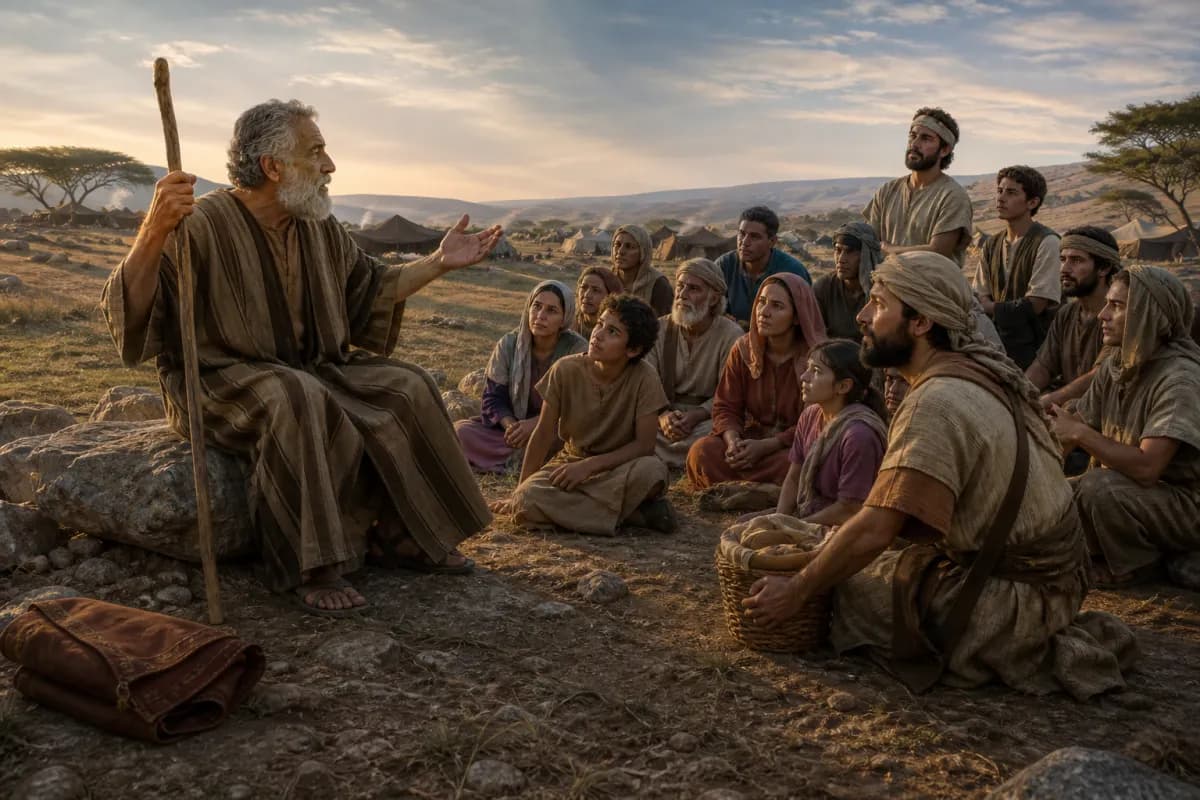
18:15The LORD your God will raise up to you a prophet from among you, of your brothers, like me. You shall listen to him.
18:16This is according to all that you desired of the LORD your God in Horeb in the day of the assembly, saying, “Let me not hear again the LORD my God’s voice, neither let me see this great fire any more, that I not die.”
18:17The LORD said to me, “They have well said that which they have spoken.
18:18I will raise them up a prophet from among their brothers, like you. I will put my words in his mouth, and he shall speak to them all that I shall command him.
18:19It shall happen, that whoever will not listen to my words which he shall speak in my name, I will require it of him.
18:20But the prophet who speaks a word presumptuously in my name, which I have not commanded him to speak, or who speaks in the name of other gods, that same prophet shall die.”
18:21You may say in your heart, “How shall we know the word which the LORD has not spoken?”
18:22When a prophet speaks in the LORD’s name, if the thing doesn’t follow, nor happen, that is the thing which the LORD has not spoken. The prophet has spoken it presumptuously. You shall not be afraid of him.
CONTEXTUAL OVERVIEW
Israel is entering a land where people sought guidance through divination, sorcery, mediums, and attempts to consult the dead. Moses does not leave a vacuum by simply saying no. He directs Israel to priests supported by God’s provision and, above all, to the prophet God will raise up from among their own people.
The chapter therefore asks where a people will look when it does not know the future or when it fears danger. Israel must not seize secret knowledge through forbidden rites. It is to hear the God who has already drawn near, speaks His word, and holds His servants accountable for speaking only what He commands.
HISTORICAL AND LITERARY CONTEXT
The Levitical provisions continue Deuteronomy’s concern that worship at the chosen place not abandon the tribe that receives no territorial inheritance. Portions from offerings and firstfruits sustain those whose service is tied to the sanctuary. The law refuses to treat spiritual ministry as magic or personal entrepreneurship; it is ordered around the Lord’s gift and command.
The promised prophet follows Israel’s fear at Horeb, where the people asked not to hear the Lord’s overwhelming voice directly lest they die. Moses serves as the mediating model. The immediate promise concerns God’s continuing provision of prophetic speech, while later Scripture keeps the hope open for the climactic prophet who will speak God’s word decisively.
SECTION-BY-SECTION ANALYSIS
- The Lord is their inheritance · Deuteronomy 18:2Levites are sustained through the worshiping community because their service is bound to the Lord’s presence rather than a tribal estate.
- Do not learn to imitate · Deuteronomy 18:9Seeking forbidden knowledge is a refusal to trust God’s revealed word and timing.
- A prophet like Moses · Deuteronomy 18:15God answers Israel’s fear by supplying a human messenger who speaks His word and calls for obedient listening.
CHRIST IN THIS PASSAGE
The New Testament explicitly applies the promise of a prophet like Moses to Jesus. He is not merely one more religious voice offering insight. He speaks the Father’s word with unique authority, reveals God’s character, and mediates a new covenant through His saving death and resurrection. To hear Him is to receive the life God gives; to reject Him is a grave refusal of God’s mercy.
Jesus also frees people from the fear-driven hunt for hidden control. His mission does not promise secret knowledge of every outcome. It brings reconciliation with God, the gift of the Spirit, and a trustworthy word for faithful obedience. The church therefore witnesses to Christ openly rather than trafficking in spiritual manipulation, superstition, or claims God has not made.
REFLECTION
Anxious hearts are vulnerable to anyone who promises certainty. Deuteronomy confronts the impulse to manage the future through hidden techniques, religious spectacle, or authoritative personalities. God’s answer is not bare ignorance. He gives His word, calls His people to listen, and gives enough light for the obedience required today.
Bring your need to know the future to Jesus. Refuse practices that pretend to control what God has kept hidden, and ground your next decision in Scripture, prayer, wisdom, and honest responsibility. Speak of Christ’s certainty—the forgiveness and life He offers—rather than making promises in His name that He has not spoken.
Original Hebrew Word Study
Deuteronomy 18:15
נָבִיא
navi · H5030
Usually translated: prophet
Navi is a prophet. God promises a spokesman like Moses so His people will hear His word without returning to forbidden divination.
Follow the Scripture trail
The Word God Will Raise Up in the larger story
The connection: Israel must receive guidance from the God who speaks instead of chasing forbidden power. The promise of a prophet like Moses draws the story toward Jesus, who reveals the Father, bears sinners’ guilt, and sends His people to speak His saving truth to the world.
Respond to the passage
Name the uncertainty that makes you want control. Bring it honestly to Jesus, reject any false source of spiritual certainty, and take the next faithful step His revealed word makes clear.
- Why does Moses place the promise of a prophet beside the prohibition of divination and mediums?
- What does the provision for Levites show about the community’s responsibility for worship and ministry?
- How does Jesus’ fulfillment of the prophet promise shape Christian discernment about bold spiritual claims?
Prayer
Lord Jesus, You are the Father’s true and final Word. Forgive me for seeking control where You call me to trust. Give me discernment, settle my anxious heart in Your promises, and make my words a faithful witness to Your saving grace. Amen.