Passage Study
Pharaoh Oppresses Israel: When Power Turns Cruel
Exodus 1:8–1:14
Exodus 1:8–14 shows Pharaoh answering his fear of Israel with forced labor. His policy makes life bitter, yet his oppression cannot cancel the fruitfulness God gives. The passage exposes the cruelty of power detached from the fear of God and prepares for the Lord’s rescue of a people who cannot free themselves.
- In this study
- 7 verses · 5 movements
Exodus 1
1:8Now there arose a new king over Egypt, who didn’t know Joseph.
1:9He said to his people, “Behold, the people of the children of Israel are more and mightier than we.
1:10Come, let’s deal wisely with them, lest they multiply, and it happen that when any war breaks out, they also join themselves to our enemies and fight against us, and escape out of the land.”
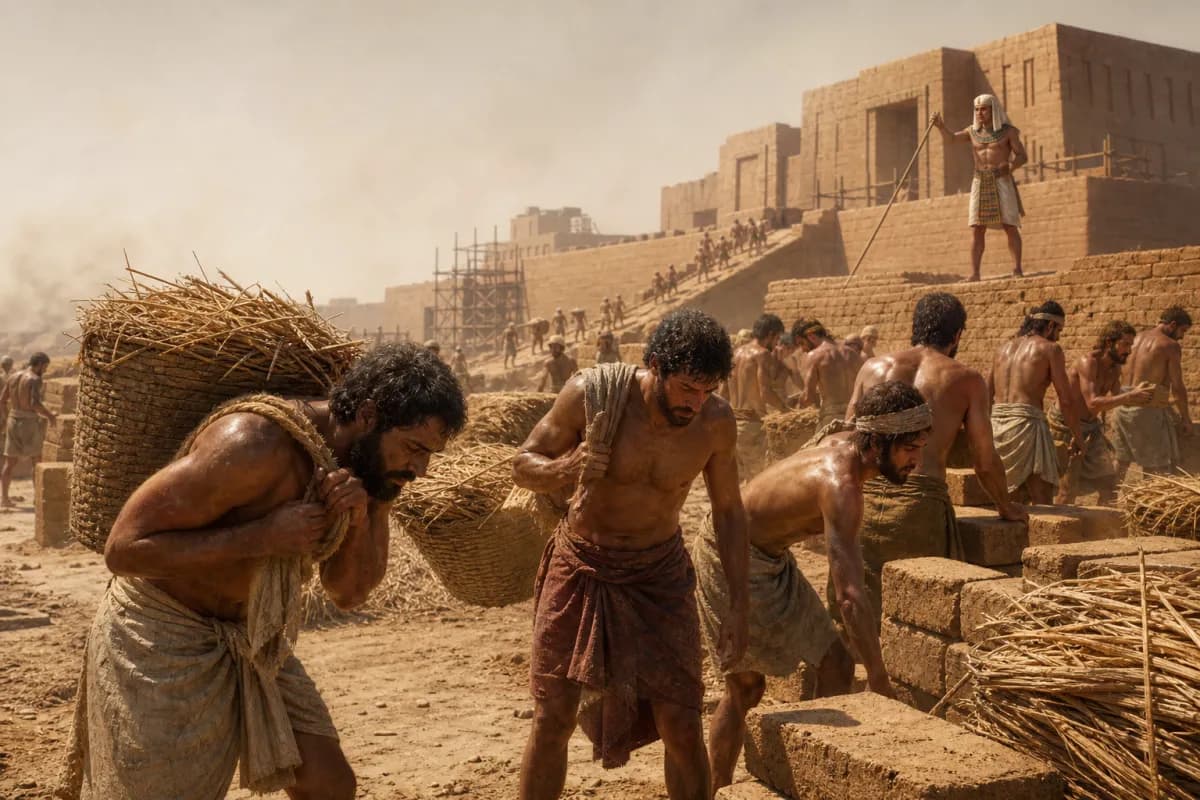
1:11Therefore they set taskmasters over them to afflict them with their burdens. They built storage cities for Pharaoh: Pithom and Raamses.
1:12But the more they afflicted them, the more they multiplied and the more they spread out. They started to dread the children of Israel.
1:13The Egyptians ruthlessly made the children of Israel serve,
1:14and they made their lives bitter with hard service in mortar and in brick, and in all kinds of service in the field, all their service, in which they ruthlessly made them serve.
CONTEXTUAL OVERVIEW
The new Pharaoh sees Israel through the lens of fear and national advantage. He does not ask how to govern justly; he asks how to keep a growing population from threatening his rule. His speech to his people turns neighbors into a danger and makes oppression appear prudent.
The scene is deliberately bitter. Taskmasters afflict Israel with burdens, and the people build the storage cities of Pithom and Rameses. The repeated contrast carries the passage: the Egyptians deal ruthlessly with Israel, but the more they afflict them, the more they multiply. Human power becomes cruel; God’s blessing persists.
HISTORICAL AND LITERARY CONTEXT
Exodus now shows how Pharaoh’s fear becomes a social system. The vocabulary of service and labor that later describes Israel’s worship of the Lord is first twisted into forced service for Pharaoh. Deliverance will therefore be more than a change of location; it will be release from a master who claims bodies, time, and strength.
The named building cities locate the story in Egypt’s world of royal construction, but the passage does not provide enough detail to settle every historical question about dates or labor arrangements. Its clear literary purpose is to show that Israel’s suffering is organized from the top down and that God sees the people under it.
Did you know?
A fifteenth-century BCE painting in Rekhmire’s tomb shows foreign captives making mudbricks under Egyptian supervision. Its inscription says the bricks were destined for workshops at Karnak Temple, preserving a picture of forced labor beyond the biblical account.
Why it matters: The scene gives a concrete view of the labor system behind the passage’s brief description of bitter service.
SECTION-BY-SECTION ANALYSIS
- Fear becomes policy · Exodus 1:9Pharaoh’s imagined threat is used to justify treating a whole people as material for his security.
- Labor becomes bondage · Exodus 1:14The work named here is not ordinary vocation but exhausting service imposed through violence.
- God’s purpose remains · Exodus 1:11Israel’s multiplication does not minimize its suffering; it shows that Pharaoh cannot finally reverse God’s blessing.
CHRIST IN THIS PASSAGE
The bondage in Egypt becomes a central pattern for describing salvation in the rest of Scripture. It should not be flattened into a one-to-one prediction of every later evil, but it does reveal the kind of rescue God brings: He acts for people who are crushed and unable to deliver themselves. Jesus announces freedom to the oppressed and gives His life to liberate sinners from slavery to sin and death.
Christ’s saving mission also judges the lie that domination makes a kingdom secure. He is the King who takes the form of a servant and gives Himself for others. Those redeemed by Him are freed from serving sin and are gathered into a new way of life marked by love, justice, and worship of God.
REFLECTION
This passage refuses to call cruelty necessary simply because it is efficient or authorized. Pharaoh’s projects may look impressive, but Exodus remembers the human cost. God’s people should learn to see the vulnerable persons behind policies, production, and profit, and to resist habits that treat anyone as disposable.
Many readers also know the weariness of serving a master they cannot satisfy: destructive desire, guilt, addiction, or an identity built on earning approval. Jesus does not excuse bondage or offer superficial relief. He meets people with costly grace, calls them out of slavery, and forms them into a people who serve the living God.
Original Hebrew Word Study
Exodus 1:13
עָבַד
avad · H5647
Usually translated: to serve, work, or labor
Avad can describe ordinary service, but here it names forced labor. Pharaoh twists the human calling to serve God into crushing service for his own kingdom.
Follow the Scripture trail
Pharaoh Oppresses Israel: When Power Turns Cruel in the larger story
The connection: Pharaoh’s bondage makes Israel’s need for a deliverer unmistakable. Jesus fulfills the larger rescue pattern by entering human misery, breaking sin’s enslaving claim through His cross and resurrection, and leading His people into the freedom of serving God.
Respond to the passage
Ask Jesus to show you where fear, ambition, or comfort has made you overlook another person’s burden. If you feel trapped beneath a master you cannot overcome, bring that bondage to Him honestly. His grace opens a path of repentance, help, and new obedience.
- What fears does Pharaoh use to persuade his people that oppression is wise?
- Why does the passage name the harsh details of Israel’s work instead of summarizing their suffering generally?
- What does Jesus’ freedom from sin’s slavery change about the kind of authority and service Christians should practice?
Prayer
Lord Jesus, You see people made bitter by burdens they did not choose. Deliver me from every master that destroys life, and make me alert to the burdens carried by others. Form in me the humility of Your servant-hearted kingdom. Amen.