Passage Study
The Plague of Darkness: Light Where God’s People Dwell
Exodus 10:21–10:29
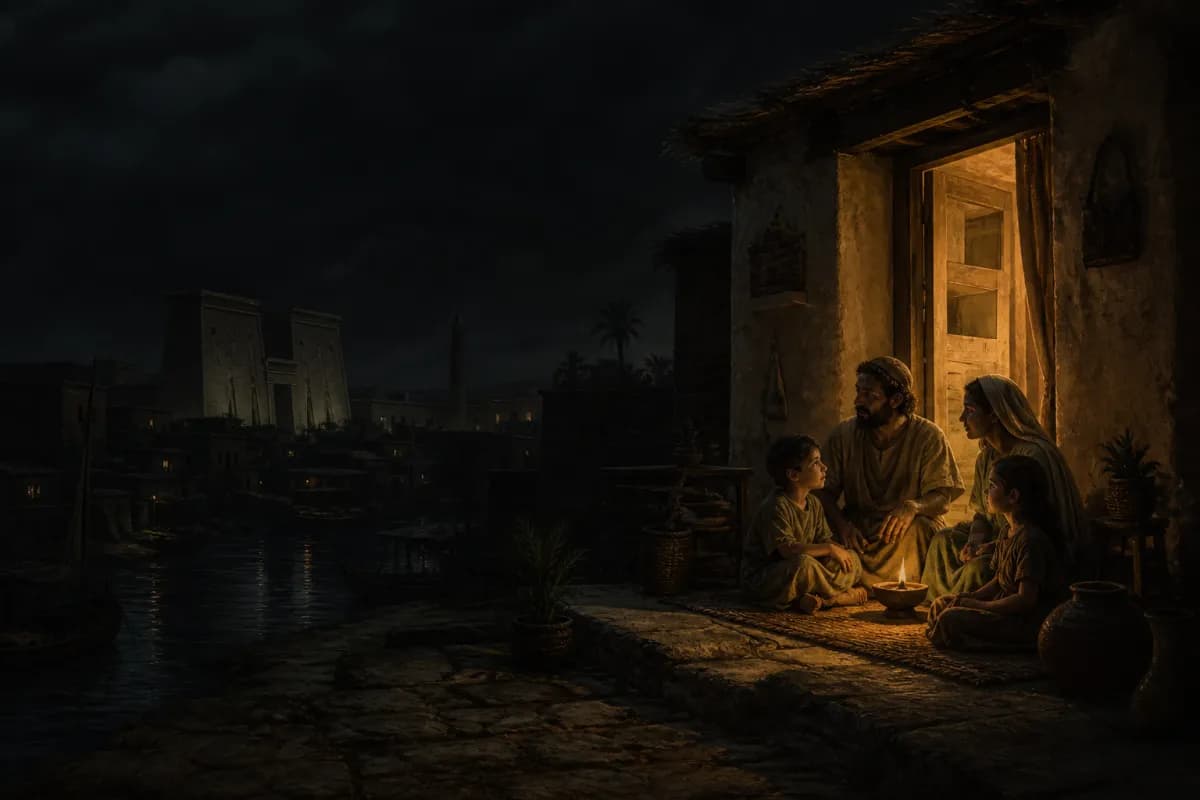
Exodus 10:21–29 tells of a darkness so thick that Egypt cannot move for three days, while the Israelites have light where they live. Pharaoh again offers a partial release, demanding that Israel leave its animals behind; Moses refuses because Israel must take what the Lord may require for worship. The contrast between darkness and light points to Jesus, the light of the world, who brings people out of sin’s darkness into the freedom of serving God.
- In this study
- 9 verses · 5 movements
Exodus 10
10:21The LORD said to Moses, “Stretch out your hand toward the sky, that there may be darkness over the land of Egypt, even darkness which may be felt.”
10:22Moses stretched out his hand toward the sky, and there was a thick darkness in all the land of Egypt for three days.
10:23They didn’t see one another, and nobody rose from his place for three days; but all the children of Israel had light in their dwellings.
10:24Pharaoh called to Moses, and said, “Go, serve the LORD. Only let your flocks and your herds stay behind. Let your little ones also go with you.”
10:25Moses said, “You must also give into our hand sacrifices and burnt offerings, that we may sacrifice to the LORD our God.
10:26Our livestock also shall go with us. Not a hoof shall be left behind, for of it we must take to serve the LORD our God; and we don’t know with what we must serve the LORD, until we come there.”
10:27But the LORD hardened Pharaoh’s heart, and he wouldn’t let them go.
10:28Pharaoh said to him, “Get away from me! Be careful to see my face no more; for in the day you see my face you shall die!”
10:29Moses said, “You have spoken well. I will see your face again no more.”
CONTEXTUAL OVERVIEW
The ninth plague brings Egypt to a standstill. The darkness is described as something that can be felt, and people do not rise from where they are for three days. After a long sequence of visible disasters, this judgment removes ordinary sight and movement themselves, while Israel’s homes remain places of light.
Pharaoh’s response still centers on control. He allows men, women, and children to go but insists that flocks and herds stay behind. Moses sees the trap: Israel cannot know beforehand exactly what will be needed to serve the Lord, and their possessions cannot remain as Pharaoh’s leverage. The dispute is about worship that answers to God’s command alone.
HISTORICAL AND LITERARY CONTEXT
Darkness recalls the opening of Genesis, where darkness precedes God’s creative word of light. Exodus does not explicitly explain the plague through a particular Egyptian deity, so readers should resist turning a possible background association into the passage’s stated meaning. What the text does make clear is that the Lord has authority over the conditions by which Egypt’s people move, work, and see.
The separation between Egypt and Israel has grown throughout the plagues. Here it is domestic and immediate: the Israelites have light in the places where they live. This preserves the exodus theme that the Lord knows His people and makes a public difference between those He rescues and the oppressive kingdom that refuses His word.
SECTION-BY-SECTION ANALYSIS
- Darkness that halts · Exodus 10:21Egypt cannot move through the darkness, displaying the Lord’s authority over a kingdom that has kept Israel immobilized in slavery.
- Light in the dwellings · Exodus 10:23Israel’s light marks the Lord’s particular care for the people He is bringing out.
- Unrestricted worship · Exodus 10:24Moses refuses to leave animals behind because service to the Lord must follow God’s command rather than Pharaoh’s limits.
CHRIST IN THIS PASSAGE
The light in Israel’s dwellings is not a direct prediction of Jesus, but darkness and light become a major biblical way of speaking about alienation from and restoration to God. Jesus identifies Himself as the light of the world and calls people to follow Him so they will not remain in darkness. His claim fulfills the exodus-shaped hope of God bringing His people into life under His presence.
Christ’s mission also exposes the futility of partial surrender. Pharaoh will release people only if he keeps a claim over their resources and future. Jesus gives Himself to redeem the whole person, and He calls His followers into a worshipful life that gladly recognizes every good gift as belonging to God.
REFLECTION
Darkness can make a person feel trapped and unable to take the next step. This passage does not turn every dark season into a sign of personal judgment. It does, however, direct us to the God who sees when human sight fails and who gives light to the people He claims as His own.
Jesus meets people who have become accustomed to managing life in shadows. Bring hidden sin, fear, and divided loyalty into His light. His grace does not shame those who come; it frees them to serve God openly and to become a steady light of truth and mercy for others.
Original Hebrew Word Study
Exodus 10:21
חֹשֶׁךְ
choshekh · H2822
Usually translated: darkness
Choshekh is the darkness that can be felt. Egypt’s darkness is more than an inconvenience; it interrupts ordinary movement and exposes a kingdom brought to a standstill before the Creator of light.
Follow the Scripture trail
The Plague of Darkness: Light Where God’s People Dwell in the larger story
The connection: The darkness over Egypt and light in Israel’s dwellings show the Lord distinguishing His people from Pharaoh’s oppressive realm. Jesus fulfills that saving mission as the light of the world, bringing people from sin’s darkness into the freedom of belonging to and serving God.
Respond to the passage
Bring one area you have kept in darkness to Jesus in honest confession and prayer. Ask Him for the courage to follow His light, including the concrete change that releases Pharaoh-like leverage from your life.
- What does the three-day darkness do to Egypt’s ordinary confidence and movement?
- Why is Moses unwilling to leave Israel’s herds under Pharaoh’s control?
- How does Jesus’ claim to be the light of the world deepen the hope suggested by Israel’s light in this passage?
Prayer
Lord Jesus, You are the light of the world. Meet me in the places where fear and sin have made me hide. Thank You for calling people out of darkness into Your life. Teach me to serve You without divided loyalty and to reflect Your mercy before others. Amen.