Passage Study
The Passover Sacrifice: Rescue Under the Blood of the Lamb
Exodus 12:1–12:13
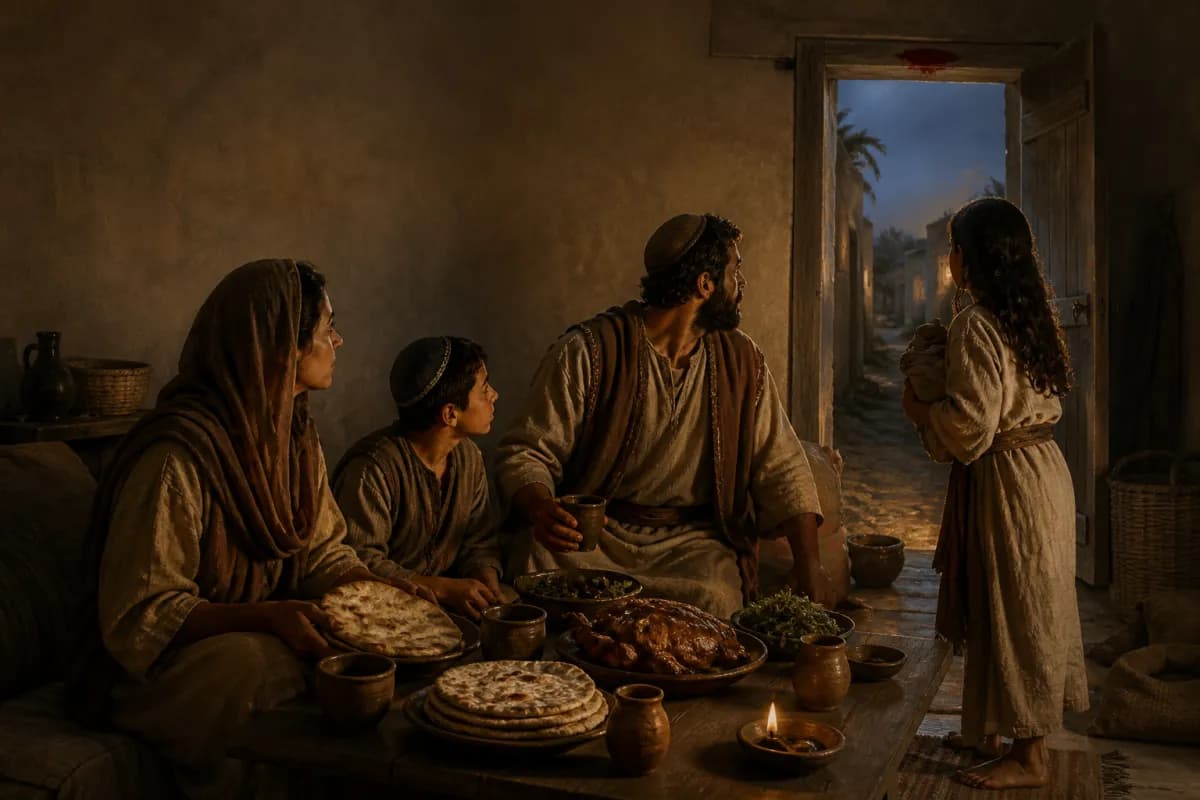
Exodus 12:1–13 gives Israel the Passover instructions on the eve of departure: each household is to take an unblemished lamb, mark the doorposts with its blood, eat in readiness, and remember that the Lord will pass over the marked homes when judgment falls on Egypt. The passage is the Bible’s central exodus rescue pattern and points directly to Jesus Christ, the Lamb who gives His life so that sinners may be delivered from judgment and brought into a new life of worship and mission.
- In this study
- 13 verses · 5 movements
Exodus 12
12:1The LORD spoke to Moses and Aaron in the land of Egypt, saying,
12:2“This month shall be to you the beginning of months. It shall be the first month of the year to you.
12:3Speak to all the congregation of Israel, saying, ‘On the tenth day of this month, they shall take to them every man a lamb, according to their fathers’ houses, a lamb for a household;
12:4and if the household is too little for a lamb, then he and his neighbor next to his house shall take one according to the number of the souls. You shall make your count for the lamb according to what everyone can eat.
12:5Your lamb shall be without defect, a male a year old. You shall take it from the sheep or from the goats.
12:6You shall keep it until the fourteenth day of the same month; and the whole assembly of the congregation of Israel shall kill it at evening.
12:7They shall take some of the blood, and put it on the two door posts and on the lintel, on the houses in which they shall eat it.
12:8They shall eat the meat in that night, roasted with fire, with unleavened bread. They shall eat it with bitter herbs.
12:9Don’t eat it raw, nor boiled at all with water, but roasted with fire; with its head, its legs and its inner parts.
12:10You shall let nothing of it remain until the morning; but that which remains of it until the morning you shall burn with fire.
12:11This is how you shall eat it: with your belt on your waist, your sandals on your feet, and your staff in your hand; and you shall eat it in haste: it is the LORD’s Passover.
12:12For I will go through the land of Egypt in that night, and will strike all the firstborn in the land of Egypt, both man and animal. I will execute judgments against all the gods of Egypt. I am the LORD.
12:13The blood shall be to you for a token on the houses where you are. When I see the blood, I will pass over you, and no plague will be on you to destroy you when I strike the land of Egypt.
CONTEXTUAL OVERVIEW
Exodus 12 begins a new calendar because Israel is about to become a newly delivered people. Time itself is marked by rescue: this month will be the first month for Israel. The Passover is not a private spiritual metaphor in its first setting. It is a household meal given on the night God will bring a slave people out from under Pharaoh’s power.
Every detail serves the coming departure. The lamb is shared according to household size, its blood is put on the doorposts, and the meal is eaten with sandals on, staff in hand, and readiness to leave. Israel does not protect itself through bravery or ritual skill; the Lord provides the sign and promises that He will pass over the houses where He sees the blood.
HISTORICAL AND LITERARY CONTEXT
Passover stands at the center of Israel’s annual memory. Later generations will tell the story, remove leaven, and keep the feast because God brought their ancestors out of Egypt. The original night joins sacrifice, meal, memory, family, and liberation. It teaches Israel that their identity begins with a rescue they did not achieve for themselves.
The chapter calls the lamb “without blemish,” fitting a sacrifice offered to the holy God. The text does not say that the animal magically transfers every individual’s moral guilt; it says the blood is a sign for the houses and that the Lord will pass over them. The wider biblical canon develops sacrifice and atonement further, and the New Testament explicitly connects Passover with Christ’s saving death.
SECTION-BY-SECTION ANALYSIS
- A new beginning · Exodus 12:2The first month is reset around deliverance, teaching Israel to count its life from God’s saving action.
- A household sign · Exodus 12:3The blood on the doorposts marks the homes God promises to pass over when judgment comes.
- A ready people · Exodus 12:11Sandals, staff, and hurried bread show that rescue moves Israel out of slavery toward service to the Lord.
CHRIST IN THIS PASSAGE
The New Testament makes the connection to Jesus explicit. John the Baptist calls Him the Lamb of God, Jesus shares a Passover meal with His disciples before His death, and Paul says, “Christ, our Passover lamb, has been sacrificed.” Christians should therefore read Exodus 12 as a major God-given pattern fulfilled in Christ, while still honoring its first meaning as Israel’s historical deliverance from Egypt.
Jesus fulfills the Passover pattern by offering Himself for sinners. His death is not merely an inspiring example of courage; it is God’s provision of redemption, bringing forgiveness and freedom from sin’s dominion. His resurrection carries the exodus forward: those united to Him are not left at the doorposts but called into a new life of worship, holiness, and witness to the saving mercy of God.
REFLECTION
Passover challenges the instinct to build safety from our own preparation, moral record, or control. Israel’s confidence rests in the word of God and the sign He gives. In the same way, Christians rest their hope in Jesus Christ, whose sacrifice is sufficient for those who trust Him rather than in their ability to make themselves acceptable.
The meal also forms memory. We forget rescue easily and return in our imaginations to old masters. The church remembers Christ’s death in the Lord’s Supper, speaks the gospel in households and congregations, and lives as a people already delivered. Let that memory become mission: tell someone not only that Jesus improves life, but that He has given Himself to bring sinners from death and bondage into God’s family.
Original Hebrew Word Study
Exodus 12:11
פֶּסַח
pesach · H6453
Usually translated: Passover
Pesach names both the meal and the Lord’s protecting action over the marked houses. The blood is not magic; it is the covenant sign by which Israel receives the rescue God provides.
Follow the Scripture trail
The Passover Sacrifice: Rescue Under the Blood of the Lamb in the larger story
The connection: Passover is the decisive rescue through which God brings Israel out of Egypt under the blood of the lamb. Jesus fulfills this pattern as the Lamb of God whose death delivers sinners from judgment and bondage, forming a people who remember His mercy and carry His saving mission into the world.
Respond to the passage
Rest your confidence in the mercy God provides through Jesus rather than in your own ability to secure yourself. Remember His sacrifice with gratitude, then speak one clear word this week about the freedom He offers from sin and death.
- Why does God make the Passover month the beginning of Israel’s calendar?
- What do the blood, the meal, and the readiness to leave each reveal about the kind of rescue God provides?
- How does the New Testament’s connection between Passover and Jesus shape both personal faith and the church’s mission?
Prayer
Lord Jesus, Lamb of God, thank You for giving Yourself to rescue sinners from judgment and bondage. Keep me from trusting my own record, deepen my gratitude for Your sacrifice, and make my life a faithful witness to the freedom You have won. Amen.