Passage Study
The Final Plague: Judgment That Breaks Pharaoh’s Hold
Exodus 12:29–12:32
Exodus 12:29–32 records the death of Egypt’s firstborn at midnight and Pharaoh’s urgent command for Israel to leave with its flocks, herds, and families. The terrible judgment brings Pharaoh’s resistance to an end and displays the seriousness of evil, while the Passover shelter already provided points to Jesus, who bears judgment so that sinners may receive life and freedom.
- In this study
- 4 verses · 5 movements
Exodus 12
12:29At midnight, the LORD struck all the firstborn in the land of Egypt, from the firstborn of Pharaoh who sat on his throne to the firstborn of the captive who was in the dungeon, and all the firstborn of livestock.
12:30Pharaoh rose up in the night, he, and all his servants, and all the Egyptians; and there was a great cry in Egypt, for there was not a house where there was not one dead.
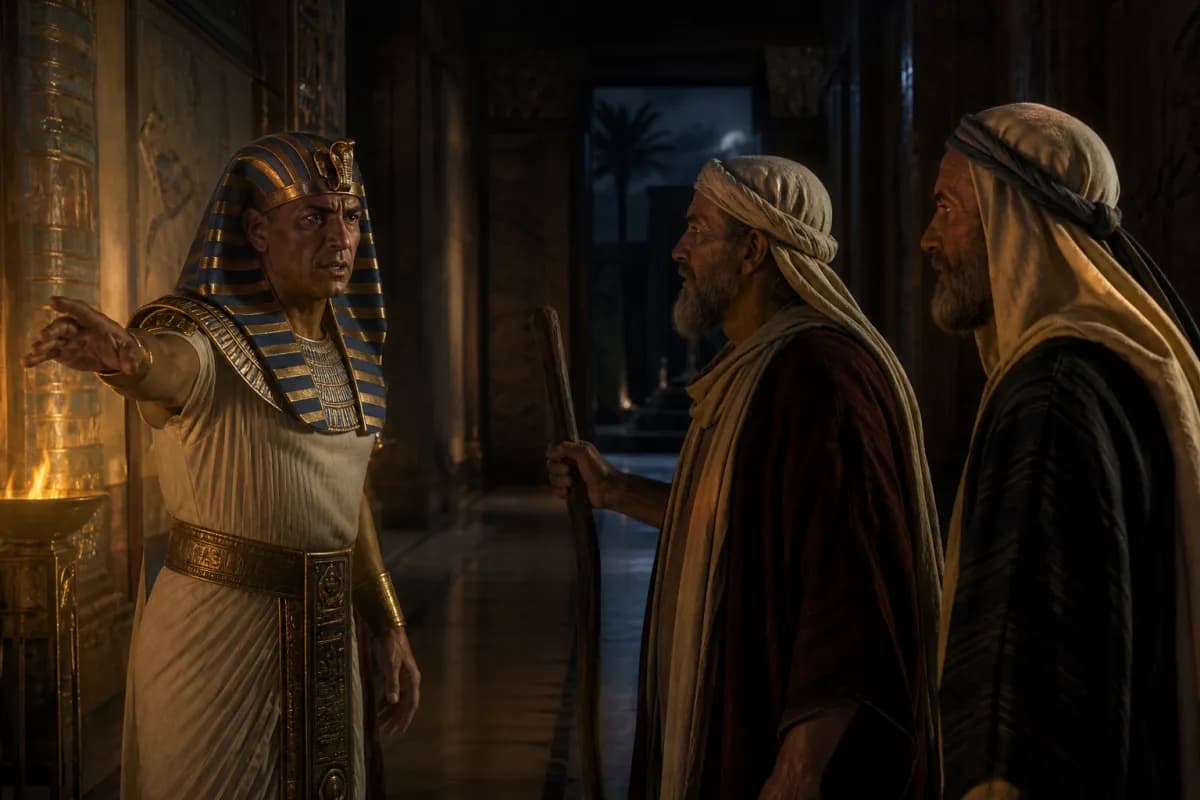
12:31He called for Moses and Aaron by night, and said, “Rise up, get out from among my people, both you and the children of Israel; and go, serve the LORD, as you have said!
12:32Take both your flocks and your herds, as you have said, and be gone; and bless me also!”
CONTEXTUAL OVERVIEW
The final plague comes after repeated warnings, signs, negotiations, and Pharaoh’s repeated hardening. At midnight, the Lord’s announced judgment falls on Egypt’s firstborn from the royal household to the prisoner’s house. The scene is intentionally grievous: every Egyptian home is touched by a loss that no political power can dismiss.
Pharaoh, who had refused even a short wilderness journey for Israel’s worship, now calls Moses and Aaron in the night and commands everyone to go. His words include sons, daughters, flocks, and herds—the very scope of freedom he had tried to limit. The Lord’s purpose has prevailed over the king who claimed to control Israel’s life.
HISTORICAL AND LITERARY CONTEXT
Exodus has framed this event as the climactic answer to Pharaoh’s long refusal to release the Lord’s firstborn son, Israel. The narrative also remembers Pharaoh’s earlier policy of killing Hebrew sons. These connections do not make the suffering light; they show that the final plague arrives within a sustained account of a ruler who has brutalized the vulnerable and resisted every summons to yield.
The passage must be read beside the Passover instructions, not in isolation. Israel is not portrayed as morally superior or naturally invulnerable. Its homes live through the night because God has provided and commanded a sign of shelter. Judgment and mercy stand together in the final exodus night.
SECTION-BY-SECTION ANALYSIS
- Midnight judgment · Exodus 12:29The event comes at the appointed hour, demonstrating that Pharaoh cannot postpone or manage the Lord’s word.
- A great cry · Exodus 12:30Egypt’s grief keeps the moral weight of judgment in view rather than turning the plague into spectacle.
- Freedom without limits · Exodus 12:31Pharaoh finally releases Israel’s people and possessions for the worship he had tried to control.
CHRIST IN THIS PASSAGE
This passage does not offer a simple one-to-one prediction of the cross, and Christians should not use it to make light of human suffering. Its place within the Passover story is vital: Israel survives because God has provided a sacrificial shelter. The New Testament identifies Jesus’ death with that Passover pattern and declares that He bears sin’s judgment to bring forgiveness and peace with God.
Jesus also speaks honestly about final judgment. His mission is merciful precisely because the human problem is not trivial. On the cross, the righteous One gives Himself for the unrighteous; in His resurrection, He opens life that Pharaoh’s death-dealing kingdom cannot destroy. The gospel calls people to flee to Christ, not to deny judgment’s seriousness.
REFLECTION
The final plague forbids complacency about cruelty, oppression, and hardened power. God sees the abuse that rulers and systems can normalize. Christians may lament before Him, resist injustice faithfully, and trust that the Lord’s justice is neither blind nor weak.
The passage also humbles those who have received mercy. Passover teaches that life is a gift received under God’s provision. Jesus welcomes people who come with empty hands, and His followers can speak of judgment without pride because their own hope rests wholly in His sacrifice.
Original Hebrew Word Study
Exodus 12:29
בְּכוֹר
bekhor · H1060
Usually translated: firstborn
Bekhor names the firstborn, the child who normally carries a household’s strength and inheritance forward. The judgment reaches the future Egypt trusted most, while the Lord preserves the households marked by His provision.
Follow the Scripture trail
The Final Plague: Judgment That Breaks Pharaoh’s Hold in the larger story
The connection: The final plague breaks Pharaoh’s grip and reveals the gravity of defying God. Within the Passover story, Jesus fulfills God’s saving mission by bearing sin’s judgment and freeing those who trust Him from slavery to death and fear.
Respond to the passage
Bring before Jesus any place where you have grown casual about sin, injustice, or your need for mercy. Receive His forgiveness with gratitude and ask Him to make you a truthful, compassionate witness to His saving justice.
- How does the passage preserve the grief and moral seriousness of the final plague?
- Why is it important to read the judgment beside the Passover shelter God had already provided?
- How does the cross hold together God’s justice, mercy, and invitation to life?
Prayer
Holy God, keep me from treating evil lightly or Your patience casually. Thank You, Lord Jesus, for bearing sin’s judgment and opening the way of life. Make me humble under Your mercy and faithful in seeking justice, truth, and peace. Amen.