Passage Study
Jethro Hears, Rejoices, and Worships
Exodus 18:1–18:12
Exodus 18:1–12 brings Moses’ Midianite father-in-law Jethro to the wilderness after he hears what God has done for Israel. Jethro rejoices, confesses the Lord’s greatness over all gods, and shares a sacrifice and meal with Israel’s leaders, showing that God’s deliverance is already drawing the nations into worship.
- In this study
- 12 verses · 5 movements
Exodus 18
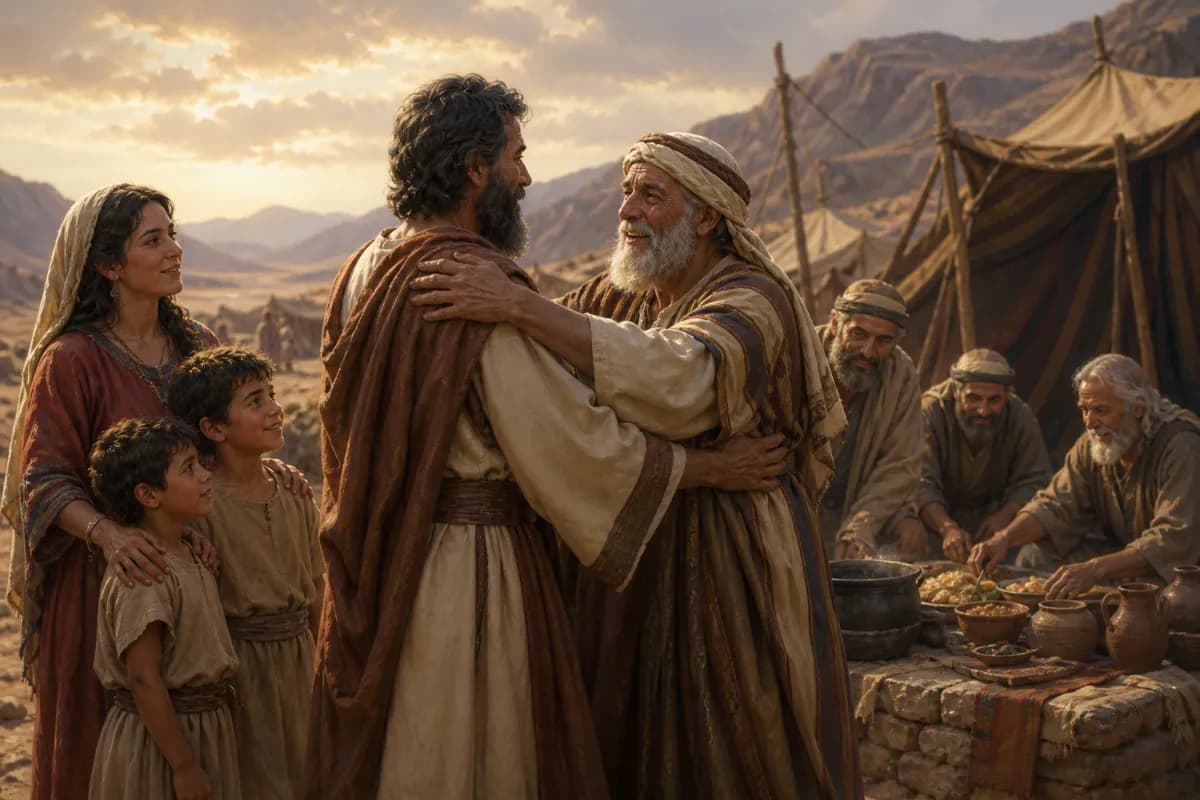
18:1Now Jethro, the priest of Midian, Moses’ father-in-law, heard of all that God had done for Moses and for Israel his people, how the LORD had brought Israel out of Egypt.
18:2Jethro, Moses’ father-in-law, received Zipporah, Moses’ wife, after he had sent her away,
18:3and her two sons. The name of one son was Gershom, for Moses said, “I have lived as a foreigner in a foreign land”.
18:4The name of the other was Eliezer, for he said, “My father’s God was my help and delivered me from Pharaoh’s sword.”
18:5Jethro, Moses’ father-in-law, came with Moses’ sons and his wife to Moses into the wilderness where he was encamped, at the Mountain of God.
18:6He said to Moses, “I, your father-in-law Jethro, have come to you with your wife, and her two sons with her.”
18:7Moses went out to meet his father-in-law, and bowed and kissed him. They asked each other of their welfare, and they came into the tent.
18:8Moses told his father-in-law all that the LORD had done to Pharaoh and to the Egyptians for Israel’s sake, all the hardships that had come on them on the way, and how the LORD delivered them.
18:9Jethro rejoiced for all the goodness which the LORD had done to Israel, in that he had delivered them out of the hand of the Egyptians.
18:10Jethro said, “Blessed be the LORD, who has delivered you out of the hand of the Egyptians, and out of the hand of Pharaoh; who has delivered the people from under the hand of the Egyptians.
18:11Now I know that the LORD is greater than all gods because of the way that they treated people arrogantly.”
18:12Jethro, Moses’ father-in-law, took a burnt offering and sacrifices for God. Aaron came with all the elders of Israel, to eat bread with Moses’ father-in-law before God.
CONTEXTUAL OVERVIEW
Jethro comes because he has heard what God did for Moses and Israel. The exodus is therefore never a private rescue whose meaning stops at Israel’s border. News of the Lord’s deliverance reaches a Midianite priest, and his response is joy, confession, sacrifice, and fellowship before God.
The reunion is personal as well as theological. Zipporah and Moses’ two sons return to him, and the children’s names recall Moses’ status as a resident alien and his experience of God’s help. Exodus holds family memory, national deliverance, and the nations’ response together in a single wilderness gathering.
HISTORICAL AND LITERARY CONTEXT
Jethro is identified as priest of Midian, a people connected with the region where Moses had lived after leaving Egypt. The text reports his confession that the Lord is greater than all gods without requiring readers to settle every question about his prior beliefs or the later religious history of Midian.
Literarily, the passage follows victory over Amalek and precedes Jethro’s counsel about shared leadership. The order is meaningful: before administrative wisdom, the narrative gives worship. Israel’s life as a people is first the result of the Lord’s saving action, and its leaders eat before God in fellowship with a foreigner who has heard the story.
SECTION-BY-SECTION ANALYSIS
- Heard what God had done · Exodus 18:1The exodus becomes testimony that reaches beyond Israel and calls for a response.
- Jethro’s confession · Exodus 18:9He attributes Israel’s rescue to the Lord’s greatness rather than to Moses’ personal ability.
- A meal before God · Exodus 18:12Sacrifice and shared table fellowship embody the worshipful peace created by God’s deliverance.
CHRIST IN THIS PASSAGE
Jethro’s response provides a real Old Testament glimpse of the nations hearing of Israel’s God and turning to worship. It is not yet the full worldwide mission promised by the prophets, but it fits that trajectory: God’s saving acts are meant to make His name known beyond the people directly rescued.
Jesus fulfills that mission as the crucified and risen Lord who sends witnesses to all nations. Through Him, outsiders are brought near to God and into one reconciled people. The shared meal in Exodus is therefore a fitting echo, though not a direct prediction, of the fellowship Christ creates through His saving death.
REFLECTION
People often need more than a slogan about faith; they need to hear what God has actually done. Moses tells Jethro the story of hardship, deliverance, and God’s goodness. That pattern can guide Christian witness: speak honestly about trouble, clearly about Jesus’ saving work, and humbly about the mercy you have received.
Make room for the person who is hearing the story of Jesus from the outside. Hospitality, worship, and a shared table can serve the gospel when they point to Christ rather than to a closed religious circle. The Lord’s mission creates a people whose joy over grace invites the nations to know Him.
Original Hebrew Word Study
Exodus 18:9
חָדָה
chadah · H2302
Usually translated: to rejoice or be glad
Chadah is deep gladness at another’s good. Jethro rejoices over what the Lord has done for Israel, and his worship shows that the exodus is already drawing a listener from outside Israel to bless the Lord’s name.
Follow the Scripture trail
Jethro Hears, Rejoices, and Worships in the larger story
The connection: Jethro hears of the Lord’s rescue and joins Israel’s leaders in worship before God. Jesus fulfills God’s saving mission by bringing people from every nation near through His death and resurrection and forming one reconciled family.
Respond to the passage
Tell one person a concrete part of your story of Jesus’ mercy, without exaggeration. Then practice hospitality that makes room for someone who may be hearing the gospel from the outside.
- What does Jethro hear that moves him from report to worship?
- Why does the passage end with sacrifice and a meal before God?
- How does this scene prepare readers for Jesus’ mission to the nations?
Prayer
Lord Jesus, thank You for bringing outsiders near through Your saving mercy. Give me truthful words for Your work in my life, a welcoming table, and joy that points beyond myself to Your grace among the nations. Amen.