Passage Study
Carried on Eagles’ Wings: A People Called for the Nations
Exodus 19:1–19:15
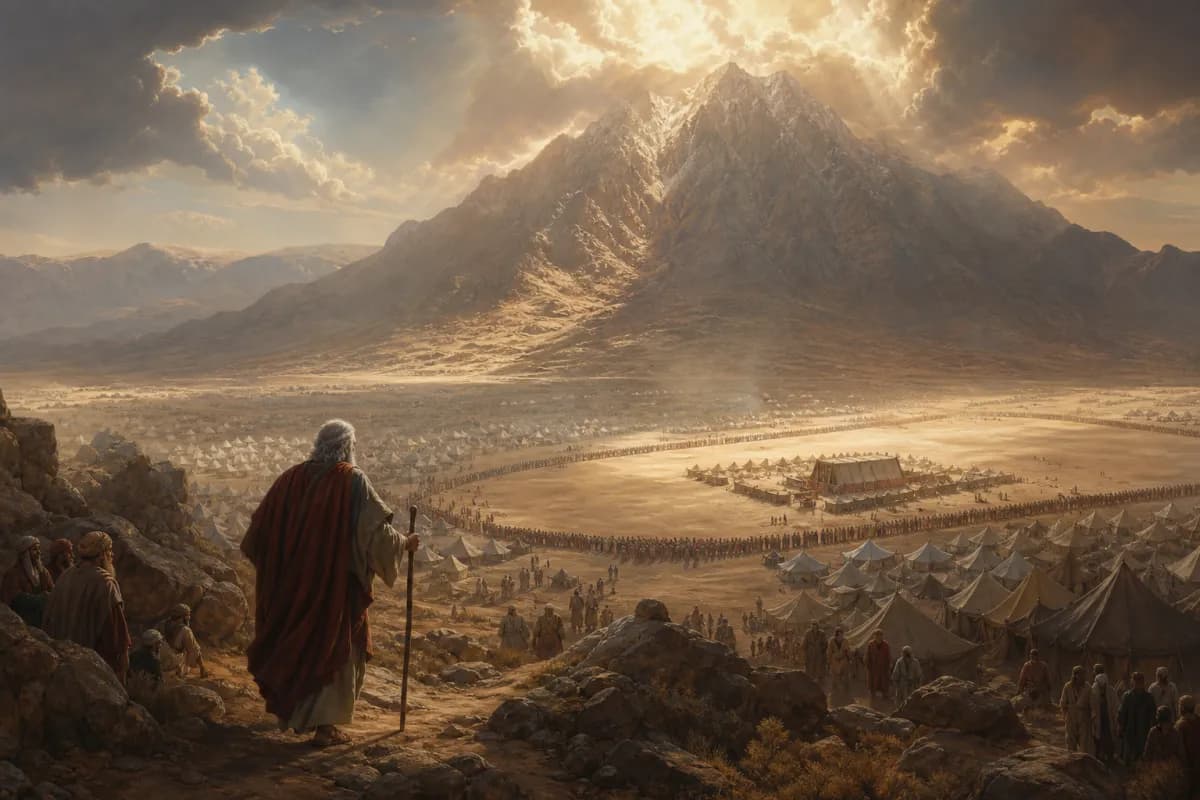
Exodus 19:1–15 brings Israel to Sinai three months after the exodus. Before giving the covenant commands, the Lord reminds them that He carried them from Egypt to Himself and calls them His treasured possession, a kingdom of priests, and a holy nation. Jesus fulfills Israel’s priestly calling by bringing sinners to God and sending a redeemed people to bear His name among the nations.
- In this study
- 15 verses · 5 movements
Exodus 19
19:1In the third month after the children of Israel had gone out of the land of Egypt, on that same day they came into the wilderness of Sinai.
19:2When they had departed from Rephidim, and had come to the wilderness of Sinai, they encamped in the wilderness; and there Israel encamped before the mountain.
19:3Moses went up to God, and the LORD called to him out of the mountain, saying, “This is what you shall tell the house of Jacob, and tell the children of Israel:
19:4‘You have seen what I did to the Egyptians, and how I bore you on eagles’ wings, and brought you to myself.
19:5Now therefore, if you will indeed obey my voice and keep my covenant, then you shall be my own possession from among all peoples; for all the earth is mine;
19:6and you shall be to me a kingdom of priests and a holy nation.’ These are the words which you shall speak to the children of Israel.”
19:7Moses came and called for the elders of the people, and set before them all these words which the LORD commanded him.
19:8All the people answered together, and said, “All that the LORD has spoken we will do.” Moses reported the words of the people to the LORD.
19:9The LORD said to Moses, “Behold, I come to you in a thick cloud, that the people may hear when I speak with you, and may also believe you forever.” Moses told the words of the people to the LORD.
19:10The LORD said to Moses, “Go to the people, and sanctify them today and tomorrow, and let them wash their garments,
19:11and be ready for the third day; for on the third day the LORD will come down in the sight of all the people on Mount Sinai.
19:12You shall set bounds to the people all around, saying, ‘Be careful that you don’t go up onto the mountain, or touch its border. Whoever touches the mountain shall be surely put to death.
19:13No hand shall touch him, but he shall surely be stoned or shot through; whether it is animal or man, he shall not live.’ When the trumpet sounds long, they shall come up to the mountain.”
19:14Moses went down from the mountain to the people, and sanctified the people; and they washed their clothes.
19:15He said to the people, “Be ready by the third day. Don’t have sexual relations with a woman.”
CONTEXTUAL OVERVIEW
Israel arrives at Sinai after the sea crossing, the wilderness provisions, and the conflict with Amalek. The Lord’s first word at the mountain reaches backward: “You have seen” what He did to Egypt and how He carried Israel to Himself. Covenant begins with rescue already accomplished, not with people climbing their way into acceptance.
The Lord then gives Israel a vocation. They are His treasured possession among all peoples, a kingdom of priests, and a holy nation. Election is not private privilege. God sets this rescued people apart to display His character and make His nearness known in a world that belongs to Him.
HISTORICAL AND LITERARY CONTEXT
Sinai is the narrative turning point of Exodus. The God who heard slaves in Egypt now forms them into a covenant people. The chapter prepares for the law by establishing both grace and holiness: Israel belongs to the Lord by His deliverance, yet His presence cannot be approached casually.
The image of an eagle carrying its young is a vivid picture of protective strength, not a promise that Israel will avoid every wilderness danger. The repeated commands to wash garments, prepare for the third day, and keep people from the mountain teach that preparation for God’s self-disclosure involves reverence, not religious excitement alone.
SECTION-BY-SECTION ANALYSIS
- Rescue first · Exodus 19:3The covenant rests on the Lord’s prior act of carrying Israel out of slavery.
- Priestly calling · Exodus 19:5Israel is set apart to represent God’s holiness among peoples who also belong to Him.
- Guarded nearness · Exodus 19:6Boundaries teach that God’s gracious presence remains holy and cannot be seized.
CHRIST IN THIS PASSAGE
Exodus 19 does not directly predict a particular scene in Jesus’ life, but the New Testament deliberately applies its calling to the church. Through His death and resurrection, Jesus brings people to God, creating a people called to proclaim the excellencies of the One who called them from darkness into light.
Jesus is also the faithful Son Israel’s story anticipates. Where Israel’s obedience repeatedly fails, He perfectly obeys the Father and gives His life for the disobedient. His saving mission does not erase holiness; it makes forgiven people able to draw near to God and live as witnesses of His mercy.
REFLECTION
Many Christians hear calling as a demand to prove worth. Sinai begins elsewhere: remember what the Lord has done to bring you to Himself. Obedience becomes grateful allegiance when it grows from rescue rather than fear of earning a place.
Ask how your life makes Jesus known to people who do not yet trust Him. A priestly people carries God’s character into ordinary speech, work, hospitality, repentance, and service. Holiness is not withdrawal from neighbors; it is a truthful, merciful way of belonging to Christ before them.
Original Hebrew Word Study
Exodus 19:5
סְגֻלָּה
segullah · H5459
Usually translated: treasured possession
Segullah refers to a treasured possession. God’s choice of Israel is not a claim that the nations are outside His rule; it gives this rescued people a distinct calling to display His holiness among them.
Follow the Scripture trail
Carried on Eagles’ Wings: A People Called for the Nations in the larger story
The connection: At Sinai, the Lord calls a rescued people to belong to Him and display His holiness among the nations. Jesus brings sinners to the Father and forms them into a priestly people whose life and witness announce His saving mission.
Respond to the passage
Thank Jesus for bringing you to God by grace. Choose one relationship where you can show His holy mercy this week through honest speech, practical care, or a clear invitation to hear the gospel.
- Why does God begin the covenant by recalling the exodus?
- How does being a kingdom of priests shape Israel’s purpose among the nations?
- How does Jesus make holy witness possible without turning it into self-salvation?
Prayer
Father, thank You for carrying Your people to Yourself through Jesus. Make me grateful rather than self-reliant, holy without pride, and ready to bear witness to Your mercy among the people You place before me. Amen.