Passage Study
Thunder at Sinai: The Holy God Draws Near
Exodus 19:16–19:25
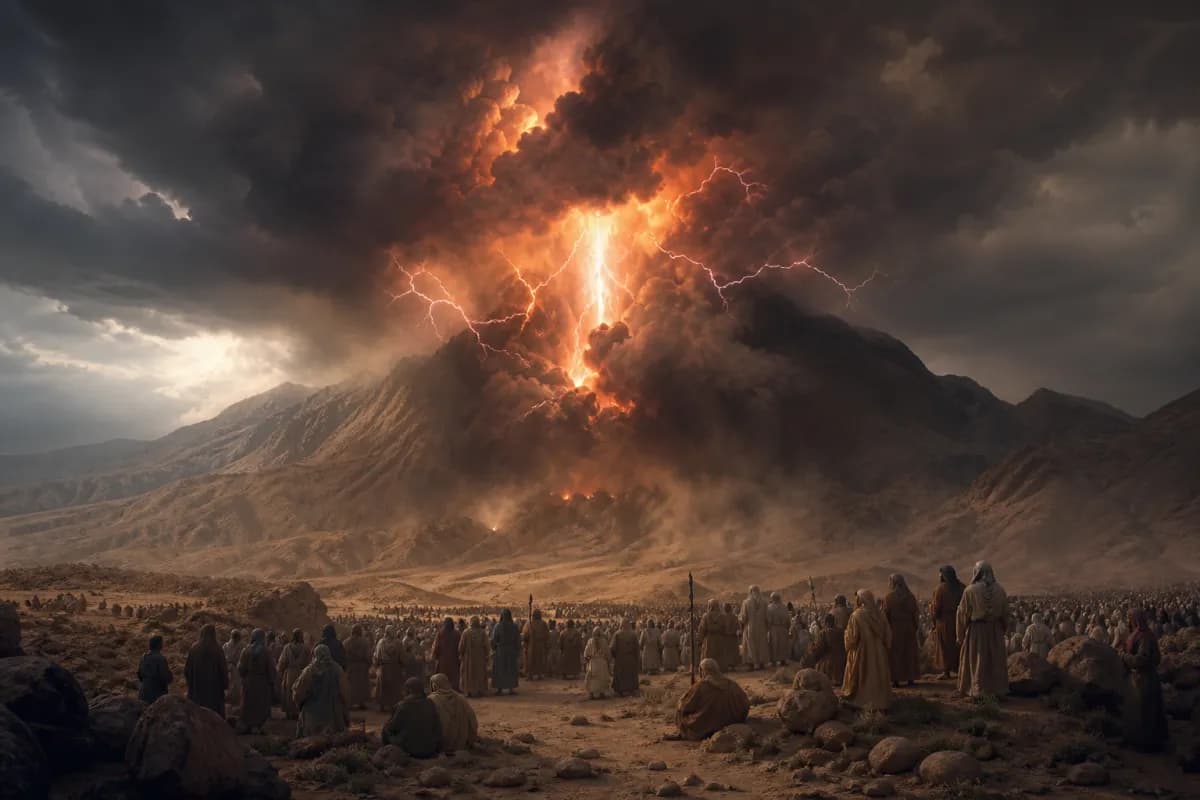
Exodus 19:16–25 describes thunder, fire, trumpet blast, smoke, and trembling as the Lord descends on Sinai. The spectacle reveals that God’s nearness is real and holy, while the repeated boundaries protect Israel from a fatal presumption. Jesus opens access to God by His blood, yet He never makes the Father’s holiness ordinary.
- In this study
- 10 verses · 5 movements
Exodus 19
19:16On the third day, when it was morning, there were thunders and lightnings, and a thick cloud on the mountain, and the sound of an exceedingly loud trumpet; and all the people who were in the camp trembled.
19:17Moses led the people out of the camp to meet God; and they stood at the lower part of the mountain.
19:18All of Mount Sinai smoked, because the LORD descended on it in fire; and its smoke ascended like the smoke of a furnace, and the whole mountain quaked greatly.
19:19When the sound of the trumpet grew louder and louder, Moses spoke, and God answered him by a voice.
19:20The LORD came down on Mount Sinai, to the top of the mountain. The LORD called Moses to the top of the mountain, and Moses went up.
19:21The LORD said to Moses, “Go down, warn the people, lest they break through to the LORD to gaze, and many of them perish.
19:22Let the priests also, who come near to the LORD, sanctify themselves, lest the LORD break out on them.”
19:23Moses said to the LORD, “The people can’t come up to Mount Sinai, for you warned us, saying, ‘Set bounds around the mountain, and sanctify it.’”
19:24The LORD said to him, “Go down! You shall bring Aaron up with you, but don’t let the priests and the people break through to come up to the LORD, lest he break out against them.”
19:25So Moses went down to the people, and told them.
CONTEXTUAL OVERVIEW
The third day promised in the opening of Exodus 19 arrives with sensory force. Israel does not manufacture a religious experience; the Lord descends, and the mountain responds with smoke, fire, and trembling. The scene makes visible what slavery had obscured: Israel’s Deliverer is not a tribal mascot but the holy Lord of creation.
Fear is an appropriate response, but the passage also gives a merciful structure for fear. Moses brings the people out to meet God at the mountain’s foot, and God sets a boundary rather than abandoning them to danger. Holy distance is itself a form of protection.
HISTORICAL AND LITERARY CONTEXT
Ancient peoples often associated storms with divine power. Exodus uses storm imagery without identifying the Lord with nature or leaving His identity vague. The Lord speaks, commands, answers Moses, and binds Himself to a people He has rescued. The signs serve covenant revelation rather than a spectacle of raw force.
The chapter repeats the warning about the mountain because the danger is real. Priests and people alike must not break through to gaze. The text does not demean human beings; it exposes the peril of sinners trying to control or approach God apart from the way He provides.
SECTION-BY-SECTION ANALYSIS
- God descends · Exodus 19:17The holy presence at Sinai is God’s initiative, not Israel’s achievement.
- Moses is summoned · Exodus 19:19Access comes by God’s call and command, not spiritual boldness.
- The boundary protects · Exodus 19:24The prohibition against breaking through guards sinners from treating holiness as manageable.
CHRIST IN THIS PASSAGE
Sinai establishes the problem that the gospel answers: sinners need a mediator if they are to come near the holy God. Jesus is not merely a calmer alternative to Sinai. By His obedient life and atoning death, He bears sin’s judgment and brings His people to the Father with confidence rooted in His sacrifice.
The New Testament’s access language should therefore deepen reverence, not erase it. At Jesus’ death the temple curtain is torn, signaling God-given access; Hebrews still calls believers to worship with awe. Christ’s mission gives welcome to the undeserving precisely because He has dealt truthfully with the holiness and sin Sinai exposes.
REFLECTION
Familiar religious language can make God seem small. Sinai restores weight to worship: God is near, but He is never ours to manage. Let this passage turn casual speech about Him into grateful awe and move worship from performance toward humble attention to His word.
If God’s holiness makes you feel only distant, look to Jesus rather than attempting to make yourself acceptable. He welcomes repentant sinners into the Father’s presence. That welcome also gives courage to speak of Christ to those who assume they must first clean themselves up before coming to God.
Original Hebrew Word Study
Exodus 19:18
יָרַד
yarad · H3381
Usually translated: to come down or descend
Yarad means to come down. The Lord descends upon Sinai, making His nearness real while the boundaries around the mountain teach that holy presence cannot be approached on human terms.
Follow the Scripture trail
Thunder at Sinai: The Holy God Draws Near in the larger story
The connection: Sinai reveals that God’s holy presence cannot be entered by presumption. Jesus, the faithful mediator, bears sin and brings forgiven people to the Father, forming worshipers who know both welcome and reverence.
Respond to the passage
Bring one area where you have treated God casually to Jesus in repentance. Receive His welcome, then practice one concrete act of reverent attention to His word or worship this week.
- Why does Exodus repeat the boundary around Sinai?
- What do the signs at the mountain reveal about the God who speaks?
- How does Jesus provide access without making God’s holiness less serious?
Prayer
Holy Father, You are near and You are not ordinary. Thank You that Jesus has opened the way for sinners to come to You. Give me reverent joy, honest repentance, and courage to invite others to the mercy found in Your Son. Amen.