Passage Study
An Altar Without Display: Worship on God’s Terms
Exodus 20:22–20:26
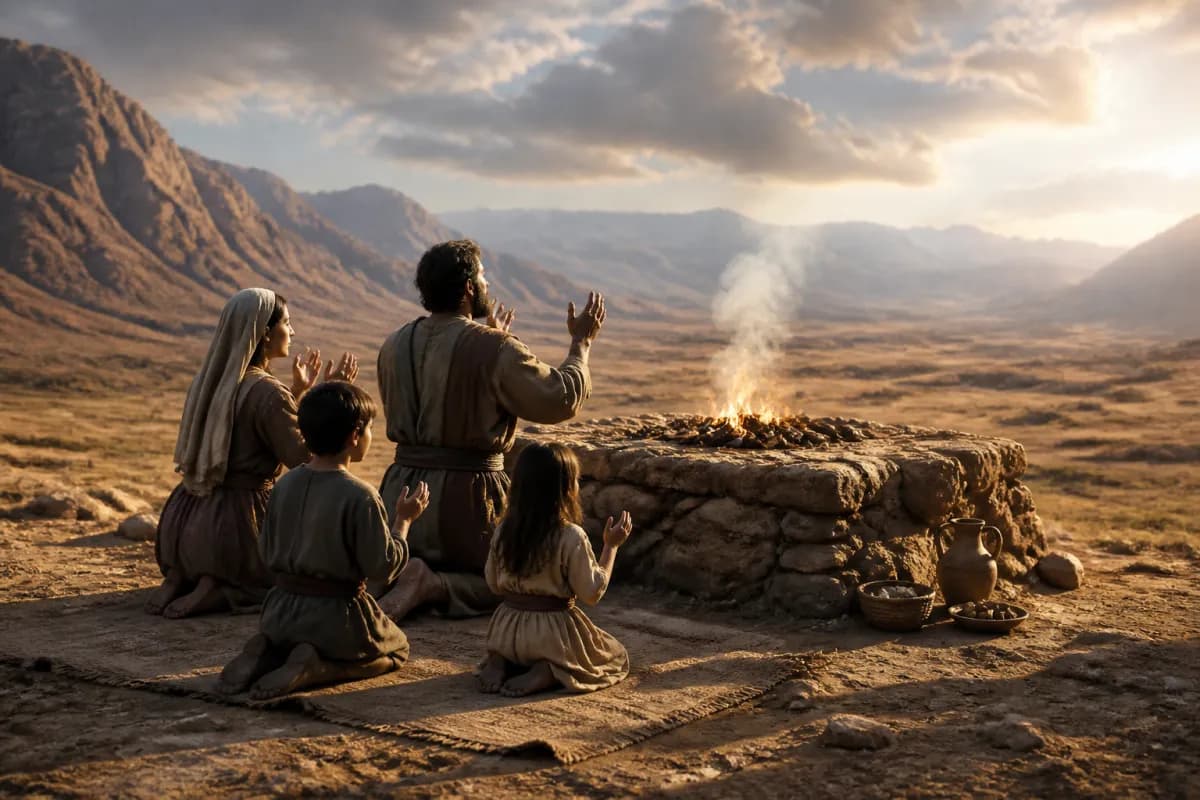
Exodus 20:22–26 follows the Ten Commandments with instructions for simple altars of earth or uncut stone. Israel must not use images, manipulate stones with tools, or turn worship into exposed self-display. The Lord promises to meet and bless where He causes His name to be remembered, preparing the way for Jesus, who gives Himself as God’s appointed sacrifice and brings worshipers to the Father.
- In this study
- 5 verses · 5 movements
Exodus 20
20:22The LORD said to Moses, “This is what you shall tell the children of Israel: ‘You yourselves have seen that I have talked with you from heaven.
20:23You shall most certainly not make gods of silver or gods of gold for yourselves to be alongside me.
20:24You shall make an altar of earth for me, and shall sacrifice on it your burnt offerings and your peace offerings, your sheep and your cattle. In every place where I record my name I will come to you and I will bless you.
20:25If you make me an altar of stone, you shall not build it of cut stones; for if you lift up your tool on it, you have polluted it.
20:26You shall not go up by steps to my altar, that your nakedness may not be exposed to it.’
CONTEXTUAL OVERVIEW
The thunder of Sinai has just silenced Israel, and the Lord now addresses the place of sacrifice. The sequence is important. Israel has heard God from heaven and must not answer by making a visible substitute for Him. Worship is shaped by the God who speaks, not by the human urge to make the divine impressive or controllable.
The altar is strikingly simple: earth, or stones not cut by human tools. Its purpose is to receive burnt offerings and well-being offerings before the Lord. God promises His own presence and blessing where He causes His name to be remembered, turning attention away from human artistry and toward His gracious initiative.
HISTORICAL AND LITERARY CONTEXT
Altars were widespread in the ancient world, often linked to local deities and elaborate sacred sites. Israel’s instructions distinguish its worship from the assumption that a god can be secured through an image, a grand shrine, or ritual display. The Lord of heaven chooses the terms and places of His remembrance.
The prohibition on steps concerns bodily exposure in a culture of robe-like garments. The issue is not embarrassment detached from worship but the protection of modest, ordered service before God. Even an altar’s construction and use are placed under the Lord’s care for holiness.
SECTION-BY-SECTION ANALYSIS
- No manufactured gods · Exodus 20:23Israel may not convert God’s self-revelation into an object it can use or display.
- Simple altar · Exodus 20:24Earth and uncut stone keep sacrifice centered on God’s provision rather than human achievement.
- Guarded service · Exodus 20:26The ban on steps protects modest, God-centered ministry at the place of sacrifice.
CHRIST IN THIS PASSAGE
The altar and sacrifice establish a genuine pattern of God-provided approach, but this passage does not identify an earthly altar as the final goal. Jesus fulfills the sacrificial purpose by offering Himself once for sins. His cross is not a human technique for reaching God; it is the Father’s costly provision for reconciliation.
Jesus also reveals God without being an idol made by human hands. In Him, God has drawn near in the incarnate Son, and He directs worship beyond religious display toward the Father in spirit and truth. His mission gathers people who cannot earn blessing and gives them access through His grace.
REFLECTION
It is possible to make worship about beauty, technology, personality, or emotional effect rather than the God who has spoken. Those things may serve worship, but Exodus asks whether they have become a way of managing attention or proving spiritual importance. Let the simple altar expose every attempt to bring God a performance instead of a yielded heart.
Come to Jesus with empty hands. His sacrifice is sufficient for forgiveness and peace with God. Let that confidence make your worship honest and your witness humble: tell others that the way to God rests on what Christ has done, not on a religious image or achievement they must produce.
Original Hebrew Word Study
Exodus 20:24
מִזְבֵּחַ
mizbeach · H4196
Usually translated: altar
Mizbeach is an altar, the place of sacrifice. Its simplicity guards Israel from turning worship into a display of human craftsmanship; the Lord promises to make His name remembered where He appoints.
Follow the Scripture trail
An Altar Without Display: Worship on God’s Terms in the larger story
The connection: The simple altar teaches that God Himself appoints the way of sacrifice and blessing. Jesus fulfills that provision by giving His life for sinners and bringing them into true worship of the Father without religious self-display.
Respond to the passage
Ask Jesus where you have been tempted to make worship about appearance, control, or achievement. Receive His finished sacrifice, and choose one quiet act of grateful worship or service that points attention to Him.
- Why does Exodus place altar instructions immediately after the Ten Commandments?
- What do uncut stones communicate about the source of access to God?
- How does Jesus fulfill sacrifice while calling worshipers away from display?
Prayer
Father, You alone appoint the way to draw near. Thank You for giving Jesus as the sufficient sacrifice for my sin. Remove my hunger for religious display and teach me to worship You in truth, humility, and gratitude. Amen.