Passage Study
Remembering Slavery: Limits, Release, and Covenant Mercy
Exodus 21:1–21:11
Exodus 21:1–11 begins Israel’s case laws with debt-service, release, household protection, and the rights of a woman sold as a servant. These laws regulate an ancient institution rather than celebrating it, placing limits on exploitation within a people who know Egypt’s slavery firsthand. Jesus fulfills God’s liberating purpose by becoming the servant who gives Himself to ransom people from sin and forms a community marked by justice and costly love.
- In this study
- 11 verses · 5 movements
Exodus 21
21:1“Now these are the ordinances which you shall set before them:
21:2“If you buy a Hebrew servant, he shall serve six years, and in the seventh he shall go out free without paying anything.
21:3If he comes in by himself, he shall go out by himself. If he is married, then his wife shall go out with him.
21:4If his master gives him a wife and she bears him sons or daughters, the wife and her children shall be her master’s, and he shall go out by himself.
21:5But if the servant shall plainly say, ‘I love my master, my wife, and my children. I will not go out free;’
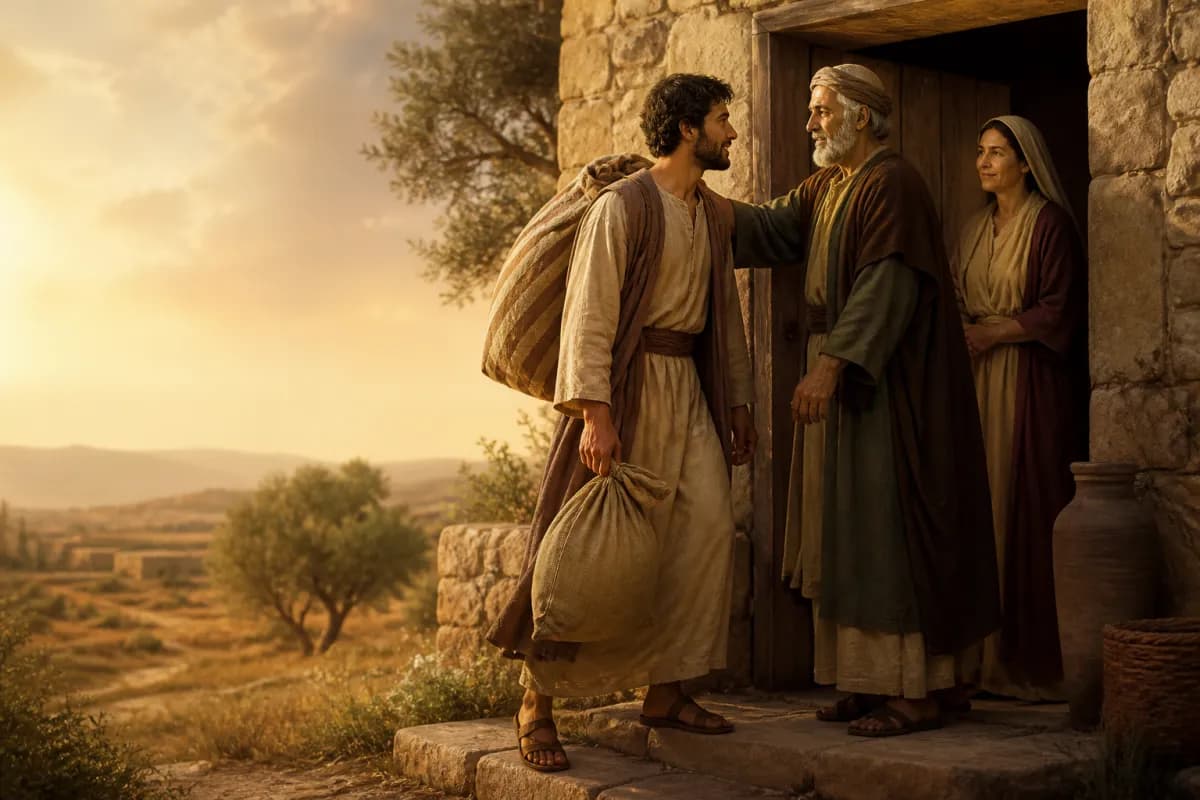
21:6then his master shall bring him to God, and shall bring him to the door or to the doorpost, and his master shall bore his ear through with an awl, and he shall serve him forever.
21:7“If a man sells his daughter to be a female servant, she shall not go out as the male servants do.
21:8If she doesn’t please her master, who has married her to himself, then he shall let her be redeemed. He shall have no right to sell her to a foreign people, since he has dealt deceitfully with her.
21:9If he marries her to his son, he shall deal with her as a daughter.
21:10If he takes another wife to himself, he shall not diminish her food, her clothing, and her marital rights.
21:11If he doesn’t do these three things for her, she may go free without paying any money.
CONTEXTUAL OVERVIEW
After the altar instructions, Exodus turns to concrete judgments for life in Israel. It begins with Hebrew debt-service, an arresting choice for a people recently freed from Pharaoh’s endless labor. The law gives a fixed term and a seventh-year release, declaring that no Israelite household may reproduce Egypt’s permanent domination.
The passage is morally demanding because it includes economic vulnerability, marriage, children, and the special danger faced by a girl sold by her father. It does not offer a modern labor code or erase the hard realities of its ancient setting. It places those realities under God’s concern for release, covenant obligation, and protection from abandonment.
HISTORICAL AND LITERARY CONTEXT
In the ancient Near East, debt could lead a person or family into household service. Exodus limits that practice for Hebrew servants and later Israelite law develops further release and provision requirements. The text should not be used to baptize later race-based chattel slavery, which treated human beings as permanent property and violated the Scripture’s own exodus-shaped concern for freedom and neighbor love.
The terms for a woman servant require close reading. If the master designates her for himself or his son, he must provide marital protection; if he fails to provide food, clothing, and marital rights, she goes free without payment. The law does not make every social danger disappear, but it makes neglect and commodification answerable before God.
SECTION-BY-SECTION ANALYSIS
- Seventh-year release · Exodus 21:2Debt-service has a God-given limit because Israel’s history forbids recreating Pharaoh’s endless bondage.
- A serious household choice · Exodus 21:5The ear-marking records a servant’s chosen lifelong attachment rather than an unregulated seizure of labor.
- Protection for the vulnerable · Exodus 21:10The woman servant’s food, clothing, marital rights, redemption, and freedom are matters of covenant justice.
CHRIST IN THIS PASSAGE
This case law does not offer a direct prediction of the cross, but its exodus logic prepares a crucial gospel theme: God opposes bondage and provides release. Jesus speaks of slavery to sin and gives His life as a ransom. He is the free Son who takes the form of a servant, not to sanctify human exploitation, but to rescue those enslaved by powers they cannot break alone.
His saving mission also reshapes the church’s use of power. In Christ there is no room for treating persons as disposable tools. Those redeemed by the Servant King are called to honor every person as one made by God and to seek justice, provision, freedom, and faithful responsibility in the relationships entrusted to them.
REFLECTION
This passage asks people with authority to examine how they use it. Employers, parents, pastors, and leaders can hide exploitation behind efficiency, contracts, or religious language. Exodus requires us to notice the person whose work, economic vulnerability, or dependence makes them easy to overlook.
Bring your own bondage to Jesus honestly—whether debt, fear, addiction, resentment, or compulsive self-protection. His freedom is not permission to ignore responsibilities; it is power to live as a servant of love. Look for one practical way to protect someone with less power, honor a commitment, or pursue fair treatment this week.
Original Hebrew Word Study
Exodus 21:2
עִבְרִי
ivri · H5680
Usually translated: Hebrew
Ivri identifies a Hebrew man within Israel’s covenant community. These laws address debt-service within a people who know slavery firsthand, placing limits and release where Egypt had imposed endless bondage.
Follow the Scripture trail
Remembering Slavery: Limits, Release, and Covenant Mercy in the larger story
The connection: Israel’s laws of release remember the Lord who broke Pharaoh’s bondage and refuse to make household power absolute. Jesus, the Servant who ransoms sinners from slavery to sin, forms a people who use freedom to love and protect their neighbors.
Respond to the passage
Ask Jesus to expose any place where you benefit from another person’s vulnerability or avoid a responsibility you owe. Take one concrete step toward fair treatment, faithful provision, or advocacy for someone with less power.
- Why is debt-service the first social case law after Sinai’s altar instructions?
- What limits and protections does the passage place on household power?
- How does Jesus’ servant leadership correct both exploitation and self-serving uses of freedom?
Prayer
Lord Jesus, You became a servant and gave Yourself to free people enslaved by sin. Forgive my misuse of power and my indifference to vulnerable neighbors. Teach me to honor commitments, seek justice, and serve others with the freedom You give. Amen.