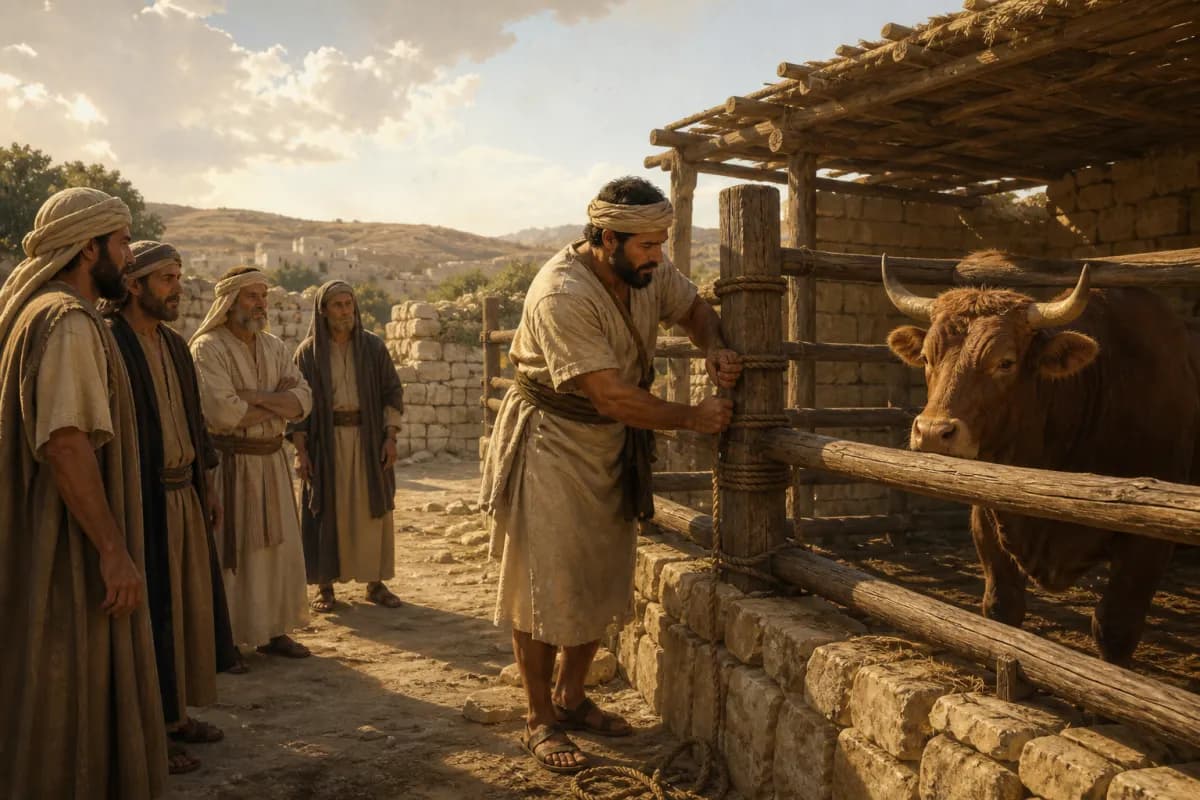
Passage Study
The Goring Ox: Responsibility for Foreseeable Harm
Exodus 21:28–21:36
Exodus 21:28–36 addresses an ox that kills or injures, especially when its owner knows the animal is dangerous. The judgments distinguish an unforeseeable tragedy from culpable neglect and require payment when another household bears the loss. Jesus calls His people to love neighbors responsibly, not merely to regret harm after it occurs.
- In this study
- 9 verses · 5 movements
Exodus 21
21:28“If a bull gores a man or a woman to death, the bull shall surely be stoned, and its meat shall not be eaten; but the owner of the bull shall not be held responsible.
21:29But if the bull had a habit of goring in the past, and this has been testified to its owner, and he has not kept it in, but it has killed a man or a woman, the bull shall be stoned, and its owner shall also be put to death.
21:30If a ransom is imposed on him, then he shall give for the redemption of his life whatever is imposed.
21:31Whether it has gored a son or has gored a daughter, according to this judgment it shall be done to him.
21:32If the bull gores a male servant or a female servant, thirty shekels of silver shall be given to their master, and the ox shall be stoned.
21:33“If a man opens a pit, or if a man digs a pit and doesn’t cover it, and a bull or a donkey falls into it,
21:34the owner of the pit shall make it good. He shall give money to its owner, and the dead animal shall be his.
21:35“If one man’s bull injures another’s, so that it dies, then they shall sell the live bull, and divide its price; and they shall also divide the dead animal.
21:36Or if it is known that the bull was in the habit of goring in the past, and its owner has not kept it in, he shall surely pay bull for bull, and the dead animal shall be his own.
CONTEXTUAL OVERVIEW
After judgments about direct assault, Exodus turns to an animal whose violence causes death or loss. The shift is deliberate: love of neighbor includes responsibility for dangers that stand under our care. An owner cannot hide behind the fact that an ox, rather than his own hand, did the damage.
The passage places human life first. When an ox gores a man or woman to death, the animal is put down and its meat may not be eaten. The owner’s liability changes sharply if the ox had a known pattern of goring and he failed to restrain it.
HISTORICAL AND LITERARY CONTEXT
Oxen were essential working animals in an agricultural world, valuable for plowing and transport but capable of grave injury. The legal cases recognize both their economic value and their danger. The law does not imagine a risk-free society; it requires people to respond differently when risk becomes known.
The case laws use examples rather than exhaustive regulations. Their moral logic reaches beyond livestock: knowledge creates responsibility. A person who can reasonably prevent injury must not treat another household’s loss as an unfortunate externality.
SECTION-BY-SECTION ANALYSIS
- Known danger · Exodus 21:36Prior warning changes responsibility because an owner has an opportunity to restrain a harmful risk.
- Human life first · Exodus 21:30The death of a person receives greater gravity than the economic loss of livestock.
- Repairing loss · Exodus 21:34Payment and replacement make negligence costly to the party who could have acted.
CHRIST IN THIS PASSAGE
The goring ox is not a hidden symbol of Christ. Its direct contribution is moral: God commands His people to take responsibility for dangers entrusted to them. Jesus’ love of neighbor is active and costly, shown supremely when He gives Himself to rescue people endangered by sin and death.
Jesus also warns about causing another person to stumble and calls His followers to care for the vulnerable. His saving mission renews ordinary faithfulness: homes, businesses, churches, and public spaces become places where disciples anticipate harm, protect others, and value neighbors above convenience or profit.
REFLECTION
Most foreseeable harm does not come from an ox. It comes from an ignored safety issue, an unmanaged addiction, a pattern of rage, a badly designed process, or information withheld because a repair would cost money. Ask what warning signs you have seen and whether you have acted with the urgency love requires.
Following Jesus includes taking practical responsibility before a crisis. Make one concrete repair: secure a hazard, report a concern, set a boundary, seek treatment, or change a process that puts another person at risk. Such ordinary vigilance can become a quiet witness to the Lord who values every neighbor.
Original Hebrew Word Study
Exodus 21:28
נָגַח
nagach · H5055
Usually translated: to gore
Nagach means to gore. The law takes responsibility seriously when an animal causes harm, especially when an owner already knows the danger; foreseeable injury cannot be dismissed as bad luck.
Follow the Scripture trail
The Goring Ox: Responsibility for Foreseeable Harm in the larger story
The connection: The ox judgments teach that known danger carries a duty of care toward neighbors. Jesus gives Himself to rescue people from sin’s ruin and sends His followers to practice watchful, costly love in the ordinary risks they can address.
Respond to the passage
Ask Jesus to show you one preventable risk that falls under your responsibility. Take a specific protective step this week and explain to anyone affected why their well-being matters to you.
- Why does prior knowledge change the owner’s liability?
- How do the pit and ox cases extend the command to love a neighbor?
- Where might Christians need to practice responsibility before harm occurs?
Prayer
Lord Jesus, make me alert to the ways my neglect can wound a neighbor. Give me humility to receive warnings, courage to act early, and love that values people above convenience, reputation, or profit. Amen.