Passage Study
Rest, Harvest, and Remembering the Redeemer
Exodus 23:10–23:19
Exodus 23:10–19 orders Israel’s fields, weekly labor, and annual feasts around the Lord who brought them from Egypt. Sabbath gives rest to land, workers, animals, and resident aliens; the three festivals turn harvest and history into worship. Jesus brings the exodus pattern to its goal as the Passover sacrifice, the giver of true rest, and the risen firstfruits of God’s new creation.
- In this study
- 10 verses · 5 movements
Exodus 23
23:10“For six years you shall sow your land, and shall gather in its increase,
23:11but the seventh year you shall let it rest and lie fallow, that the poor of your people may eat; and what they leave the animal of the field shall eat. In the same way, you shall deal with your vineyard and with your olive grove.
23:12“Six days you shall do your work, and on the seventh day you shall rest, that your ox and your donkey may have rest, and the son of your servant, and the alien may be refreshed.
23:13“Be careful to do all things that I have said to you; and don’t invoke the name of other gods or even let them be heard out of your mouth.
23:14“You shall observe a feast to me three times a year.
23:15You shall observe the feast of unleavened bread. Seven days you shall eat unleavened bread, as I commanded you, at the time appointed in the month Abib (for in it you came out of Egypt), and no one shall appear before me empty.
23:16And the feast of harvest, the first fruits of your labors, which you sow in the field; and the feast of ingathering, at the end of the year, when you gather in your labors out of the field.
23:17Three times in the year all your males shall appear before the Lord GOD.
23:18“You shall not offer the blood of my sacrifice with leavened bread. The fat of my feast shall not remain all night until the morning.
23:19You shall bring the first of the first fruits of your ground into the house of the LORD your God. “You shall not boil a young goat in its mother’s milk.
CONTEXTUAL OVERVIEW
After laws about truthful justice and care for the vulnerable, Exodus turns to Israel’s calendar and fields. Time, harvest, worship, and neighbor care belong together. The God who delivered Israel from forced labor will not permit an economy in which land, servants, animals, and poor households are squeezed without rest.
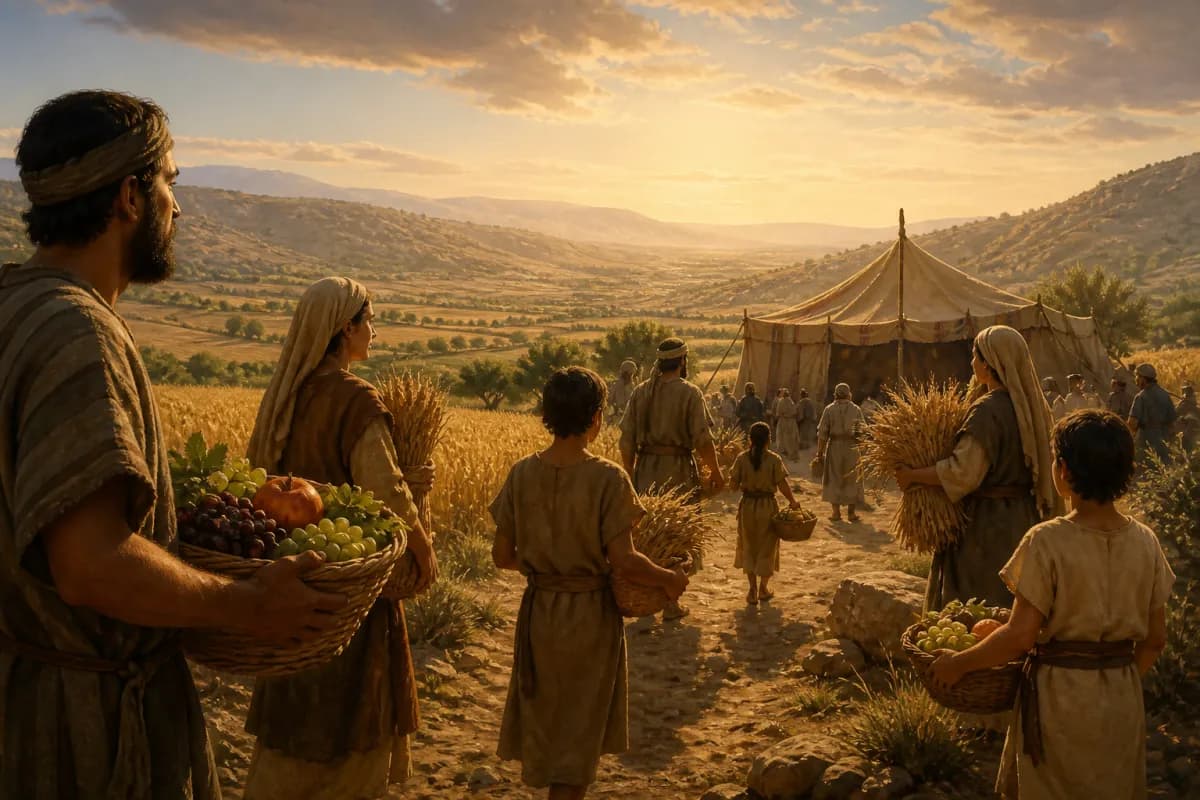
The three annual festivals give Israel a shared memory. Unleavened bread looks back to the hurried departure from Egypt; the harvest feasts acknowledge that every crop is received from God. Israel does not simply possess land and produce. It lives before the Redeemer, whose gifts are meant to become worship and generosity.
HISTORICAL AND LITERARY CONTEXT
Israel is still at Sinai when these instructions are given, before it possesses fields in Canaan. That future orientation matters: the promised land is never presented as raw material for endless gain. In the seventh year, what grows on its own is available to the poor and to animals, training a settled people to remember dependence and shared provision.
The festivals gather the males of Israel before the Lord, but their benefits reach the whole community through food, rest, and shared remembrance. The final command about not boiling a young goat in its mother’s milk is brief and its precise ancient setting is debated. Its clear function here is to mark Israel’s worship and food practices as distinct from surrounding patterns rather than casually absorbed from them.
SECTION-BY-SECTION ANALYSIS
- Rest shared widely · Exodus 23:11Sabbath interrupts exploitation by extending relief beyond the landowner to workers, resident aliens, animals, and the poor.
- Memory through feasting · Exodus 23:19Israel celebrates the exodus and harvest so prosperity does not erase the God who rescued and provided.
- The first and best · Exodus 23:16Firstfruits confess that all increase is God’s gift before it becomes Israel’s resource.
CHRIST IN THIS PASSAGE
The Passover connection is explicit in the New Testament: Christ is called our Passover lamb, and His death accomplishes the rescue to which Israel’s feast pointed. The feast of Unleavened Bread therefore does more than preserve national history; it prepares readers to see salvation as God’s costly deliverance from bondage to sin and death.
The Sabbath and harvest images also find their fulfillment in Jesus without making every regulation a coded prediction. He invites the weary to come to Him for rest, and His resurrection is described as firstfruits of those who have died. His saving mission creates a people who receive time, work, possessions, and hope as gifts ordered toward God’s coming renewal.
REFLECTION
A hurried life can make rest feel irresponsible and success feel self-made. Exodus challenges both instincts. Ask whether your use of time leaves room for worship, restoration, and the people whose labor supports your comfort. Sabbath is not an achievement badge; it is a practiced confession that God, not anxiety, keeps the world alive.
Make remembrance concrete. Give thanks for a specific provision, share from what you have received, and let the death and resurrection of Jesus reshape how you measure a fruitful life. The church bears witness to His mission when its work, rest, generosity, and celebrations point beyond acquisition to the Redeemer.
Original Hebrew Word Study
Exodus 23:12
שַׁבָּת
shabbat · H7676
Usually translated: Sabbath; cessation or rest
Shabbat comes from ceasing. The weekly rest reaches servants, resident aliens, and animals, showing that worship of the Creator reshapes a community’s use of power and time.
Follow the Scripture trail
Rest, Harvest, and Remembering the Redeemer in the larger story
The connection: Israel’s Sabbaths and festivals train a redeemed people to remember the exodus, receive provision with gratitude, and share rest with those under their care. Jesus fulfills the Passover pattern, gives true rest, and rises as firstfruits, sending His people into the world with a life ordered by His saving grace.
Respond to the passage
Choose one concrete practice of remembrance this week: rest from a form of anxious labor, give from your first and best rather than leftovers, or share a meal that turns gratitude for God’s provision toward Jesus.
- Why does the Sabbath command include servants, resident aliens, animals, and the poor?
- How do the annual festivals protect Israel from forgetting the exodus?
- How do Christ’s Passover death and firstfruits resurrection shape Christian work and rest?
Prayer
Lord Jesus, You are our Passover sacrifice and the giver of true rest. Free me from anxious striving and forgetful prosperity. Teach me to receive Your gifts gratefully, share them generously, and live as a witness to Your coming renewal. Amen.