Passage Study
Priestly Garments: Holy Service for a People in Need
Exodus 28:1–28:5
Exodus 28:1–5 sets Aaron and his sons apart to serve as priests and commands holy garments made for glory and beauty. The clothing marks a God-appointed office of representing Israel before the holy Lord; it does not celebrate private status. Jesus is the final high priest whose holy life and self-giving sacrifice bring His people to God, and He sends them to serve as a priestly witness among the nations.
- In this study
- 5 verses · 5 movements
Exodus 28
28:1“Bring Aaron your brother, and his sons with him, near to you from among the children of Israel, that he may minister to me in the priest’s office: Aaron, with Nadab, Abihu, Eleazar, and Ithamar, Aaron’s sons.
28:2You shall make holy garments for Aaron your brother, for glory and for beauty.
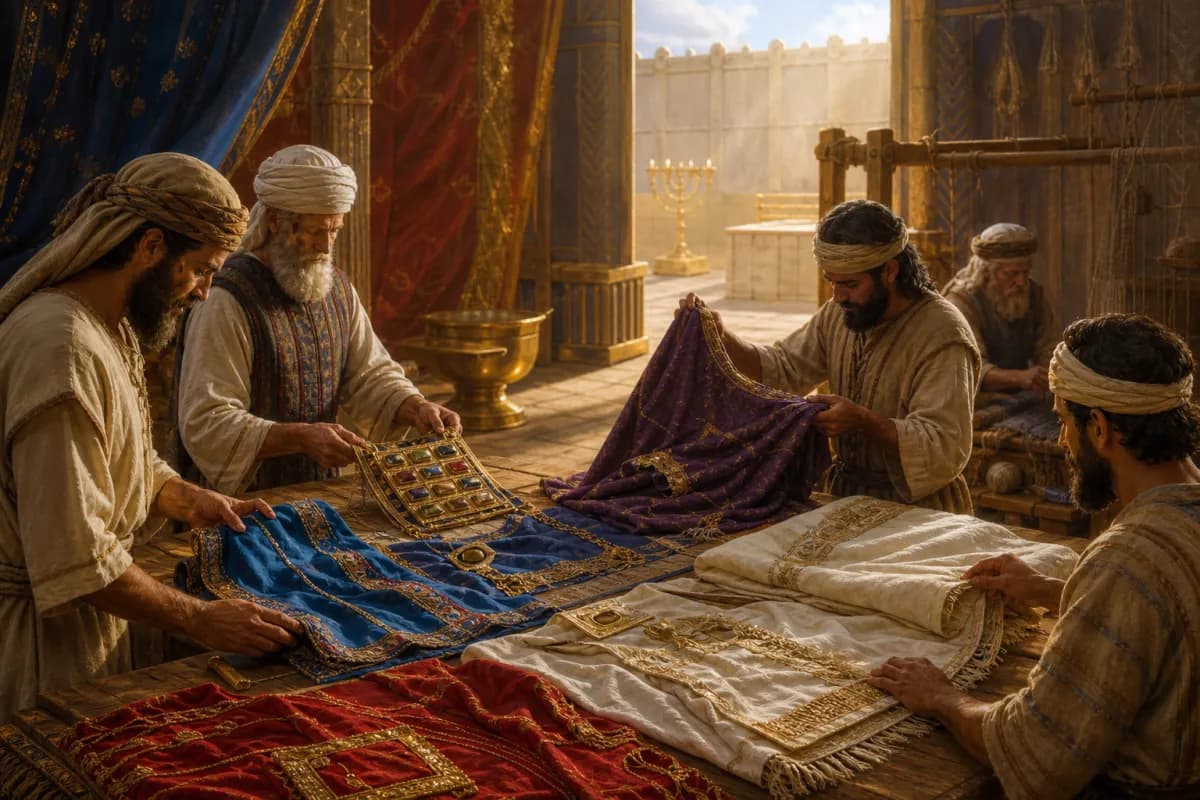
28:3You shall speak to all who are wise-hearted, whom I have filled with the spirit of wisdom, that they make Aaron’s garments to sanctify him, that he may minister to me in the priest’s office.
28:4These are the garments which they shall make: a breastplate, an ephod, a robe, a fitted tunic, a turban, and a sash. They shall make holy garments for Aaron your brother and his sons, that he may minister to me in the priest’s office.
28:5They shall use the gold, and the blue, and the purple, and the scarlet, and the fine linen.
CONTEXTUAL OVERVIEW
The tabernacle requires more than furniture and boundaries; it requires people whom God appoints to serve in it. Exodus names Aaron, Nadab, Abihu, Eleazar, and Ithamar, placing priesthood within a real family and within the larger people God has redeemed from Egypt.
The garments are called holy and are made “for glory and for beauty.” Their splendor does not make priests self-important. It makes visible the weight of representing a people before a holy God. Israel needs mediation because God is near and because sin makes approach a matter of mercy, not entitlement.
HISTORICAL AND LITERARY CONTEXT
Priests in Israel are not self-appointed religious specialists. The Lord chooses Aaron’s household, and the following chapters explain their consecration and duties. This divine appointment matters because the golden calf narrative will show how quickly Israel can invent worship that looks religious while rejecting God’s word.
The skilled workers are described as filled with a spirit of wisdom for this task. The text honors craftsmanship as service to God. Fine materials and careful design are not opposed to holiness when they are used according to God’s instruction and for the good of the people rather than for human self-exaltation.
SECTION-BY-SECTION ANALYSIS
- God brings priests near · Exodus 28:1Priesthood begins in divine appointment, not personal religious ambition.
- Glory and beauty · Exodus 28:2The garments make the dignity and weight of holy service visible.
- Skilled artisans · Exodus 28:3God uses wisdom and craftsmanship to furnish worship according to His word.
CHRIST IN THIS PASSAGE
Aaron’s garments do not turn every fabric or color into a direct prediction of Jesus. They do establish a priestly office that anticipates a greater mediator. Hebrews presents Jesus as the holy high priest who does not need sacrifice for His own sin and who brings His people to God through His once-for-all offering.
Jesus fulfills the priestly purpose without reproducing Aaron’s wardrobe. He represents His people perfectly, intercedes for them, and gives His own life for their cleansing. United to Him, believers become a priestly people whose mission is to proclaim the mercy that brought them from darkness into light.
REFLECTION
Spiritual leadership becomes dangerous when it turns into personal display. Exodus gives a better vision: gifts, roles, and beauty exist to serve the holiness of God and the good of people entrusted to our care. Ask whether your influence is helping others draw near to God or quietly gathering attention to yourself.
The named artisans also matter. God can use work that feels behind the scenes—craft, administration, hospitality, preparation, care—to serve His people. Offer your particular ability to Jesus as service, and ask Him to make it part of a witness that helps others see His mercy.
Original Hebrew Word Study
Exodus 28:2
כָּבוֹד
kavod · H3519
Usually translated: glory, weight, or honor
Kavod is glory or honor. Aaron’s garments are made “for glory and for beauty,” not to elevate the priest personally but to mark the weight and dignity of representing the people before God.
Follow the Scripture trail
Priestly Garments: Holy Service for a People in Need in the larger story
The connection: Aaron’s garments mark God-appointed service for a people who need a mediator. Jesus fulfills that need as the sinless high priest, bringing His people to the Father and sending them as a priestly witness to His saving mercy.
Respond to the passage
Offer one ability, role, or area of influence to Jesus again as service for others rather than self-display. Look for one person who needs encouragement to use a quiet gift in the life and mission of the church.
- Why must priestly service begin with God bringing Aaron and his sons near?
- How can glory and beauty serve holiness rather than personal status?
- How does Jesus fulfill the priestly office without requiring Christians to recreate Israel’s garments?
Prayer
Lord Jesus, my holy and faithful high priest, thank You for bringing me to the Father. Purify my motives, use my gifts for the good of Your people, and make my life a witness to the mercy You have shown. Amen.