Passage Study
The Bronze Basin: Cleansing for Those Who Serve Near God
Exodus 30:17–30:21
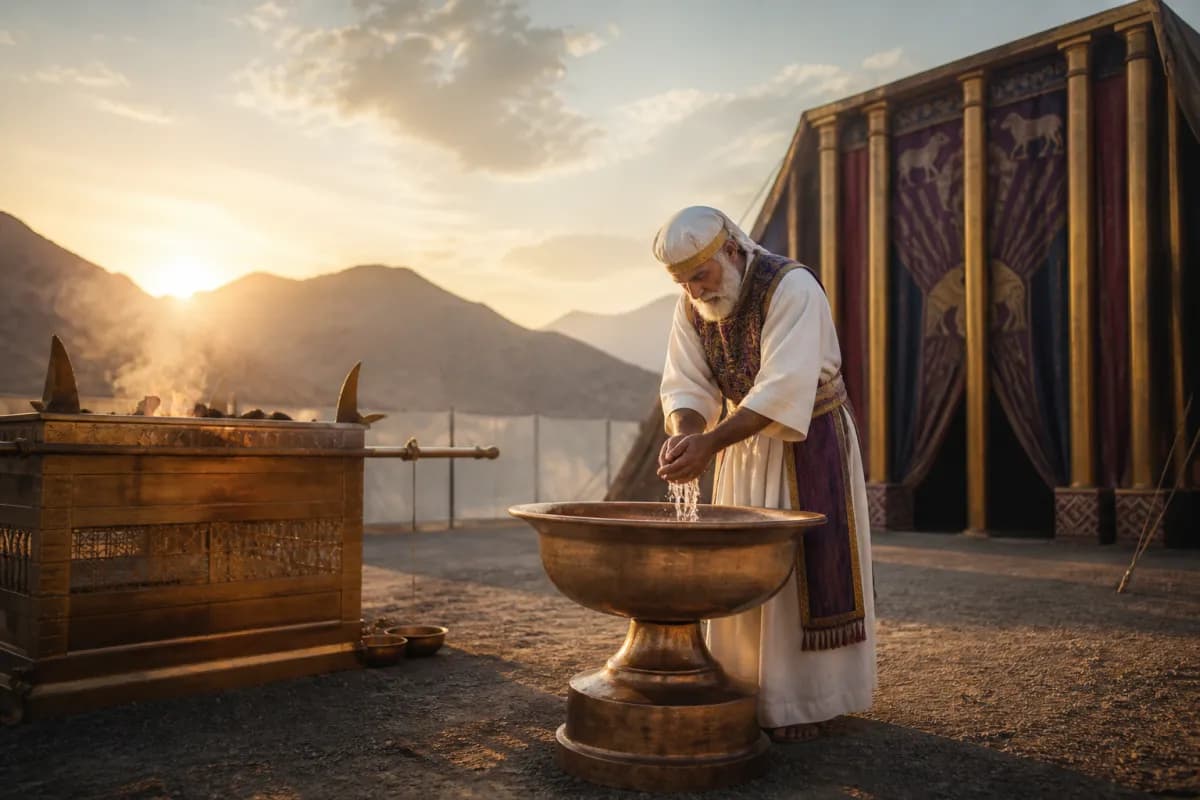
Exodus 30:17–21 places a bronze basin between the tent of meeting and the altar so Aaron and his sons wash their hands and feet before entering or offering sacrifice. The repeated washing teaches that holy service cannot be casual. Jesus provides the decisive cleansing from sin and continues to form a people who draw near to God with humble, obedient lives.
- In this study
- 5 verses · 5 movements
Exodus 30
30:17The LORD spoke to Moses, saying,
30:18“You shall also make a basin of bronze, and its base of bronze, in which to wash. You shall put it between the Tent of Meeting and the altar, and you shall put water in it.
30:19Aaron and his sons shall wash their hands and their feet in it.
30:20When they go into the Tent of Meeting, they shall wash with water, that they don’t die; or when they come near to the altar to minister, to burn an offering made by fire to the LORD.
30:21So they shall wash their hands and their feet, that they not die. This shall be a statute forever to them, even to him and to his descendants throughout their generations.”
CONTEXTUAL OVERVIEW
The basin stands in the path between the altar and the tent of meeting. Sacrifice has addressed sin at the altar, yet priests still wash before they enter the tent or minister at the altar. The location makes ordinary bodily movement part of Israel’s lesson about holy approach.
The command concerns Aaron and his sons, not a general bathing rite for the whole camp. Priests repeatedly serve near the Lord’s dwelling, so their hands and feet must be washed. The passage refuses the idea that familiarity with sacred work makes reverence less necessary.
HISTORICAL AND LITERARY CONTEXT
Bronze recurs in the courtyard’s altar and fittings, durable materials for the sphere where sacrifice and priestly service occur. Exodus gives no measurements for this basin and no detailed explanation of its design. The emphasis falls instead on its placement and required use.
The warning “so that they may not die” belongs to the tabernacle’s larger teaching on holiness. It is not a threat that priests must earn God’s love through hygiene. It shows that the holy Lord sets the terms of ministry and provides the cleansing by which His servants may live before Him.
SECTION-BY-SECTION ANALYSIS
- Between altar and tent · Exodus 30:18The basin sits on the path from sacrificial provision to ministry in God’s dwelling.
- Hands and feet · Exodus 30:19The priest’s service and movement are both brought under God’s holy claim.
- A perpetual statute · Exodus 30:21Repeated service requires repeated reverence rather than spiritual complacency.
CHRIST IN THIS PASSAGE
The basin’s water does not directly predict baptism or give a complete account of forgiveness. Its clear canonical contribution is the need for cleansing among people who serve before a holy God. Jesus gives the deeper cleansing the rites anticipated: His blood deals with sin, and His word cleanses His people for fellowship and service.
In John 13, Jesus washes His disciples’ feet and tells Peter that those who have been bathed still need their feet washed. The scene does not recreate Exodus’ priestly basin, but it echoes the need for ongoing humble cleansing in the life of people who belong to Him. Christ’s mission sends cleansed servants to love one another and carry His grace outward.
REFLECTION
Religious activity can become a hiding place from repentance. A person can sing, teach, organize, or give while avoiding the sin that has dirtied hands and distorted a path. Before serving this week, ask Jesus to search you, confess plainly, and receive His mercy without pretending that busyness is holiness.
The basin also commends lowly care. Jesus the Lord washes feet. Look for one practical act that makes another believer’s path easier—a quiet apology, a meal, a ride, a burden shared—and let that service testify that His cleansing produces humble love rather than spiritual status.
Original Hebrew Word Study
Exodus 30:18
רָחַץ
rachats · H7364
Usually translated: to wash
Rachats means to wash. The priests wash hands and feet before serving so that the routine of ministry continually acknowledges the purity required in drawing near to a holy God.
Follow the Scripture trail
The Bronze Basin: Cleansing for Those Who Serve Near God in the larger story
The connection: The basin gives priests God’s appointed cleansing as they move between sacrifice and holy service. Jesus fulfills the deeper need by cleansing sinners through His saving death and shaping a humble people who serve in the purity and love He gives.
Respond to the passage
Before your next act of ministry, pause to confess one concrete sin to Jesus and receive His cleansing. Then choose one lowly act of service that reflects the Lord who washed His disciples’ feet.
- Why is the basin located between the altar and the tent of meeting?
- What does the repeated washing teach priests who serve near God every day?
- How does Jesus’ foot washing deepen rather than flatten the call to cleansing?
Prayer
Lord Jesus, cleanse my heart, my work, and my path. Keep me from treating Your presence casually, and teach me to serve others with the humble love You showed when You washed Your disciples’ feet. Amen.