Passage Study
Depart Without My Presence? The Gift Israel Cannot Lose
Exodus 33:1–33:6
Exodus 33:1–6 records the Lord telling Israel to leave Sinai for the promised land while warning that He will not go in its midst after the golden calf. Land, protection, and an angel cannot compensate for the loss of God Himself. Israel mourns, and Jesus brings the saving presence of God to sinners, forming a people who live and witness by His presence.
- In this study
- 6 verses · 5 movements
Exodus 33
33:1The LORD spoke to Moses, “Depart, go up from here, you and the people that you have brought up out of the land of Egypt, to the land of which I swore to Abraham, to Isaac, and to Jacob, saying, ‘I will give it to your offspring.’
33:2I will send an angel before you; and I will drive out the Canaanite, the Amorite, and the Hittite, and the Perizzite, the Hivite, and the Jebusite.
33:3Go to a land flowing with milk and honey; but I will not go up among you, for you are a stiff-necked people, lest I consume you on the way.”
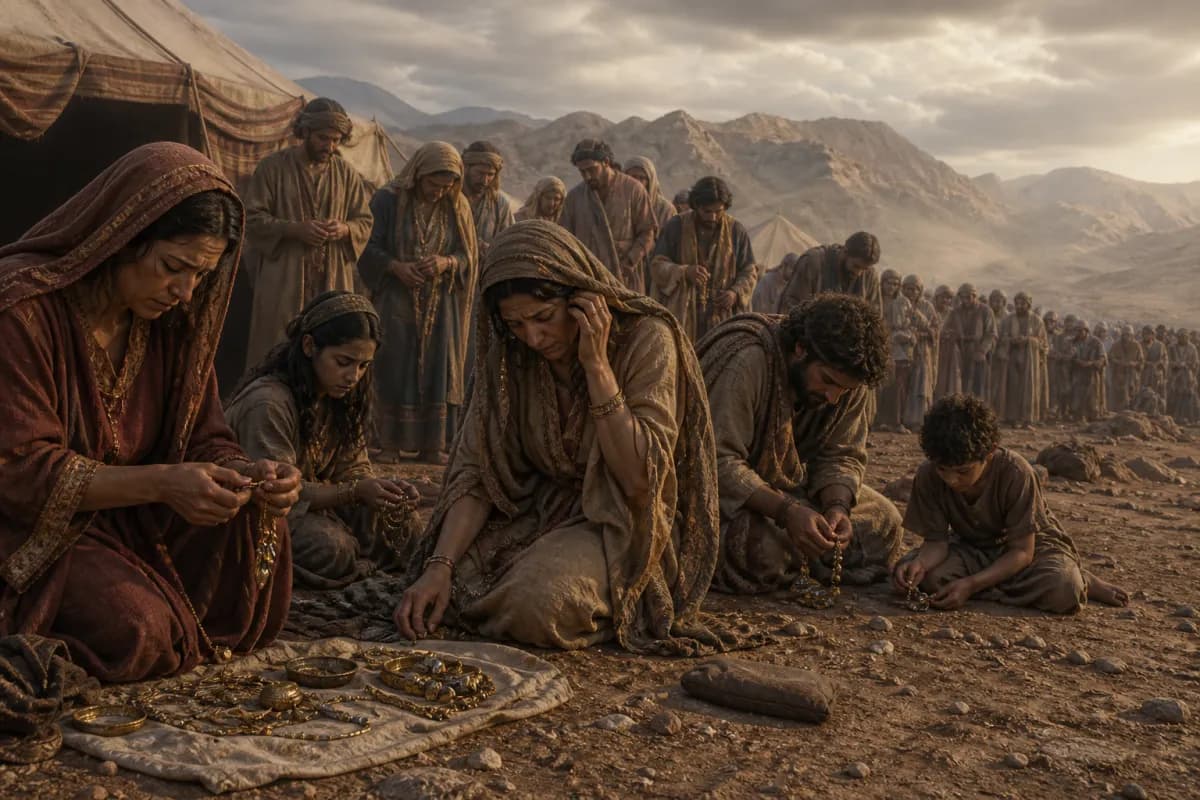
33:4When the people heard this evil news, they mourned; and no one put on his jewelry.
33:5The LORD had said to Moses, “Tell the children of Israel, ‘You are a stiff-necked people. If I were to go up among you for one moment, I would consume you. Therefore now take off your jewelry from you, that I may know what to do to you.’”
33:6The children of Israel stripped themselves of their jewelry from Mount Horeb onward.
CONTEXTUAL OVERVIEW
After the calf rebellion, Israel hears a disturbing mixture of promise and distance. The Lord still speaks of the land sworn to the patriarchs and still promises to drive out enemies. Yet He says He will not go up in the people’s midst, because their stubbornness would make His holy presence dangerous to them.
The passage asks what Israel actually wants from redemption. A fertile land, security, and a future can become substitutes for God if they are desired apart from His fellowship. Israel’s mourning shows that the threat has reached deeper than disappointment over lost benefits: the people recognize that separation from the Lord is the true disaster.
HISTORICAL AND LITERARY CONTEXT
The land promise reaches back to Genesis, and the list of Canaanite peoples recalls the concrete destination ahead. Israel is not being offered an abstract religious experience. The Lord’s covenant purpose includes a real people, a real journey, and a real land, but the gifts of covenant cannot be detached from the Giver of covenant.
The angel in verse 2 is described as God’s messenger. Exodus has used angel language before in connection with God’s leading, but this paragraph emphasizes the contrast between mediated protection and the Lord dwelling in Israel’s midst. The next scenes will show Moses pressing precisely on that distinction.
SECTION-BY-SECTION ANALYSIS
- Promise retained · Exodus 33:5God’s commitment to the patriarchal promise remains active even in Israel’s covenant failure.
- Presence threatened · Exodus 33:1The passage exposes the poverty of receiving God’s gifts while losing fellowship with God Himself.
- Mourning expressed · Exodus 33:3Israel’s removal of ornaments marks sorrow and submission after idolatry, not a technique for earning grace.
CHRIST IN THIS PASSAGE
Exodus does not say that the angel is Jesus, and the passage should not force that identification. Its central burden is God’s presence with a sinful people. In Jesus, the Word becomes flesh and dwells among us; He bears the judgment sin deserves so that those who trust Him can be reconciled to God rather than merely receive religious benefits.
The risen Christ promises to be with His disciples as they go to the nations. His mission therefore gives the church more than a task or a destination. It gives the presence of the Savior Himself, making His people a living witness that God has come near to restore fellowship with those who had wandered from Him.
REFLECTION
It is possible to ask God for health, provision, progress, safety, or ministry success while scarcely desiring God. This passage puts that desire under light. Tell Jesus where you have treated His gifts as enough without seeking His face, and ask Him to restore a love for communion with the Father.
Let mourning turn into concrete repentance. Remove one practice, purchase, screen, or ambition that has begun to rival your worship. Then replace it with a practice that receives Christ’s presence: Scripture with prayer, gathered worship, truthful confession, or attentive care for a neighbor who needs the hope of God near.
Original Hebrew Word Study
Exodus 33:2
מַלְאָךְ
malakh · H4397
Usually translated: messenger or angel
Malakh means messenger. The offer of an angel and the warning that the Lord will not go in Israel’s midst show that land and victory can never replace the gift of God Himself.
Follow the Scripture trail
Depart Without My Presence? The Gift Israel Cannot Lose in the larger story
The connection: Israel learns that land and protection without God’s presence are not the goal of redemption. Jesus brings God near through His saving work and sends His reconciled people into the world with the promise that He is with them.
Respond to the passage
Ask whether you are seeking God’s benefits more than God Himself. Bring that divided desire to Jesus, set aside one rival trust, and make a deliberate appointment this week to seek His presence in prayer and worship.
- Why is the Lord’s absence more serious than Israel’s loss of comfort or security?
- What does Israel’s mourning communicate after the golden calf?
- How does Christ’s promise to be with His people reshape Christian mission?
Prayer
Lord Jesus, forgive me for wanting Your gifts without wanting You. Draw me into faithful fellowship with the Father, break the idols that compete for my love, and make my life a witness that Your presence is better than every lesser good. Amen.