Passage Study
The Tent of Meeting: Seeking the Lord After Rebellion
Exodus 33:7–33:11
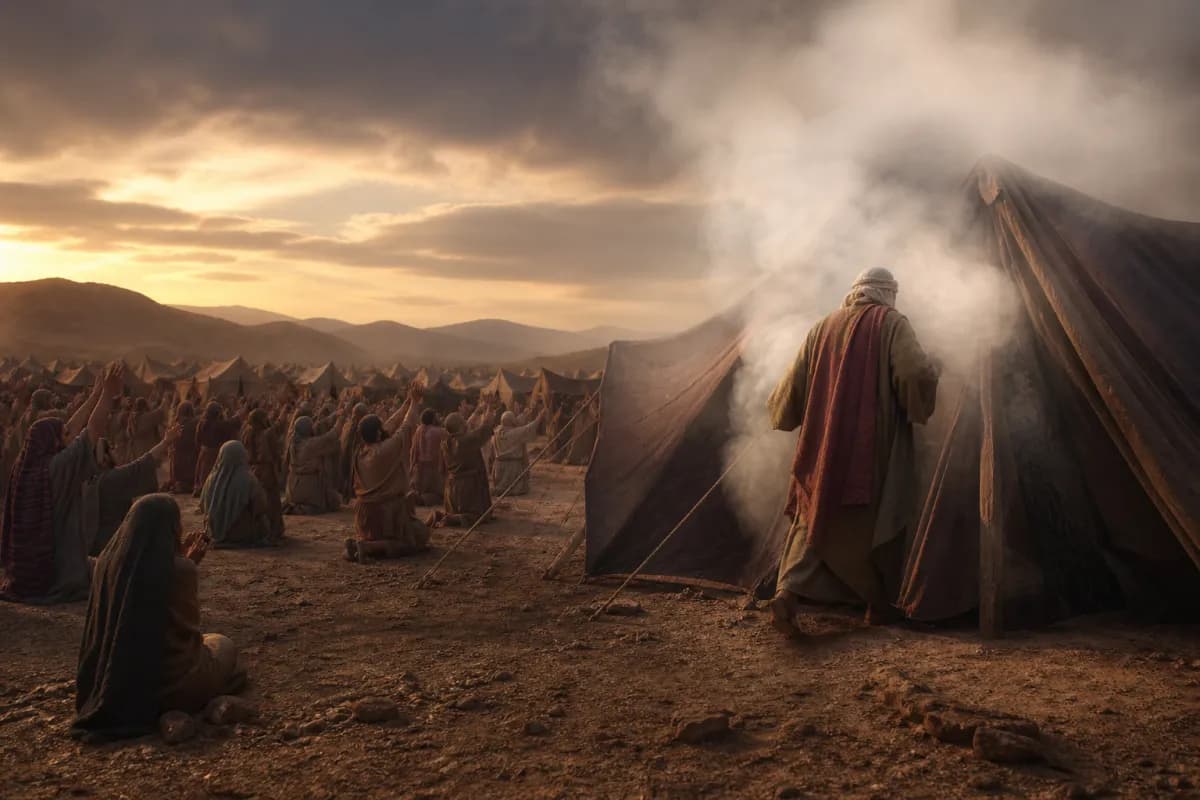
Exodus 33:7–11 records Moses pitching a tent outside Israel’s camp after the golden-calf rebellion. Those who seek the LORD go out to it, the cloud descends, and the Lord speaks with Moses face to face while Joshua remains nearby. The scene makes Israel’s broken fellowship visible and directs hope toward the presence God alone can restore. Jesus brings sinners to the Father and forms a people who seek God rather than merely His gifts.
- In this study
- 5 verses · 5 movements
Exodus 33
33:7Now Moses used to take the tent and pitch it outside the camp, far away from the camp, and he called it “The Tent of Meeting.” Everyone who sought the LORD went out to the Tent of Meeting, which was outside the camp.
33:8When Moses went out to the Tent, all the people rose up, and stood, everyone at their tent door, and watched Moses, until he had gone into the Tent.
33:9When Moses entered into the Tent, the pillar of cloud descended, stood at the door of the Tent, and the LORD spoke with Moses.
33:10All the people saw the pillar of cloud stand at the door of the Tent, and all the people rose up and worshiped, everyone at their tent door.
33:11The LORD spoke to Moses face to face, as a man speaks to his friend. He turned again into the camp, but his servant Joshua, the son of Nun, a young man, didn’t depart from the Tent.
CONTEXTUAL OVERVIEW
The tent of meeting is pitched outside the camp at the very moment Israel is grieving over the golden calf and God has warned that He will not go among them in the ordinary way. Distance now has theological force. Israel’s idolatry has damaged the fellowship it was redeemed to enjoy.
Yet the passage is not a scene of abandonment. Anyone who seeks the LORD may go out to the tent, the cloud descends when Moses enters, and Israel worships as the Lord speaks with him. The story holds judgment and mercy together: sin makes distance real, but God still provides a way for His people to seek Him.
HISTORICAL AND LITERARY CONTEXT
This provisional tent should not simply be equated with the completed tabernacle later described in Exodus 35–40. The text calls it the tent of meeting and locates it outside the camp during the crisis following chapter 32. Its placement dramatizes the unresolved question of whether God’s presence will again travel in Israel’s midst.
The phrase that the LORD speaks with Moses “face to face” expresses direct, personal communication, as the comparison with one speaking to a friend makes clear. It does not cancel the limits later stated in Exodus 33:20. The narrative honors Moses’ unique mediation while preparing for his plea that God’s own presence must go with the people.
SECTION-BY-SECTION ANALYSIS
- Outside the camp · Exodus 33:7The tent’s location makes the relational consequence of the calf rebellion visible without declaring God’s covenant purpose finished.
- Those who seek · Exodus 33:9The invitation to seek the LORD keeps repentance and desire for God at the center of Israel’s crisis.
- Cloud and worship · Exodus 33:10God’s appearing produces communal bowing, showing that true encounter leads to reverence rather than control.
CHRIST IN THIS PASSAGE
Moses’ tent outside the camp reveals the need for a mediator and a restored presence; it does not itself provide the final reconciliation. Jesus fulfills that need by bearing sin and bringing people to God. His death occurs outside the city, and Hebrews calls believers to go to Him there, receiving the access and belonging that human repentance alone cannot manufacture.
Christ’s mission does more than improve religious feelings. He reconciles people to the Father and creates a worshiping community that seeks God Himself. Christians may therefore come through Jesus with confidence, while refusing the fantasy that God’s gifts, success, or religious activity can substitute for communion with Him.
REFLECTION
After failure, we often want either to hide from God or to rush past the damage with religious busyness. The tent outside the camp gives neither option. It invites seeking the Lord honestly, acknowledges the seriousness of sin, and waits on the presence God must give.
Bring to Jesus one place where you have wanted His benefits without His rule. Confess it plainly, then make time to seek Him in Scripture and prayer before pursuing a solution. Consider inviting one trusted believer into that return, so repentance becomes shared worship rather than private shame.
Original Hebrew Word Study
Exodus 33:7
מוֹעֵד
moed · H4150
Usually translated: appointed meeting or meeting place
Moed is an appointed meeting. The tent becomes the place where those who seek the Lord go out to meet Him, underscoring Israel’s need for restored fellowship after the calf rebellion.
Follow the Scripture trail
The Tent of Meeting: Seeking the Lord After Rebellion in the larger story
The connection: The tent outside the camp makes the rupture of Israel’s idolatry visible while preserving a place to seek the Lord. Jesus bears sin and restores access to the Father, gathering seekers into a people marked by His presence and mission.
Respond to the passage
Go to Christ with the sin or distraction that has made you content with God’s gifts but distant from God Himself. Set aside a specific time this week to seek Him with repentance and worship.
- Why is the tent located outside the camp in this moment?
- How do seeking, watching, and bowing involve the whole people?
- What does Christ provide that Moses’ mediation could not finally secure?
Prayer
Father, forgive me for wanting Your gifts while resisting Your presence. Thank You that Jesus has brought me near. Teach me to seek You honestly, worship You reverently, and help others turn from false refuges to Your reconciling grace. Amen.