Passage Study
The Terms of the Covenant: Wholehearted Worship in the Land
Exodus 34:10–34:28
Exodus 34:10–28 renews Israel’s covenant responsibilities as it prepares to enter Canaan: God promises wonders, commands the removal of rival worship, calls for exclusive loyalty, and orders Israel’s feasts, firstborn, Sabbath, and offerings. The passage shows that redemption creates a worshiping people. Jesus fulfills Israel’s calling by bringing people from the nations into faithful worship of the one true God.
- In this study
- 19 verses · 5 movements
Exodus 34
34:10He said, “Behold, I make a covenant: before all your people I will do marvels, such as have not been worked in all the earth, nor in any nation; and all the people among whom you are shall see the work of the LORD; for it is an awesome thing that I do with you.
34:11Observe that which I command you today. Behold, I will drive out before you the Amorite, the Canaanite, the Hittite, the Perizzite, the Hivite, and the Jebusite.
34:12Be careful, lest you make a covenant with the inhabitants of the land where you are going, lest it be for a snare among you;
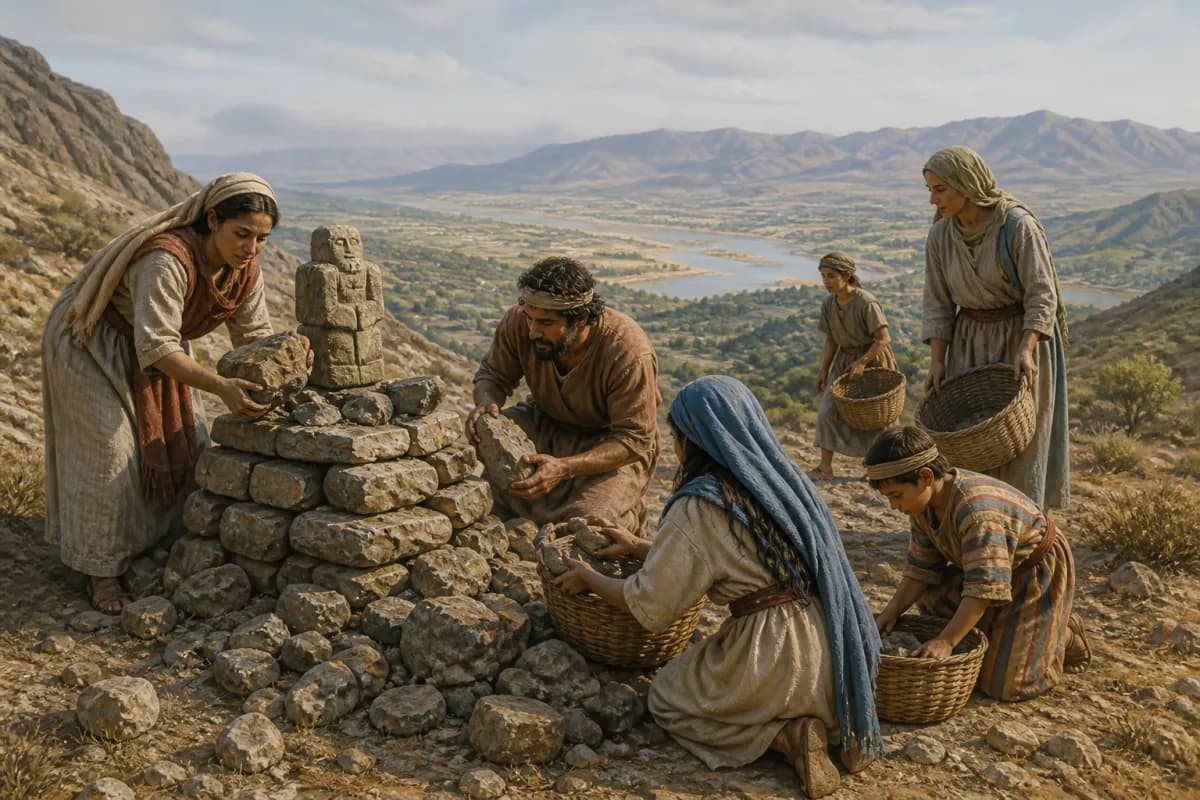
34:13but you shall break down their altars, and dash in pieces their pillars, and you shall cut down their Asherah poles;
34:14for you shall worship no other god; for the LORD, whose name is Jealous, is a jealous God.
34:15“Don’t make a covenant with the inhabitants of the land, lest they play the prostitute after their gods, and sacrifice to their gods, and one call you and you eat of his sacrifice;
34:16and you take of their daughters to your sons, and their daughters play the prostitute after their gods, and make your sons play the prostitute after their gods.
34:17“You shall make no cast idols for yourselves.
34:18“You shall keep the feast of unleavened bread. Seven days you shall eat unleavened bread, as I commanded you, at the time appointed in the month Abib; for in the month Abib you came out of Egypt.
34:19“All that opens the womb is mine; and all your livestock that is male, the firstborn of cow and sheep.
34:20You shall redeem the firstborn of a donkey with a lamb. If you will not redeem it, then you shall break its neck. You shall redeem all the firstborn of your sons. No one shall appear before me empty.
34:21“Six days you shall work, but on the seventh day you shall rest: in plowing time and in harvest you shall rest.
34:22“You shall observe the feast of weeks with the first fruits of wheat harvest, and the feast of harvest at the year’s end.
34:23Three times in the year all your males shall appear before the Lord GOD, the God of Israel.
34:24For I will drive out nations before you and enlarge your borders; neither shall any man desire your land when you go up to appear before the LORD, your God, three times in the year.
34:25“You shall not offer the blood of my sacrifice with leavened bread. The sacrifice of the feast of the Passover shall not be left to the morning.
34:26“You shall bring the first of the first fruits of your ground to the house of the LORD your God. “You shall not boil a young goat in its mother’s milk.”
34:27The LORD said to Moses, “Write these words; for in accordance with these words I have made a covenant with you and with Israel.”
34:28He was there with the LORD forty days and forty nights; he neither ate bread, nor drank water. He wrote on the tablets the words of the covenant, the ten commandments.
CONTEXTUAL OVERVIEW
God’s self-proclamation in verses 5–9 is followed by concrete covenant life. Forgiveness after the calf does not leave Israel free to blend the Lord’s worship with the religions of Canaan. The people are headed toward a land filled with established altars, images, feasts, and social ties, and the covenant addresses that real pressure directly.
The passage moves from the destruction of rival worship to annual feasts, firstborn redemption, Sabbath, and offerings. These commands are not a disconnected legal appendix. They order Israel’s calendar, household, work, harvest, and worship around the God who redeemed it from Egypt.
HISTORICAL AND LITERARY CONTEXT
The Canaanite setting involved many local cultic sites and deities, but Exodus does not require a detailed reconstruction of every practice to make its point. Israel must not make a covenant with inhabitants that would become a snare or adopt worship forms that give divided loyalty to the Lord.
The phrase that the Lord is jealous describes covenant zeal, not the insecurity or envy of a creature. The God who redeemed Israel has the rightful claim to Israel’s worship. The commands about feasts and firstborn remember creation and exodus, protecting the community from treating its produce, time, and children as self-owned possessions.
SECTION-BY-SECTION ANALYSIS
- No covenant with idols · Exodus 34:10Israel must not accommodate worship that competes with the Lord’s rightful claim.
- Jealous for His name · Exodus 34:14God’s covenant zeal protects the redeemed people from the ruin of false worship.
- Feasts and firstborn · Exodus 34:19Israel’s calendar and household practices continually rehearse God’s creation and rescue.
CHRIST IN THIS PASSAGE
These commands belong to Israel’s covenant life in the land and should not be transferred mechanically into Christian civil action. Their enduring center is whole-hearted worship of the God who redeems. Jesus confronts idols of heart and nation, gives Himself to free people from false masters, and gathers worshipers from every people rather than authorizing hostility toward them.
Christ fulfills the story remembered in Israel’s feasts, especially the exodus pattern of rescue, and He is the firstborn Son who gives Himself for many. His mission sends the church into every culture to call people away from idols toward the living God through persuasion, service, suffering love, and the proclamation of the gospel.
REFLECTION
Idolatry often looks less like bowing to a statue and more like letting career, romance, political tribe, comfort, or fear dictate what we may obey. This passage calls for honest inventory. Ask Jesus where a rival loyalty has become a snare, and take a concrete step to remove its practical hold.
Build rhythms that remember redemption rather than merely consuming time. Gather with God’s people, give thanks at meals, practice rest, and use resources in ways that honor Christ. These actions do not earn salvation; they train a redeemed people to live visibly under the gracious rule of their Savior.
Original Hebrew Word Study
Exodus 34:14
קַנָּא
qanna · H7067
Usually translated: jealous or zealously protective
Qanna describes God’s covenant jealousy. It is not insecure envy; it names the Lord’s rightful insistence that the people He redeemed not give their worship and loyalty to rival gods.
Follow the Scripture trail
The Terms of the Covenant: Wholehearted Worship in the Land in the larger story
The connection: Covenant renewal calls Israel to worship the Redeemer alone in every sphere of life. Jesus fulfills God’s saving purpose by freeing people from idols and forming a worldwide people whose worship, work, and witness belong to the living God.
Respond to the passage
Identify one loyalty that competes with obedience to Christ. Renounce its claim in prayer, remove one practical access point, and establish one weekly rhythm that helps your household remember the Savior who redeemed you.
- Why does covenant renewal include both God’s promise and Israel’s concrete obedience?
- What does God’s jealousy mean in this passage?
- How should Christians apply the call to exclusive worship without treating other people as enemies?
Prayer
Lord Jesus, expose the loyalties that compete for my heart. Thank You for freeing me from false masters. Teach me to worship You alone, to use my time and resources gratefully, and to invite others toward the living God with truth and love. Amen.