Passage Study
The Sabbath Command: Rest Under the Redeemer’s Rule
Exodus 35:1–35:3
Exodus 35:1–3 begins the tabernacle-building account by repeating the Sabbath command. Israel’s work for God must remain under God’s gift of rest; even a holy project cannot replace trustful obedience. Jesus gives rest to His people and sends them to serve without making achievement their master.
- In this study
- 3 verses · 5 movements
Exodus 35
35:1Moses assembled all the congregation of the children of Israel, and said to them, “These are the words which the LORD has commanded, that you should do them.
35:2‘Six days shall work be done, but on the seventh day there shall be a holy day for you, a Sabbath of solemn rest to the LORD: whoever does any work in it shall be put to death.
35:3You shall kindle no fire throughout your habitations on the Sabbath day.’”
CONTEXTUAL OVERVIEW
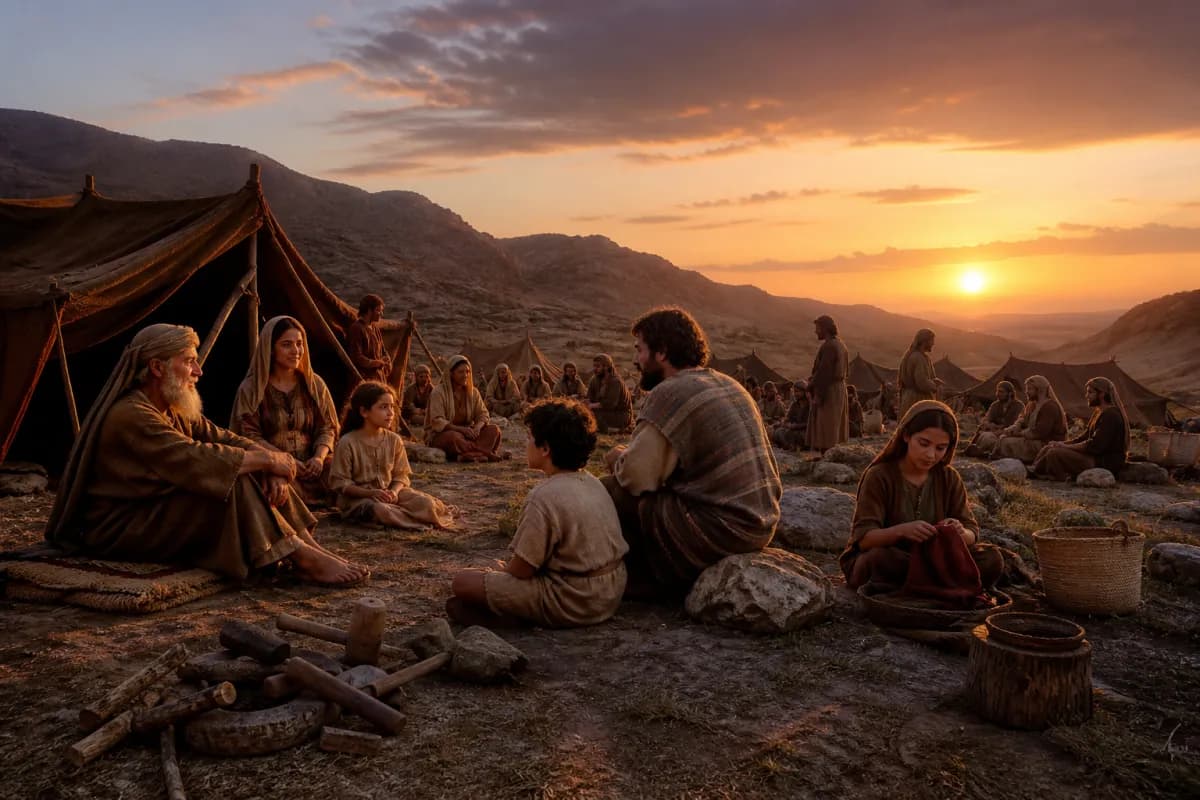
Exodus 35 opens after the covenant has been renewed and just before Israel begins building the tabernacle. Moses gathers the whole congregation, but the first command is not a production schedule. The Lord again sets apart the seventh day as a Sabbath of complete rest.
That placement is crucial. Israel has a holy task and much material work ahead, yet the people may not define faithfulness as endless labor. The God who rescued them from Pharaoh also commands a rhythm in which they stop, trust Him, and acknowledge that their lives are not secured by ceaseless output.
HISTORICAL AND LITERARY CONTEXT
The Sabbath command reaches back to the covenant words of Exodus 20 and to the more extended sign language of Exodus 31. Here it appears at the threshold of construction. Israel will build exactly as the Lord commands, but even tabernacle work does not authorize them to ignore the Creator’s pattern of work and rest.
The instruction about not kindling fire belongs to the concrete household observance of Sabbath in Israel’s covenant life. The passage does not spell out every circumstance or later legal application. Its clear emphasis is that the day is holy, and Israel’s obedience must include limits God establishes rather than limits chosen only by convenience.
SECTION-BY-SECTION ANALYSIS
- A gathered people · Exodus 35:1The whole congregation hears the command before specialized tabernacle labor begins.
- Complete rest · Exodus 35:2Sabbath interrupts Israel’s productive activity because the day belongs to the Lord.
- Household obedience · Exodus 35:3The command reaches daily life, showing that covenant worship shapes more than public ceremony.
CHRIST IN THIS PASSAGE
The Sabbath command is given in its original covenant form to Israel. Christians should not casually transfer every detail into a new rulebook. Yet the passage’s central witness remains: human beings are creatures who need to receive life from God rather than build their identity on unending work. Jesus invites the weary to come to Him and gives the rest that labor cannot manufacture.
Christ’s saving mission frees His people from both laziness and slavery to performance. Those who are justified by grace can work diligently without treating achievement as a savior. Their rest becomes a testimony that God, not frantic self-provision, is Lord; it also creates room for worship, mercy, and a believable witness to the One who gives rest.
REFLECTION
A good project can become an excuse for disobedience when we assume that God needs our constant exertion. Consider where urgency, ministry, business, or anxiety has made rest feel irresponsible. Bring that pressure to Jesus and ask Him to teach you faithful limits.
Set aside a deliberate period this week for worship, Scripture, prayer, and unhurried presence with others. The point is not to earn holiness by scheduling. It is to receive your life as a gift from the Redeemer and to resist the lie that you must constantly prove your worth.
Original Hebrew Word Study
Exodus 35:2
מְלָאכָה
melakhah · H4399
Usually translated: work, task, or skilled labor
Melakhah is work or skilled labor. Even the urgent labor of building the tabernacle must stop for Sabbath, so God’s work is never advanced by treating His command for rest as expendable.
Follow the Scripture trail
The Sabbath Command: Rest Under the Redeemer’s Rule in the larger story
The connection: At the beginning of the sanctuary work, Israel learns that redeemed service must remain under the Lord’s gift of rest. Jesus fulfills God’s saving purpose by bringing weary sinners to Himself and forming servants whose work flows from grace rather than bondage.
Respond to the passage
Name the pressure that tells you you cannot stop. Bring it to Jesus, plan a concrete time for worshipful rest, and refuse one unnecessary task so you can receive rather than perform your identity before God.
- Why does Exodus repeat Sabbath immediately before the tabernacle work begins?
- How does the household instruction make Sabbath concrete?
- How does the rest Jesus gives differ from avoidance of responsibility?
Prayer
Lord Jesus, rescue me from measuring my value by constant output. Teach me to work faithfully, to rest trustfully, and to make space for worship and mercy. Let the peace You give point weary people toward Your saving grace. Amen.