Passage Study
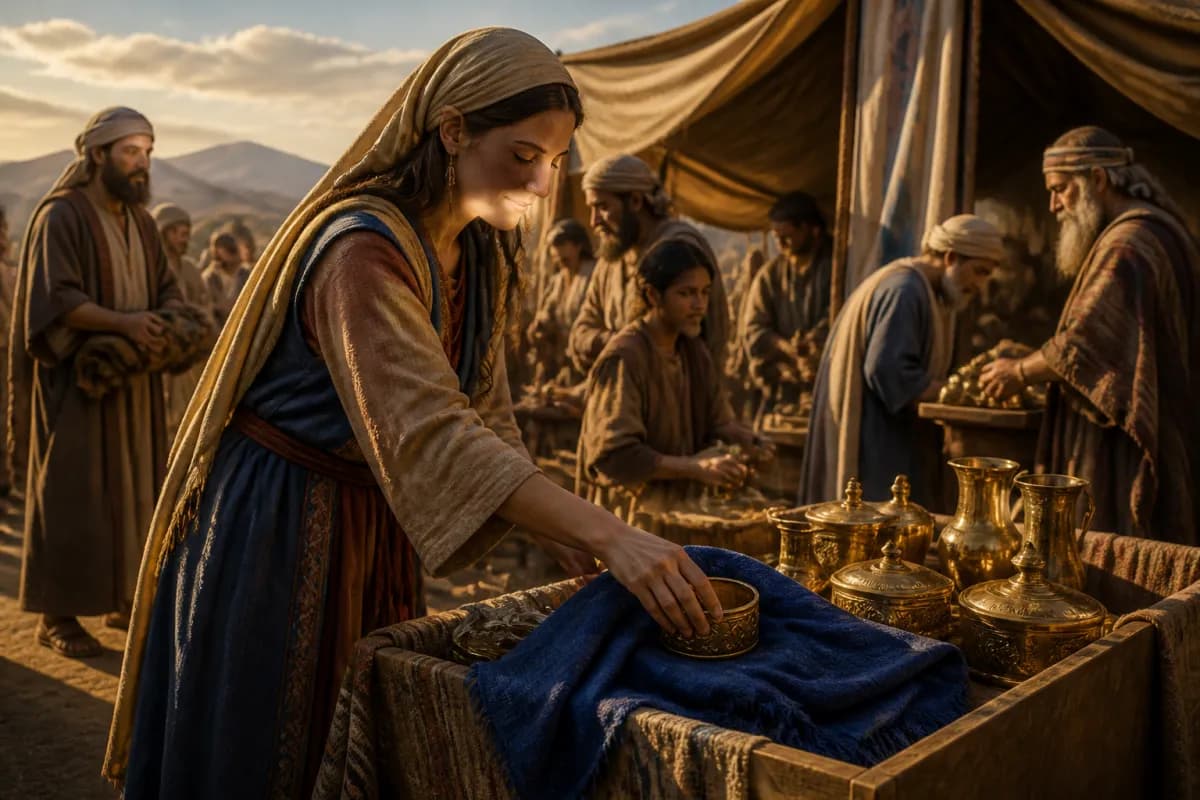
Offerings for the Tabernacle: Hearts Moved to Give
Exodus 35:4–35:9
Exodus 35:4–9 calls Israel to bring materials for the tabernacle from willing hearts. The Lord who has redeemed His people receives gifts for the place of His dwelling, yet He does not need to coerce them. In Christ, grace creates generous people whose resources serve worship and mission rather than self-display.
- In this study
- 6 verses · 5 movements
Exodus 35
35:4Moses spoke to all the congregation of the children of Israel, saying, “This is the thing which the LORD commanded, saying,
35:5‘Take from among you an offering to the LORD. Whoever is of a willing heart, let him bring it as the LORD’s offering: gold, silver, bronze,
35:6blue, purple, scarlet, fine linen, goats’ hair,
35:7rams’ skins dyed red, sea cow hides, acacia wood,
35:8oil for the light, spices for the anointing oil and for the sweet incense,
35:9onyx stones, and stones to be set for the ephod and for the breastplate.
CONTEXTUAL OVERVIEW
Moses now turns from the Sabbath command to the materials needed for the tabernacle. The invitation begins with the heart: whoever is of a willing heart may bring an offering to the Lord. Israel’s giving belongs to a redeemed people responding to God’s command, not to a fundraising campaign built on pressure or private gain.
The long list makes the purpose concrete. Gold, blue yarn, acacia wood, oil, spices, and stones are not anonymous donations. Each will serve the dwelling place, its furnishings, its priestly ministry, or its worship. The passage joins inward willingness with visible, carefully directed service.
HISTORICAL AND LITERARY CONTEXT
The materials mirror the instructions given in Exodus 25–31. What God first revealed on Sinai is now placed before Israel for implementation. The repetition shows that the sanctuary is not designed from popular taste; the people bring what the Lord has specified for His dwelling among them.
Some of these valuables came from Egypt when the Israelites departed. Exodus has already framed that departure as God’s act of deliverance. The text therefore presents Israel’s goods as gifts within a larger redemption story. It does not promise that every believer will have the same resources, but it does insist that possessions can be placed under the Lord’s purposes.
SECTION-BY-SECTION ANALYSIS
- Willing hearts · Exodus 35:5The invitation calls for responsive generosity rather than coerced religious payment.
- Many materials · Exodus 35:4Different resources are needed, showing that the whole community can participate in the Lord’s work.
- A defined purpose · Exodus 35:6Every item is named for the sanctuary and its service rather than gathered for vague religious prestige.
CHRIST IN THIS PASSAGE
The tabernacle materials prepared a place where the Lord would dwell among Israel under the old covenant. The New Testament announces that God has come near decisively in Jesus, and that through Him believers become a people in whom God dwells by the Spirit. This is a canonical fulfillment, not a claim that every fabric or stone predicts a separate feature of Christ.
Jesus gives Himself rather than asking others to purchase access to God. His grace changes the direction of generosity: His people give because they have received reconciliation, and their resources can support worship, mercy, and gospel witness. Christian giving should therefore carry the freedom, purpose, and humility of those who belong to a Savior who first gave Himself for them.
REFLECTION
Ask what your possessions are presently for. It is easy to call something “mine” so completely that it becomes unavailable to God or neighbor. Exodus 35 does not demand performative sacrifice; it invites a heart moved by grace to place real resources at the Lord’s disposal.
Choose one specific act of generosity that serves Christ’s work: support a need in your church, provide practical help to a neighbor, or invest in a ministry that clearly proclaims the gospel. Give quietly and truthfully, remembering that the goal is not to make your generosity visible but to make God’s mercy more visible.
Original Hebrew Word Study
Exodus 35:5
נָדִיב
nadiv · H5081
Usually translated: willing or generous-hearted
Nadiv describes a willing and generous heart. The materials for the tabernacle are not seized by force; Israel’s worship is expressed through free devotion to the God who first delivered them.
Follow the Scripture trail
Offerings for the Tabernacle: Hearts Moved to Give in the larger story
The connection: Israel’s willing gifts prepare the place of God’s dwelling among a redeemed people. Jesus is God’s decisive gift and gathers a Spirit-indwelt people whose generosity serves worship, mercy, and the proclamation of His saving mission.
Respond to the passage
Bring one part of your budget, skill, or possession honestly before Jesus. Ask how it can serve His purposes, then make one specific gift or act of service without using it to claim attention or control.
- Why does the offering begin with willing hearts?
- How does the list of materials show that Israel’s gifts have a defined purpose?
- How does Christ’s self-giving reshape Christian generosity?
Prayer
Lord Jesus, everything I have is received from Your kindness. Free me from fearful grasping and from giving for applause. Move my heart to use my resources for worship, mercy, and the witness of Your gospel. Amen.