Passage Study
The Veil and Screen Made: Holiness Guarded, Access Given
Exodus 36:35–36:38
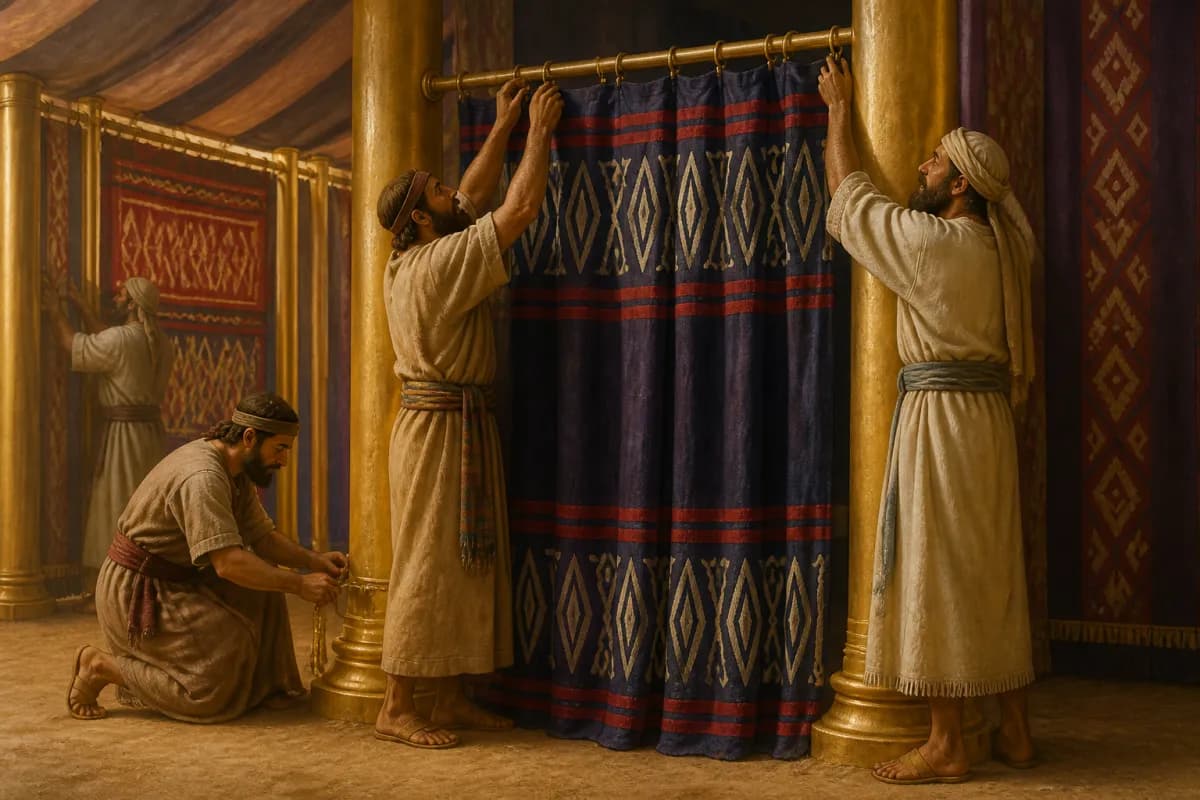
Exodus 36:35–38 records the making of the inner veil and outer entrance screen for the tabernacle. The veil separates the most holy place, while the screen marks the tent’s entrance. Together they teach that God truly dwells with His people, yet sinful people cannot approach Him casually. Jesus fulfills this hope by giving His life to bring sinners reconciled access to the Father.
- In this study
- 4 verses · 5 movements
Exodus 36
36:35He made the veil of blue, purple, scarlet, and fine twined linen, with cherubim. He made it the work of a skillful workman.
36:36He made four pillars of acacia for it, and overlaid them with gold. Their hooks were of gold. He cast four sockets of silver for them.
36:37He made a screen for the door of the tent, of blue, purple, scarlet, and fine twined linen, the work of an embroiderer;
36:38and the five pillars of it with their hooks. He overlaid their capitals and their fillets with gold, and their five sockets were of bronze.
CONTEXTUAL OVERVIEW
The final verses of Exodus 36 make two textile boundaries. The inner veil will divide the holy place from the most holy place; the entrance screen will mark the front of the tent. The tabernacle is therefore a place of God’s gracious nearness, but it is never a place where Israel may treat His presence as ordinary.
Both hangings are beautiful, embroidered with the same rich colors used elsewhere in the sanctuary. Yet their beauty serves separation and order. The veil’s cherubim and the carefully placed pillars tell Israel that the holy God has provided a way to live among them while also guarding the reality that sin makes unmediated access impossible.
HISTORICAL AND LITERARY CONTEXT
The workers now complete the structures commanded in Exodus 26:31–37. In the finished tabernacle, the veil will stand before the ark and the mercy seat, and the priesthood and sacrifices described in Exodus and Leviticus will govern approach. The screen and veil belong to a full covenant system, not isolated religious decorations.
Cherubim recall the guarded holiness of Eden, though Exodus does not provide an explicit commentary linking every sanctuary image to Genesis. What the text plainly establishes is graduated access: Israel is welcomed to worship, priests have assigned service, and the most holy place remains carefully protected. God’s gracious presence is real, and His holiness is real.
SECTION-BY-SECTION ANALYSIS
- The inner veil · Exodus 36:35The cherubim-woven curtain separates the most holy place and declares the seriousness of God’s holiness.
- The entrance screen · Exodus 36:37The front hanging marks a genuine way into the tent, though access remains ordered by God’s covenant provision.
- Beauty with purpose · Exodus 36:36Colors, embroidery, pillars, and bases serve the theological reality of guarded yet gracious divine presence.
CHRIST IN THIS PASSAGE
The veil’s original role is to guard the most holy place within Israel’s sanctuary. The Gospels report that the temple curtain was torn at Jesus’ death, and Hebrews speaks of His flesh as the way into God’s presence. Those later texts do not make Exodus 36 a license for casual familiarity with God; they proclaim that Jesus has done what sinners could never do, bearing sin and opening reconciled access to the Father.
Christ’s mission joins reverence and welcome. Because He is the true high priest and sacrifice, believers come with confidence, repentance, and gratitude rather than fear-driven distance or self-made entitlement. The church then invites others toward God through the gospel of Jesus, trusting His cross rather than religious achievement to bring people near.
REFLECTION
We can drift toward two errors: avoiding God because we know our guilt, or treating Him lightly because grace is real. The veil and screen correct both. God is holy enough that we need His appointed provision, and gracious enough that He provides a real way to approach.
Bring hidden sin honestly to Jesus rather than hiding behind activity or shame. Then make one gentle gospel invitation this week: tell someone that access to God is not earned by becoming impressive, but received through the Savior who gave Himself to reconcile sinners to the Father.
Original Hebrew Word Study
Exodus 36:35
פָּרֹכֶת
parokhet · H6532
Usually translated: veil or curtain
Parokhet is the veil that guards the Most Holy Place. Its making preserves the same truth as its instruction: God lives among His people, yet His holiness establishes the way they may draw near.
Follow the Scripture trail
The Veil and Screen Made: Holiness Guarded, Access Given in the larger story
The connection: The veil and screen show that God’s holy presence is both guarded and graciously approached through His covenant provision. Jesus fulfills that provision by His death and priestly ministry, bringing sinners to the Father and sending His people to invite others through the gospel.
Respond to the passage
Bring one area of shame or self-reliance into the light before Jesus. Receive His welcome through the cross, then pray for one person who needs to hear that God has made a real way to Himself.
- What different roles do the veil and the entrance screen play in the tabernacle?
- Why does holy access require both a boundary and an appointed way?
- How does Jesus’ saving work give confidence without making God seem casual?
Prayer
Lord Jesus, I cannot make my own way to the Father. Thank You for giving Yourself to reconcile sinners and open access to God. Keep me humble, reverent, and joyful, and use me to invite others to trust Your saving grace. Amen.