Passage Study
Circumcision at the Lodging Place: The Covenant Cannot Be Ignored
Exodus 4:24–4:26
Exodus 4:24–26 interrupts Moses’ return to Egypt with a startling confrontation: the Lord opposes the man He has commissioned until Zipporah performs the covenant sign on their son. The scene teaches that God’s deliverer must not treat covenant allegiance as optional, and it prepares readers for Jesus, who fulfills the covenant and brings His people near through His own blood.
- In this study
- 3 verses · 5 movements
Exodus 4
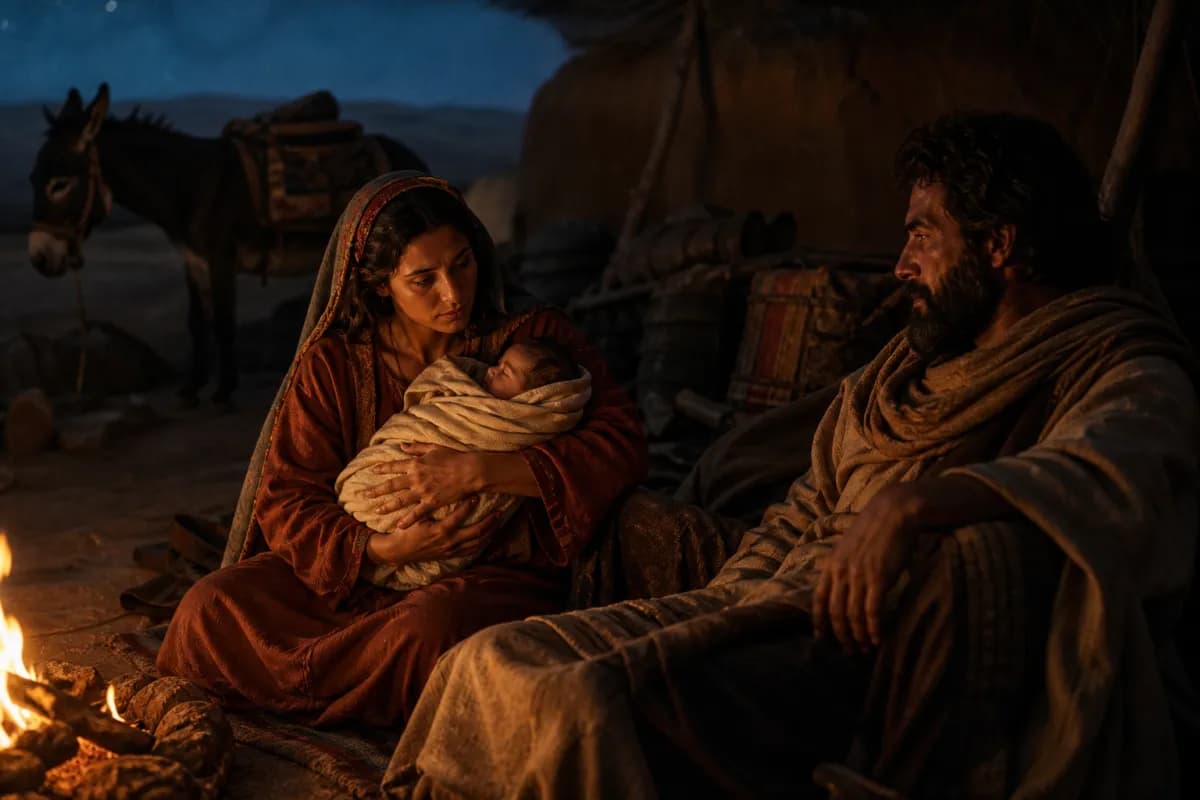
4:24On the way at a lodging place, the LORD met Moses and wanted to kill him.
4:25Then Zipporah took a flint, and cut off the foreskin of her son, and cast it at his feet; and she said, “Surely you are a bridegroom of blood to me.”
4:26So he let him alone. Then she said, “You are a bridegroom of blood,” because of the circumcision.
CONTEXTUAL OVERVIEW
Moses has just received the commission to confront Pharaoh and announce that Israel is the Lord’s firstborn son. Before he reaches Egypt, this brief scene brings a neglected command inside Moses’ own household into view. Its placement is deliberate: a man sent to call Pharaoh to release God’s covenant people cannot casually disregard the covenant sign God gave to Abraham.
The passage is compressed and leaves some details unstated, including the precise identity of the person the Lord seeks to kill. Its central movement is clear, however. A life-threatening divine confrontation ends only when Zipporah acts decisively, making circumcision—the sign of belonging to Abraham’s covenant—impossible to treat as a private irrelevance.
HISTORICAL AND LITERARY CONTEXT
Circumcision was commanded in Genesis 17 as the sign of God’s covenant with Abraham’s household. The sign did not create the covenant by human effort; it marked the family that had received God’s promise and called them to live under His rule. Exodus 4 brings that older command into the story just before Moses becomes the public spokesman of Israel’s God.
Zipporah is a Midianite woman, and the text records her actions without giving a full account of her emotions or prior understanding. Her phrase “bridegroom of blood” is difficult and should not be pressed into a detailed theory. The narrative’s emphasis rests on the immediate, costly act that turns aside the danger.
SECTION-BY-SECTION ANALYSIS
- A severe interruption · Exodus 4:24The journey to confront Pharaoh pauses because Moses himself must live under the covenant word he carries.
- Zipporah’s action · Exodus 4:25She acts swiftly in a crisis, and the narrative credits the covenant sign with the passing of the threat.
- A household matter · Exodus 4:26God’s mission reaches into family obedience; public service cannot substitute for covenant faithfulness.
CHRIST IN THIS PASSAGE
This episode does not directly predict Christ, and its difficult details should not be allegorized. Its covenant logic does help readers see why Jesus’ obedience matters. Where Moses’ household is exposed by neglected obedience, Jesus is the faithful Son who fulfills the Father’s will without failure and bears the curse deserved by covenant breakers.
Paul speaks of believers receiving a circumcision made without hands in union with Christ, joined to His death and resurrection. Jesus’ saving mission does not make holiness optional. By His blood He forgives and brings people into God’s covenant family, then forms them to live as those who truly belong to Him.
REFLECTION
The passage challenges the division between public faithfulness and private neglect. A visible calling, ministry role, or strong religious vocabulary cannot replace humble obedience in the places nearest to us. God’s severity here is not petty; it protects the truth that He is not a tool for advancing our plans.
Jesus invites repentant people to come honestly rather than to hide unfinished obedience behind religious activity. His grace is costly grace: He gives forgiveness through His own blood and creates a people who learn to bring their households, commitments, and hidden compromises under His good rule.
Original Hebrew Word Study
Exodus 4:25
דָּם
dam · H1818
Usually translated: blood
Dam is blood, the life poured out in covenant signs and sacrifice. The hard scene refuses to let Moses carry God’s commission while treating the covenant mark in his own household as optional.
Follow the Scripture trail
Circumcision at the Lodging Place: The Covenant Cannot Be Ignored in the larger story
The connection: Before Moses confronts Pharaoh, God makes clear that His messenger belongs under the covenant he proclaims. Jesus fulfills that calling as the faithful Son whose blood brings covenant breakers near to God and sends them to live under His gracious rule.
Respond to the passage
Ask Jesus to show you where public conviction has masked private compromise. Receive His forgiveness without minimizing the matter, and take the concrete step of obedience His grace makes possible.
- Why does this confrontation appear on the journey immediately after Moses receives his commission?
- What does Zipporah’s decisive action reveal about the seriousness of God’s covenant sign?
- How does Christ’s perfect obedience keep this passage from becoming either despair or religious performance?
Prayer
Holy God, forgive the ways I have wanted to speak for You while resisting Your rule in ordinary life. Thank You for Jesus, the faithful Son, whose blood brings me near. Give me a willing heart to obey You in the places I am tempted to hide. Amen.