Passage Study
Aaron Joins Moses: A Shared Word for a Gathered People
Exodus 4:27–4:31
Exodus 4:27–31 brings Aaron to Moses, reunites the brothers in the wilderness, and gathers Israel’s elders around the word and signs God has given. The people worship because the Lord has seen their misery. The passage shows that God’s saving mission creates a truthful, worshiping people and points forward to Jesus, God’s final Word, who gathers witnesses to proclaim His rescue.
- In this study
- 5 verses · 5 movements
Exodus 4
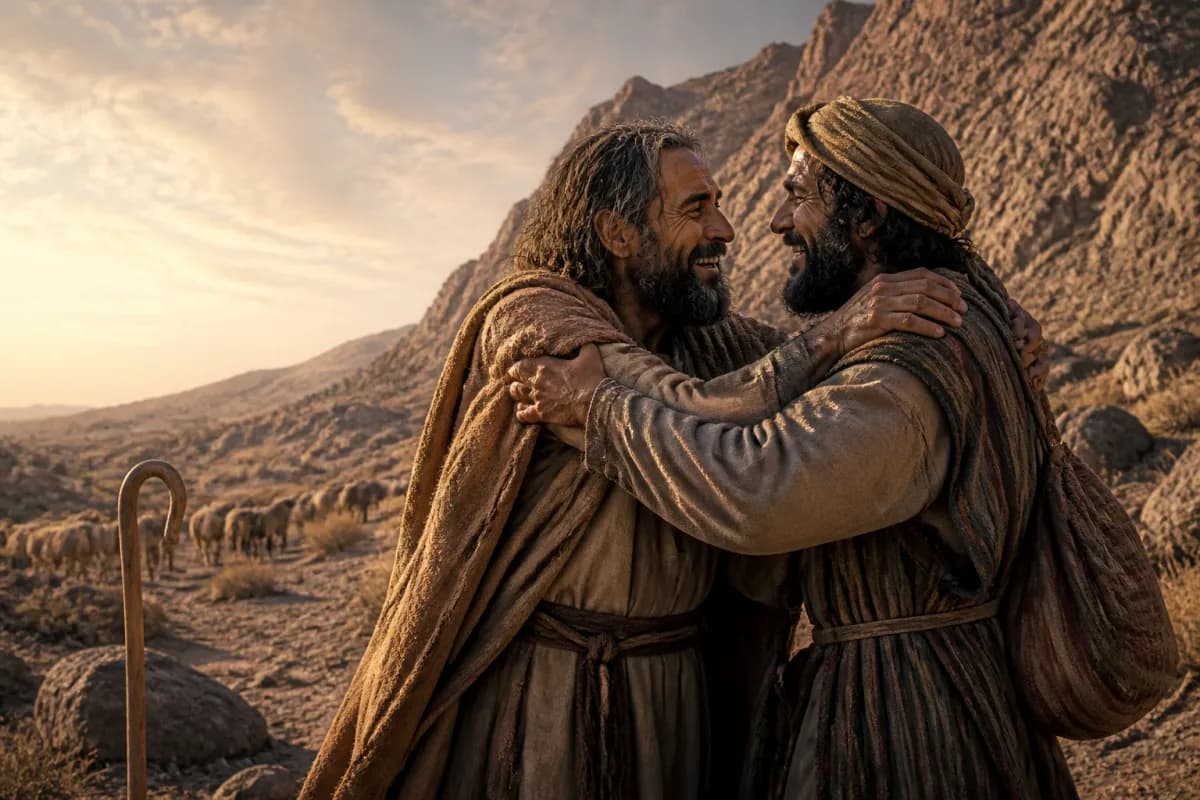
4:27The LORD said to Aaron, “Go into the wilderness to meet Moses.” He went, and met him on God’s mountain, and kissed him.
4:28Moses told Aaron all the LORD’s words with which he had sent him, and all the signs with which he had instructed him.
4:29Moses and Aaron went and gathered together all the elders of the children of Israel.
4:30Aaron spoke all the words which the LORD had spoken to Moses, and did the signs in the sight of the people.
4:31The people believed, and when they heard that the LORD had visited the children of Israel, and that he had seen their affliction, then they bowed their heads and worshiped.
CONTEXTUAL OVERVIEW
The same Lord who answered Moses’ fear about speaking now sends Aaron to meet him. Their reunion takes place at “the mountain of God,” returning the narrative to the site where Moses received his commission. The mission is neither Moses’ private vision nor Aaron’s independent message; both men are drawn into the word God has already spoken.
The first audience is Israel’s elders. Before Pharaoh receives the demand to let Israel go, the enslaved people hear that the Lord has seen their affliction and remembered them. Their response is not a strategy meeting but belief and worship: they bow because the God of their ancestors has turned toward their misery.
HISTORICAL AND LITERARY CONTEXT
This passage completes the commissioning scenes of Exodus 3–4. Moses’ repeated objections have not cancelled God’s purpose; God supplies Aaron as a companion and spokesperson. The narrative treats this provision as mercy without shifting authority away from the Lord who gives both the message and the signs.
Elders function as representative leaders within Israel’s clans. Their gathering makes the coming exodus a communal event rather than the adventure of one reluctant man. The people’s worship also resumes the theme of Exodus 2–3: God heard their cry and now makes His attention known through concrete words and acts.
SECTION-BY-SECTION ANALYSIS
- Two brothers · Exodus 4:27God answers Moses’ weakness by joining Aaron to him, yet keeps the mission centered on His own word.
- Elders gathered · Exodus 4:29Israel receives the news together through representative leaders before the public confrontation with Pharaoh begins.
- Worshiping faith · Exodus 4:30The people bow because the Lord has looked upon their suffering; rescue begins with God’s mercy made known.
CHRIST IN THIS PASSAGE
The passage does not identify Moses or Aaron as a one-to-one prediction of Jesus. It does establish a pattern fulfilled more fully in Him: God makes His saving purpose known through a commissioned word, gathers a people, and calls forth faith and worship. Jesus is more than a messenger; He is the Word made flesh who reveals the Father and accomplishes the rescue He proclaims.
The risen Christ also sends witnesses who speak what they have received rather than a private gospel of their own. His mission gathers people from every nation around the announcement of His death and resurrection, so that belief becomes worship and worship becomes faithful public witness.
REFLECTION
Moses did not have to overcome every weakness before God could use him; God provided Aaron and made the message clear. This does not excuse avoidance, but it relieves the false burden of solitary adequacy. God often gives His people companions, shared responsibility, and a truthful word to carry together.
The elders’ worship begins when they hear that God has seen them. Jesus gives suffering people an even fuller assurance: He has entered human weakness, died for sin, and risen to gather them to the Father. The church’s first responsibility is to keep announcing that real rescue with accuracy, humility, and hope.
Original Hebrew Word Study
Exodus 4:28
דָּבָר
davar · H1697
Usually translated: word, speech, or command
Davar can mean a spoken word or the matter carried by that word. Aaron is not sent with a private message; he joins Moses in carrying everything the Lord has entrusted to him.
Follow the Scripture trail
Aaron Joins Moses: A Shared Word for a Gathered People in the larger story
The connection: God gathers Israel around the report that He has seen their suffering and is acting to save. Jesus fulfills that saving mission as God’s final self-revelation, gathering witnesses and worshipers through the gospel of His death and resurrection.
Respond to the passage
Receive Jesus’ mercy as news before treating it as a task. Then consider who needs to hear the trustworthy word you have received, and seek faithful companionship rather than carrying that witness alone.
- What does Aaron’s meeting with Moses show about God’s answer to Moses’ fear of speaking?
- Why do the elders’ belief and worship depend on the report that God has seen their affliction?
- How can the church speak Christ’s gospel as a received message rather than a personal invention?
Prayer
Father, thank You that You see the afflicted and make Your mercy known. Thank You for Jesus, Your living Word, and for the people You place beside us in witness. Make our words true, our worship grateful, and our service brave. Amen.