Passage Study
No Straw: When Deliverance Seems to Make Life Harder
Exodus 5:10–5:21
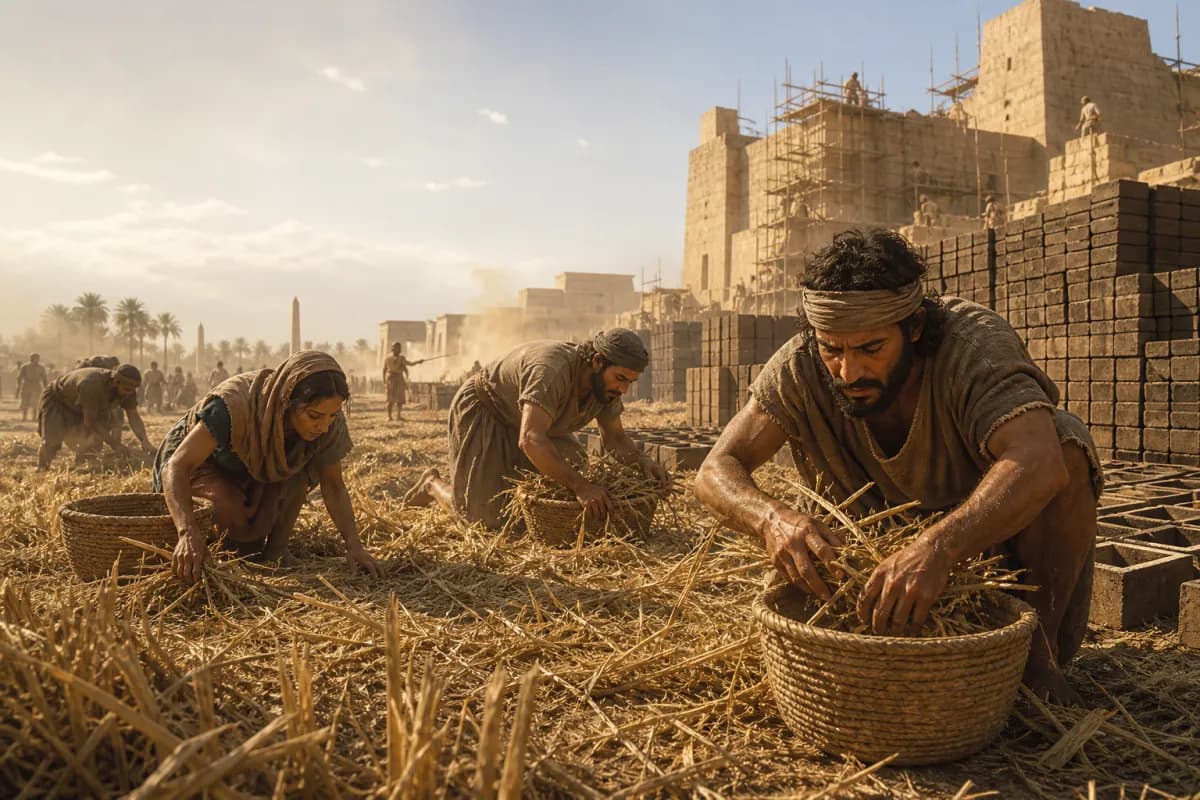
Exodus 5:10–21 records Pharaoh’s cruel refusal to supply straw while demanding the same brick quota. Israel’s overseers are beaten, the people turn on Moses and Aaron, and the first public step toward deliverance appears to deepen their suffering. The passage gives truthful language for disappointed faith and directs readers to Jesus, who meets suffering people without denying the cost of the road to freedom.
- In this study
- 12 verses · 5 movements
Exodus 5
5:10The taskmasters of the people went out with their officers, and they spoke to the people, saying, “This is what Pharaoh says: ‘I will not give you straw.
5:11Go yourselves, get straw where you can find it, for nothing of your work shall be diminished.’”
5:12So the people were scattered abroad throughout all the land of Egypt to gather stubble for straw.
5:13The taskmasters were urgent saying, “Fulfill your work quota daily, as when there was straw!”
5:14The officers of the children of Israel, whom Pharaoh’s taskmasters had set over them, were beaten, and were asked, “Why haven’t you fulfilled your quota both yesterday and today, in making brick as before?”
5:15Then the officers of the children of Israel came and cried to Pharaoh, saying, “Why do you deal this way with your servants?
5:16No straw is given to your servants, and they tell us, ‘Make brick!’ and behold, your servants are beaten; but the fault is in your own people.”
5:17But Pharaoh said, “You are idle! You are idle! Therefore you say, ‘Let’s go and sacrifice to the LORD.’
5:18Go therefore now, and work; for no straw shall be given to you; yet you shall deliver the same number of bricks!”
5:19The officers of the children of Israel saw that they were in trouble when it was said, “You shall not diminish anything from your daily quota of bricks!”
5:20They met Moses and Aaron, who stood along the way, as they came out from Pharaoh.
5:21They said to them, “May the LORD look at you and judge, because you have made us a stench to be abhorred in the eyes of Pharaoh, and in the eyes of his servants, to put a sword in their hand to kill us!”
CONTEXTUAL OVERVIEW
The command to withhold straw turns Pharaoh’s earlier threat into daily misery. Straw strengthened the brick mixture; taking it away while keeping the production demand forces Israel to search for substitute material and work longer for the same impossible outcome. The story slows down to let readers feel the pressure through the taskmasters, officers, fields, beaten bodies, and failed appeal.
This is not the deliverance Israel expected after Moses and Aaron announced that God had seen their affliction. Their conditions immediately worsen, and their leaders become the visible targets of resentment. Exodus refuses a shallow version of faith that pretends obedience always produces immediate relief.
HISTORICAL AND LITERARY CONTEXT
The passage follows Pharaoh’s declaration that Israel’s call to worship is a lie born of idleness. His economic policy is designed to validate that accusation: if people are fighting to meet an impossible quota, they will not have energy to imagine freedom or listen to the God who calls them out.
The Israelite officers stand between Egyptian taskmasters and the laboring people. Their beating exposes the injustice of the arrangement; they are held responsible for a quota neither they nor the people can meet. Their appeal to Pharaoh therefore produces one of the narrative’s clearest displays of his deliberate cruelty.
SECTION-BY-SECTION ANALYSIS
- An impossible quota · Exodus 5:14Pharaoh removes a necessary resource while retaining the same demand, turning labor into an instrument of humiliation.
- Beaten officers · Exodus 5:10The chain of command spreads suffering downward while shielding Pharaoh from the cost of his own decree.
- A wounded accusation · Exodus 5:20Israel’s leaders fault Moses and Aaron because obedience to God has, for the moment, made visible suffering worse.
CHRIST IN THIS PASSAGE
The passage does not say that every worsening circumstance is a direct parallel to Christ’s suffering. It does show that God’s path of rescue can expose evil before it removes it. Jesus’ public ministry also brings conflict with powers that benefit from bondage, and His road to the decisive victory of resurrection passes through rejection, injustice, and the cross.
Jesus does not offer distant encouragement to people crushed by impossible demands. He bears injustice, prays for enemies, and gives His life to deliver sinners from condemnation and death. His mission gives suffering believers a truthful hope: God’s rescue is real even when its final shape is not yet visible.
REFLECTION
Some obedience makes a hidden injustice visible and can bring immediate backlash. Exodus gives sufferers permission to say that the situation is bad; it does not demand cheerful denial. The officers’ complaint will be followed by Moses’ own hard question to God, showing that Scripture makes room for lament while the story of deliverance continues.
Jesus calls His people to stand with those carrying impossible burdens. That may mean refusing cruel quotas, telling the truth about exploitative systems, or patiently remaining present with someone whose relief has not come. Christian hope is active because the crucified and risen Christ has not abandoned the afflicted.
Original Hebrew Word Study
Exodus 5:11
עֲבֹדָה
avodah · H5656
Usually translated: service, labor, or work
Avodah names the work Pharaoh increases until it becomes unbearable. The word later serves worship language too, making Exodus’ contrast clear: the Lord rescues Israel from degrading labor for true service to Him.
Follow the Scripture trail
No Straw: When Deliverance Seems to Make Life Harder in the larger story
The connection: Israel’s intensified labor shows that God’s rescue confronts a system invested in their bondage. Jesus enters the cost of that confrontation, bearing the cross to break sin’s deeper slavery and sustain His people with mercy as they wait for freedom’s fullness.
Respond to the passage
Do not mistake a hard road for proof that Jesus has left you. Bring the specific burden into His presence, seek wise help, and look for one truthful way to stand beside someone else carrying an unjust load.
- What makes Pharaoh’s straw policy deliberately cruel rather than merely inefficient?
- Why does the passage preserve the officers’ anger at Moses and Aaron instead of smoothing it over?
- How can Jesus’ suffering keep you from both denial and despair when obedience becomes costly?
Prayer
God of mercy, You see the burdens people carry under unjust demands. Keep me from shallow answers when suffering worsens. Thank You that Jesus entered rejection and pain to bring real rescue. Give me endurance, wise companions, and courage to lighten burdens where I can. Amen.