Passage Study
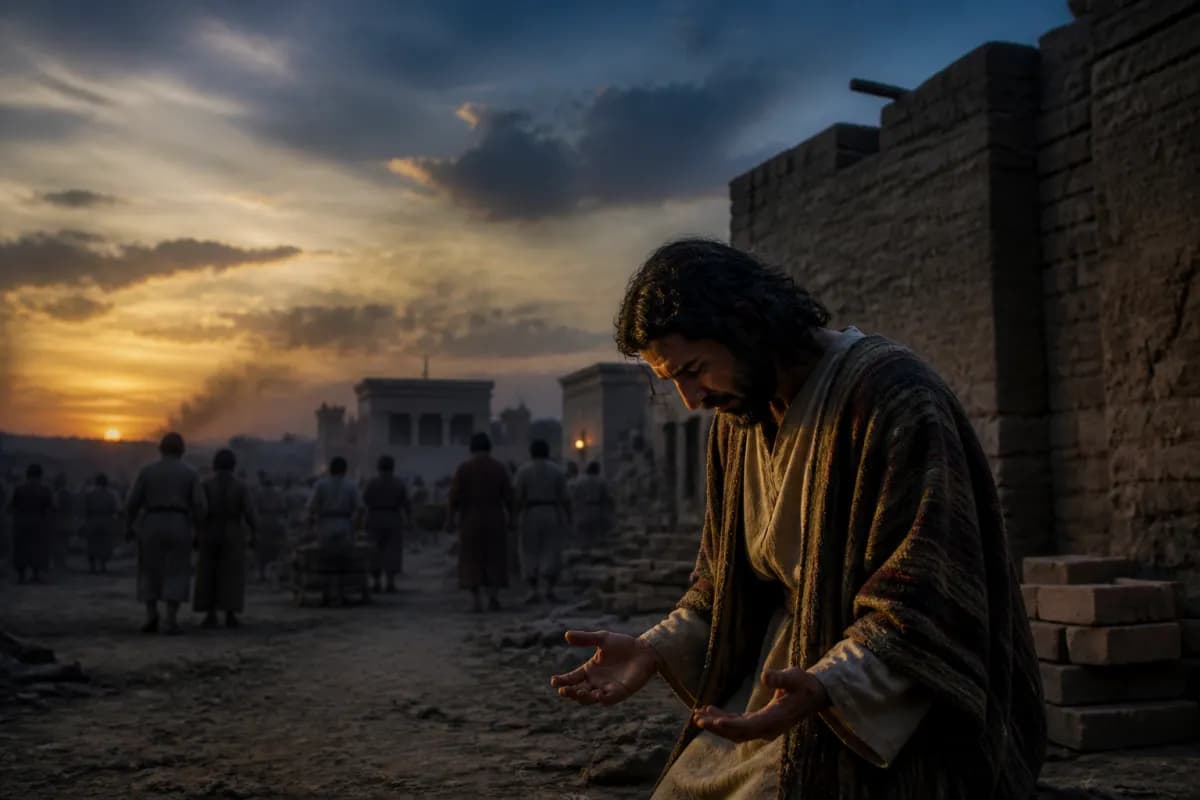
Moses Questions God: Lament at the Edge of Rescue
Exodus 5:22–5:23
Exodus 5:22–23 ends the first encounter with Pharaoh in honest protest. Moses returns to the Lord and asks why Israel has suffered more since he spoke in God’s name. His prayer neither abandons God nor disguises the failure he sees. The passage teaches believers to bring painful confusion to God and prepares for Jesus, whose saving mission enters human anguish and secures the deliverance God promises.
- In this study
- 2 verses · 5 movements
CONTEXTUAL OVERVIEW
Moses’ prayer comes after Pharaoh’s refusal has led to harsher labor and Israel has turned against Moses and Aaron. He does not retreat into silence or defend himself before the people with easy answers. He returns to the Lord—the very God who called him—and speaks the question the circumstances have forced into the open.
The prayer is blunt: Why have You done harm to this people? Why did You send me? Since I spoke in Your name, Pharaoh has acted wickedly, and You have not delivered Your people. Moses sees the gap between God’s promise and the current evidence. Exodus preserves that gap so that the coming answer will rest on God’s faithfulness rather than on Moses’ confidence.
HISTORICAL AND LITERARY CONTEXT
This lament closes Exodus 5 and leads directly into the Lord’s renewed covenant speech in Exodus 6. The literary placement matters: Moses’ complaint is not the final word, but it is not rebuked as though the suffering were unreal. God will answer by reaffirming His name, His covenant with the patriarchs, and His purpose to redeem Israel with a mighty hand.
Biblical lament is different from unbelief that turns away from God. Moses takes his grievance to the Lord and keeps speaking of “Your people.” He is confused by God’s action, yet he remains oriented toward the God who promised deliverance. The passage offers neither a formula for timing nor a reason to call evil good.
SECTION-BY-SECTION ANALYSIS
- Moses returns · Exodus 5:22His first response to collapse is to bring the matter back to the God who sent him.
- Moses asks why · Exodus 5:23The Bible does not edit out the hard question created when obedience appears to make suffering worse.
- Moses waits for God’s answer · Exodus 5:22The complaint ends without a self-made resolution, leaving the Lord to define what deliverance will be.
CHRIST IN THIS PASSAGE
Moses’ lament is not a hidden prediction of Jesus, but it belongs to the biblical language of faithful suffering that Jesus Himself enters. In Gethsemane and at the cross, Jesus prays from the depth of anguish while perfectly entrusting Himself to the Father. Unlike Moses, He carries no sinful failure; yet He bears the full weight of a world’s evil in order to save it.
The resurrection answers the deepest fear that God’s promise has failed. Jesus’ saving mission does not erase every question in the moment, but it establishes that the Father has not abandoned His purpose. Through the risen Christ, believers can lament honestly while holding to the certain promise that sin, death, and oppression will not have the final word.
REFLECTION
Some prayers come after plans have collapsed, relationships have worsened, or a faithful action has produced consequences we did not expect. Moses gives language for that moment. Bring the facts, the disappointment, and even the “why” to God. Honest lament is not a failure of spiritual maturity when it keeps returning to the Lord.
Jesus gives lament a secure horizon. He has entered suffering, died for sinners, risen in victory, and promised His presence until the end. That hope does not require you to call a painful season good. It enables you to keep praying, resisting evil, receiving help, and serving faithfully while you wait for God’s promised deliverance.
Original Hebrew Word Study
Exodus 5:22
רָעַע
ra‘a · H7489
Usually translated: to do harm or deal badly
Moses uses a word for harm when he asks why this people has been treated so badly. Scripture gives him room to bring the apparent worsening of Israel’s suffering directly to God rather than denying it.
Follow the Scripture trail
Moses Questions God: Lament at the Edge of Rescue in the larger story
The connection: Moses’ unanswered question stands at the threshold of God’s renewed promise to redeem Israel. Jesus fulfills God’s saving mission by entering human anguish, bearing evil at the cross, and rising to guarantee the deliverance for which His people still pray.
Respond to the passage
Return to God with the specific disappointment you are carrying. Tell Jesus where His promise seems distant, and ask for grace to remain faithful while you wait. Let His resurrection keep your lament from becoming resignation.
- What is significant about Moses returning to the Lord rather than withdrawing after Pharaoh’s retaliation?
- Which facts does Moses name in his complaint, and why does Scripture preserve them?
- How does Jesus’ death and resurrection give Christian lament both honesty and hope?
Prayer
Father, I bring You the places where I do not understand Your timing or Your ways. Thank You that Jesus has entered sorrow and secured hope through His resurrection. Keep me near to You in lament, faithful in obedience, and confident that Your rescue will not fail. Amen.