Passage Study
Moses Is Sent to Pharaoh: God Speaks Through a Reluctant Servant
Exodus 6:28–6:30
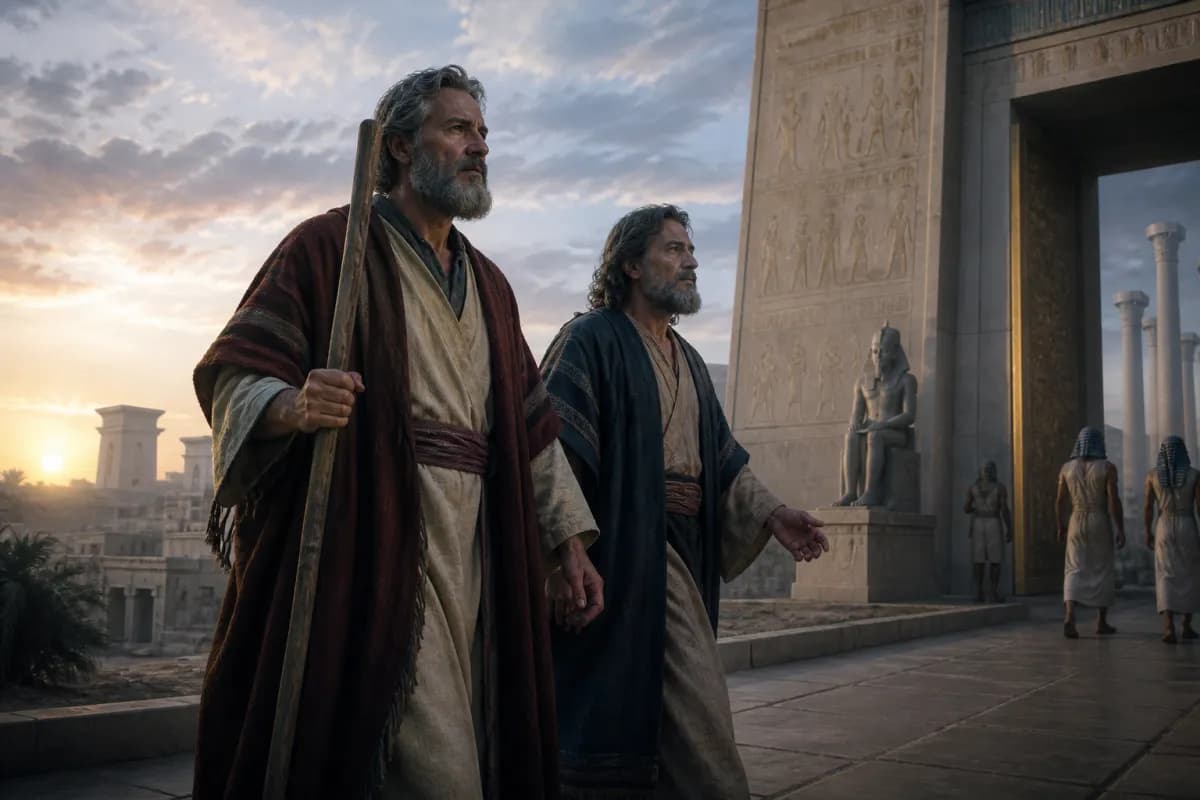
Exodus 6:28–7:7 returns to Moses’ objection that he cannot speak effectively before Pharaoh. God answers by defining Moses’ and Aaron’s roles, giving a precise message, and reminding them that Pharaoh’s resistance will display God’s power. The passage shows that God’s mission does not rest on the messenger’s eloquence and points to Jesus, whose saving word comes with divine authority and sends His people to testify faithfully.
- In this study
- 3 verses · 5 movements
CONTEXTUAL OVERVIEW
The genealogy has identified Moses and Aaron; now the narrative resumes the question that has followed Moses since the burning bush: how can he speak before the king of Egypt? Moses calls attention to his “uncircumcised lips,” an image of unfitness or impeded speech. His concern is real, but the Lord does not revoke the mission.
God gives the brothers a defined relationship. Moses will speak God’s words to Aaron, and Aaron will speak to Pharaoh. The arrangement does not turn Moses into a deity; it means that he represents God’s message authoritatively to Aaron, who becomes the public spokesman. Every word remains accountable to the Lord who sends them.
HISTORICAL AND LITERARY CONTEXT
Exodus repeatedly joins divine sovereignty with real human resistance. God says He will harden Pharaoh’s heart, and the narrative will also describe Pharaoh hardening his own heart. The text refuses to treat Pharaoh as an innocent victim: his stubbornness belongs to a long history of enslaving Israel and resisting the Lord’s command.
The first audience would have heard the promise of signs and judgments as assurance that Egypt’s king is not beyond God’s reach. Pharaoh’s court claims public authority, wealth, and religious prestige, but the coming contest will reveal that Israel’s God alone has authority over Egypt and its ruler.
SECTION-BY-SECTION ANALYSIS
- Uncircumcised lips · Exodus 6:30Moses’ image of unfitness does not cancel God’s commission or define its outcome.
- Aaron speaks · Exodus 6:29God provides an ordered partnership so that the message reaches Pharaoh clearly.
- Egypt will know · Exodus 6:28The coming judgments will reveal the Lord’s identity and expose Pharaoh’s pretended supremacy.
CHRIST IN THIS PASSAGE
Moses and Aaron speak a message given to them; Jesus speaks with the unique authority of the Son who reveals the Father. The comparison should not flatten their differences. Yet Exodus helps readers see that salvation comes by God’s initiated word, confronting rulers and powers that claim the right to control human life.
Jesus’ mission brings God’s saving authority into the world in His person, death, and resurrection. He then sends ordinary disciples to bear witness to what He has accomplished. Their confidence, like Moses’ and Aaron’s, is not eloquence or status but the truth of God’s word and the presence of the risen Christ.
REFLECTION
Many people postpone obedience because they can name a real limitation. Exodus neither mocks Moses’ weakness nor allows it to have the final word. God supplies Aaron, gives a message, and asks the brothers to do what He commands. Faithfulness often begins with the next clear act, not with a sudden feeling of adequacy.
Jesus calls His church to speak His gospel in situations where resistance is expected. That calling does not require a performance. It requires truthfulness, dependence on the Spirit, and love for those who may refuse the message. God is responsible for the outcome; His people are responsible to bear witness.
Original Hebrew Word Study
Exodus 6:30
עָרֵל
arel · H6189
Usually translated: uncircumcised
Moses calls his lips “uncircumcised,” using covenant language for what feels unfit or closed. His objection keeps the focus on God’s sending word rather than on the messenger’s natural confidence.
Follow the Scripture trail
Moses Is Sent to Pharaoh: God Speaks Through a Reluctant Servant in the larger story
The connection: God sends Moses and Aaron with His word into Pharaoh’s court so that Egypt will know who the Lord is. Jesus fulfills God’s saving revelation as the Son who speaks and accomplishes the Father’s will, then sends His church to proclaim His rescue in dependent obedience.
Respond to the passage
Do not wait to feel impressive before obeying the clear word of Jesus. Name your limitation honestly, receive the help God provides, and take the next faithful opportunity to speak or act as Christ’s witness.
- What does Moses’ repeated objection reveal about the difference between God’s call and a servant’s self-confidence?
- Why does God tell Moses in advance that Pharaoh will resist?
- How does the authority of Jesus’ saving word give courage to ordinary believers who are called to bear witness?
Prayer
Lord Jesus, forgive me for treating my weakness as a reason to avoid Your call. Give me humility to receive help, courage to speak Your truth, and love for those who resist. Let Your power be clear in my dependence on You. Amen.