Passage Study
Famine Again: Isaac Learns to Remain Under God’s Promise
Genesis 26:1–26:33
Genesis 26:1–33 follows Isaac through famine, fear, abundance, conflict over wells, and a covenant with Abimelech. God tells Isaac to remain in Gerar and repeats the promise made to Abraham. Isaac’s fearful deception and his patient pursuit of space for life show a man upheld by grace, directing readers to Jesus, who secures God’s promise and gives His people peace that does not depend on control.
- In this study
- 33 verses · 5 movements
Genesis 26
26:1There was a famine in the land, in addition to the first famine that was in the days of Abraham. Isaac went to Abimelech king of the Philistines, to Gerar.
26:2The LORD appeared to him, and said, “Don’t go down into Egypt. Live in the land I will tell you about.
26:3Live in this land, and I will be with you, and will bless you. For I will give to you, and to your offspring, all these lands, and I will establish the oath which I swore to Abraham your father.
26:4I will multiply your offspring as the stars of the sky, and will give all these lands to your offspring. In your offspring all the nations of the earth will be blessed,
26:5because Abraham obeyed my voice, and kept my requirements, my commandments, my statutes, and my laws.”
26:6Isaac lived in Gerar.
26:7The men of the place asked him about his wife. He said, “She is my sister,” for he was afraid to say, “My wife”, lest, he thought, “the men of the place might kill me for Rebekah, because she is beautiful to look at.”
26:8When he had been there a long time, Abimelech king of the Philistines looked out at a window, and saw, and, behold, Isaac was caressing Rebekah, his wife.
26:9Abimelech called Isaac, and said, “Behold, surely she is your wife. Why did you say, ‘She is my sister’?” Isaac said to him, “Because I said, ‘Lest I die because of her.’”
26:10Abimelech said, “What is this you have done to us? One of the people might easily have lain with your wife, and you would have brought guilt on us!”
26:11Abimelech commanded all the people, saying, “He who touches this man or his wife will surely be put to death.”
26:12Isaac sowed in that land, and reaped in the same year one hundred times what he planted. The LORD blessed him.
26:13The man grew great, and grew more and more until he became very great.
26:14He had possessions of flocks, possessions of herds, and a great household. The Philistines envied him.
26:15Now all the wells which his father’s servants had dug in the days of Abraham his father, the Philistines had stopped, and filled with earth.
26:16Abimelech said to Isaac, “Go away from us, for you are much mightier than we.”
26:17Isaac departed from there, encamped in the valley of Gerar, and lived there.
26:18Isaac dug again the wells of water, which they had dug in the days of Abraham his father, for the Philistines had stopped them after the death of Abraham. He called their names after the names by which his father had called them.
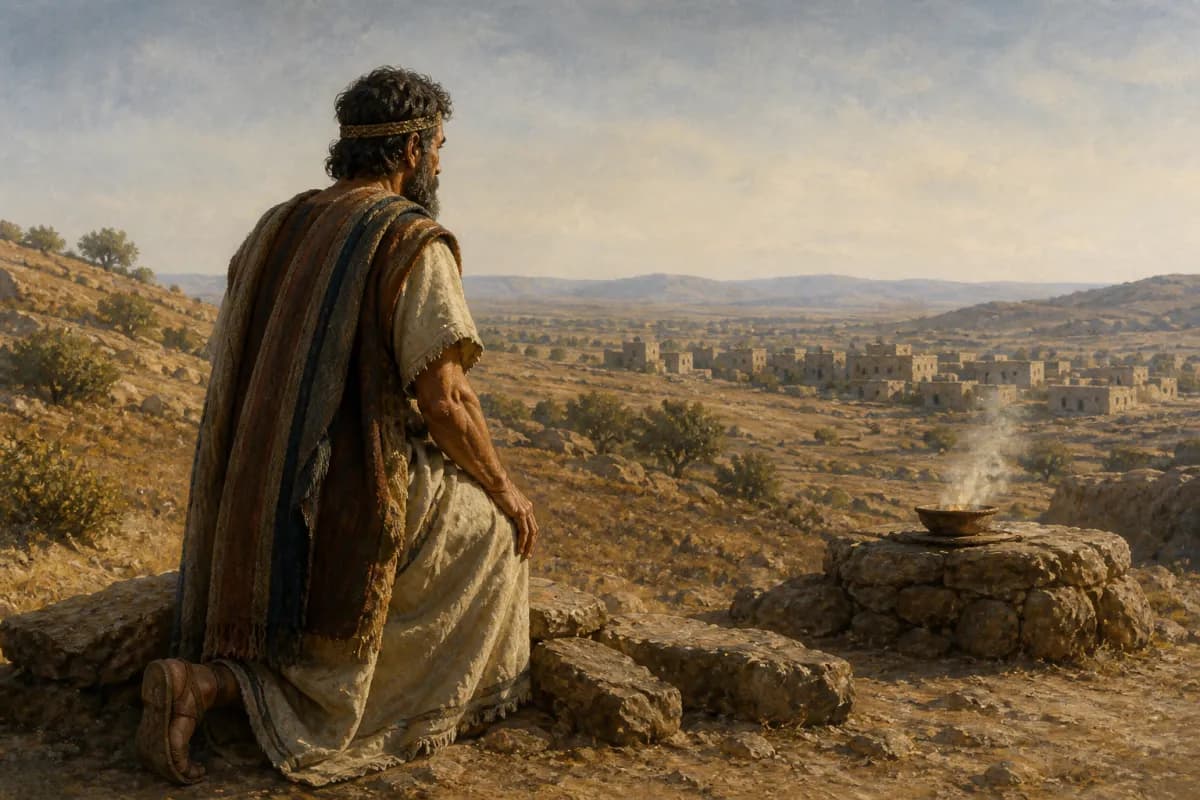
26:19Isaac’s servants dug in the valley, and found there a well of flowing water.
26:20The herdsmen of Gerar argued with Isaac’s herdsmen, saying, “The water is ours.” So he called the name of the well Esek, because they contended with him.
26:21They dug another well, and they argued over that, also. So he called its name Sitnah.
26:22He left that place, and dug another well. They didn’t argue over that one. So he called it Rehoboth. He said, “For now the LORD has made room for us, and we will be fruitful in the land.”
26:23He went up from there to Beersheba.
26:24The LORD appeared to him the same night, and said, “I am the God of Abraham your father. Don’t be afraid, for I am with you, and will bless you, and multiply your offspring for my servant Abraham’s sake.”
26:25He built an altar there, and called on the LORD’s name, and pitched his tent there. There Isaac’s servants dug a well.
26:26Then Abimelech went to him from Gerar with Ahuzzath his friend, and Phicol the captain of his army.
26:27Isaac said to them, “Why have you come to me, since you hate me, and have sent me away from you?”
26:28They said, “We saw plainly that the LORD was with you. We said, ‘Let there now be an oath between us, even between us and you, and let’s make a covenant with you,
26:29that you will do us no harm, as we have not touched you, and as we have done to you nothing but good, and have sent you away in peace.’ You are now the blessed of the LORD.”
26:30He made them a feast, and they ate and drank.
26:31They rose up some time in the morning, and swore an oath to one another. Isaac sent them away, and they departed from him in peace.
26:32The same day, Isaac’s servants came, and told him concerning the well which they had dug, and said to him, “We have found water.”
26:33He called it “Shibah”. Therefore the name of the city is “Beersheba” to this day.
CONTEXTUAL OVERVIEW
A famine puts Isaac’s household under the kind of pressure that had shaped Abraham’s earlier journey. He travels toward Gerar, where Abimelech rules, and may be considering Egypt as a source of security. God appears and gives a specific command: do not go down to Egypt; stay in the land where I tell you, because God will be with him and will keep the promise made to Abraham.
The chapter is strikingly honest about Isaac. The same man who receives a divine promise repeats his father’s fear-driven lie, saying that Rebekah is his sister. Yet God preserves Rebekah, confronts the danger through Abimelech, and continues to bless Isaac. The emphasis is not Isaac’s spiritual achievement but the reliability of the God who remains faithful while forming a fearful man.
HISTORICAL AND LITERARY CONTEXT
Gerar appears earlier in the Abraham narratives as a Philistine-associated royal center, though the later Philistine identity should not be read back into every detail of the patriarchal period. The narrative itself supplies what readers need: Abimelech has authority, Isaac is a resident outsider, and land and water are sources of real economic vulnerability.
Wells are central because flocks and households cannot survive without dependable water. The conflict is therefore not a minor argument about property. It puts Isaac’s ability to remain in the region at stake. Genesis places the disputes beside God’s repeated promise of presence, teaching that covenant faithfulness is tested in ordinary needs as much as in dramatic moments of worship.
SECTION-BY-SECTION ANALYSIS
- The command to remain · Genesis 26:7God ties Isaac’s obedience to a particular place, teaching him that survival does not require grasping the route that looks safest.
- The reopened wells · Genesis 26:18Isaac receives an inheritance from Abraham yet must patiently rework the ground in a contested land.
- The altar at Beersheba · Genesis 26:25After renewed fear and renewed promise, worship names the Lord as Isaac’s true source of security.
CHRIST IN THIS PASSAGE
The repeated promise to Abraham and Isaac carries forward the covenant line through which Scripture identifies Jesus as the promised offspring. Isaac’s mixture of faith and fear makes him an unsuitable savior; the promise depends finally on God’s faithfulness, not on the steadiness of the patriarch who receives it.
Jesus fulfills that promise as the obedient Son and the source of blessing for the nations. He does not secure His mission by deception or self-protection. Through His death and resurrection, He makes peace with God for sinners and gives His people a secure inheritance that conflict, famine, and fear cannot finally take away.
REFLECTION
Famine can expose the strategies we reach for when we feel unsafe. Isaac’s lie warns that fear can make a person treat a spouse, neighbor, or promise as something to manage rather than receive from God. The gospel invites confession without despair: Jesus meets fearful people with truth, forgiveness, and the steady presence Isaac repeatedly hears promised.
The wells invite patient peacemaking. Isaac does not turn every contested place into a final battle; he keeps working until God makes room. This is not a command to remain in unsafe situations or to surrender justice. It is a picture of a believer who refuses to make control or retaliation the source of life, trusting Christ to lead with wisdom and provide what is needed.
Original Hebrew Word Study
Genesis 26:3
גּוּר
gur · H1481
Usually translated: to sojourn or live as a resident alien
Gur means to live as a sojourner. Isaac remains a dependent resident in the land God promises, learning that the covenant inheritance arrives by God’s faithfulness rather than by immediate possession.
Follow the Scripture trail
Famine Again: Isaac Learns to Remain Under God’s Promise in the larger story
The connection: In the famine, God preserves the promise through Isaac despite Isaac’s fear and the conflicts around him. Jesus fulfills that covenant promise as the faithful Son who gives peace with God and carries blessing to the nations.
Respond to the passage
Name the place where fear is tempting you to control, conceal, or force an outcome. Ask Jesus for the courage to act truthfully, to seek peace wisely, and to trust His provision one faithful step at a time.
- Why does God’s repeated promise matter when Isaac still acts from fear?
- How do the wells make the conflict in this chapter concrete rather than merely symbolic?
- What kind of peace does Jesus offer that is deeper than getting every disputed circumstance resolved immediately?
Prayer
Faithful God, when fear makes me grasp for control, turn me again to Your promise. Forgive my half-truths and anxious striving. Through Jesus, teach me to walk honestly, seek peace wisely, and trust Your presence in every uncertain season. Amen.