Passage Study
Job’s Repentance, God’s Verdict, and Restored Fellowship
Job 42:1–42:17
Job 42 closes the book with Job confessing God’s unsearchable purpose after seeing Him more truly, the Lord rebuking Eliphaz and his friends for speaking falsely, and Job praying for them. God restores Job’s fortunes, gives him a renewed household, and grants a long life. The restoration is a gift, not a formula that makes every suffering end the same way. The passage points to Jesus, whose righteous suffering and resurrection secure forgiveness, reconciliation, and final restoration beyond the limits of Job’s earthly ending.
- In this study
- 17 verses · 5 movements
Job 42
42:1Then Job answered the LORD:
42:2“I know that you can do all things, and that no purpose of yours can be restrained.
42:3You asked, ‘Who is this who hides counsel without knowledge?’ therefore I have uttered that which I didn’t understand, things too wonderful for me, which I didn’t know.
42:4You said, ‘Listen, now, and I will speak; I will question you, and you will answer me.’
42:5I had heard of you by the hearing of the ear, but now my eye sees you.
42:6Therefore I abhor myself, and repent in dust and ashes.”
42:7It was so, that after the LORD had spoken these words to Job, the LORD said to Eliphaz the Temanite, “My wrath is kindled against you, and against your two friends; for you have not spoken of me the thing that is right, as my servant Job has.
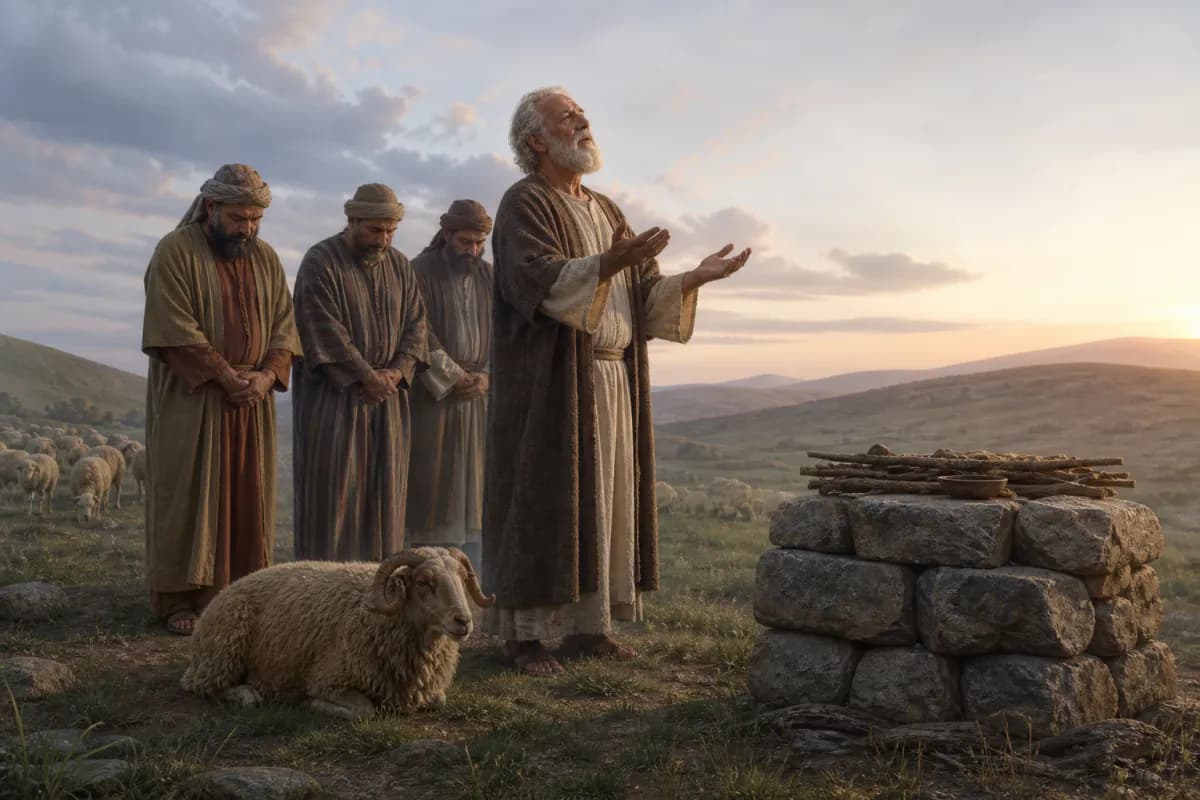
42:8Now therefore, take to yourselves seven bulls and seven rams, and go to my servant Job, and offer up for yourselves a burnt offering; and my servant Job shall pray for you, for I will accept him, that I not deal with you according to your folly. For you have not spoken of me the thing that is right, as my servant Job has.”
42:9So Eliphaz the Temanite and Bildad the Shuhite and Zophar the Naamathite went and did what the LORD commanded them, and the LORD accepted Job.
42:10The LORD restored Job’s prosperity when he prayed for his friends. The LORD gave Job twice as much as he had before.
42:11Then all his brothers, all his sisters, and all those who had been of his acquaintance before, came to him and ate bread with him in his house. They comforted him, and consoled him concerning all the evil that the LORD had brought on him. Everyone also gave him a piece of money, and everyone a ring of gold.
42:12So the LORD blessed the latter end of Job more than his beginning. He had fourteen thousand sheep, six thousand camels, one thousand yoke of oxen, and a thousand female donkeys.
42:13He had also seven sons and three daughters.
42:14He called the name of the first, Jemimah; and the name of the second, Keziah; and the name of the third, Keren Happuch.
42:15In all the land were no women found so beautiful as the daughters of Job. Their father gave them an inheritance among their brothers.
42:16After this Job lived one hundred forty years, and saw his sons, and his sons’ sons, to four generations.
42:17So Job died, being old and full of days.
CONTEXTUAL OVERVIEW
Job’s answer begins after the whirlwind speeches have changed the terms of the dispute. He confesses that God can do all things and that he has spoken about matters beyond his knowledge. The crucial movement is from hearing to seeing: Job has encountered God’s majesty in a way that humbles his demand to manage the moral order. His repentance is not a confession that the friends’ accusations were correct.
The Lord’s verdict makes that distinction unmistakable. Eliphaz, Bildad, and Zophar have not spoken rightly about God as Job has. They must bring sacrifices, and Job must pray for them. The man they treated as a secret offender becomes the intercessor through whom they are spared. Only after this reconciliation does the narrative describe Job’s restored fortunes and family life.
HISTORICAL AND LITERARY CONTEXT
Job 42 completes a wisdom narrative that has consistently resisted a mechanical explanation of suffering. The prologue showed that Job’s losses were not punishment for hidden sin; the dialogues exposed the cruelty of applying a rigid moral formula; and the whirlwind revealed the difference between creaturely knowledge and divine wisdom. The epilogue restores Job, but it does not erase his children’s deaths or give readers a universal timetable for healing and prosperity.
Job’s daughters are named—Jemimah, Keziah, and Keren-happuch—and receive an inheritance alongside their brothers. The text presents this as part of the abundance of the ending. It should not be pressed into a program for every family or culture, but it does show restoration reaching the household rather than stopping at Job’s private comfort.
SECTION-BY-SECTION ANALYSIS
- Now my eye sees you · Job 42:5Job’s encounter with God transforms his posture even though he receives no explanation of the heavenly contest.
- You have not spoken of me what is right · Job 42:7God publicly corrects the friends’ confident theology and protects Job from their false verdict.
- Job prayed for his friends · Job 42:10The injured man’s intercession becomes the means by which former accusers are received, making forgiveness concrete.
CHRIST IN THIS PASSAGE
Job’s prayer for the friends is a strong thematic pattern, not a direct prediction of Christ. Job needs mercy himself, yet he intercedes for people who have wounded him. Jesus fulfills this pattern perfectly: the righteous Son bears sin, prays for His enemies, and by His one sacrifice brings guilty people into peace with God.
Job’s restored life also points beyond itself. His renewed household is a gracious earthly ending, but the book has already shown that justice cannot be measured by immediate prosperity. Jesus’ resurrection gives the firmer Christian hope: death and loss do not have the last word, and God will finally make all things new. That promise sustains believers whether or not their present circumstances are visibly restored.
REFLECTION
Job 42 calls for humble repentance where we have spoken beyond our knowledge about God or another person’s suffering. It also gives permission to receive God’s correction without accepting false shame. The friends were wrong to make Job’s pain into evidence of hidden wickedness, and God Himself says so.
If someone has harmed you with careless spiritual words, bring the wound to Jesus. Forgiveness may require truth, boundaries, and time; it is not pretending the harm never occurred. Pray for grace to seek their good while trusting the risen Christ with the justice and restoration that remain beyond your control.
Original Hebrew Word Study
Job 42:2
יָדַע
yada · H3045
Usually translated: to know or acknowledge
Yada means to know or acknowledge. Job’s final confession is not an answer to every question; it is the settled recognition that God’s purposes cannot be overturned.
Follow the Scripture trail
Job’s Repentance, God’s Verdict, and Restored Fellowship in the larger story
The connection: God rejects the friends’ false verdict, receives Job’s intercession, and gives Job a gracious restoration. Jesus fulfills the deeper pattern as the righteous intercessor whose death reconciles enemies to God and whose resurrection guarantees final restoration beyond every partial earthly ending.
Respond to the passage
Ask Jesus to expose any way you have used another person’s pain to make a quick spiritual judgment. Where you have been wounded by false words, name the harm truthfully before Him and ask for the grace to pursue forgiveness without denying the need for wisdom and boundaries.
- Why is Job’s repentance different from admitting that the friends’ accusations were true?
- What does God’s verdict on Eliphaz, Bildad, and Zophar teach about speaking to sufferers?
- Why must Job’s restoration not become a promise that every faithful sufferer will receive the same earthly outcome?
Prayer
Risen Lord Jesus, You know every grief and every careless word that has wounded me. Humble me where I have judged wrongly, help me forgive without pretending harm is small, and fix my hope on the final restoration Your resurrection secures. Amen.