Passage Study
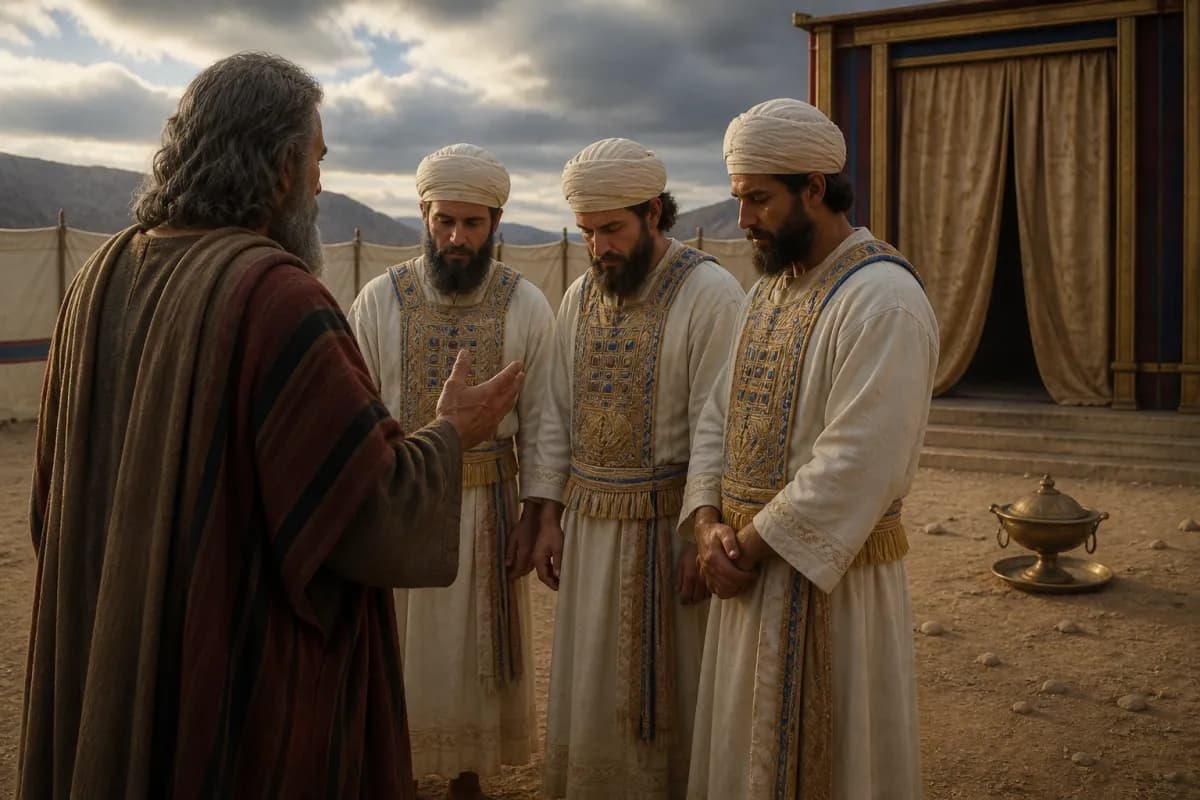
Unauthorized Fire: Nadab, Abihu, and the Holiness of God
Leviticus 10:1–10:7
Leviticus 10:1–7 tells how Nadab and Abihu bring fire before the Lord that He has not commanded, and fire from His presence consumes them. The shocking judgment teaches Israel that God’s holiness cannot be approached on self-chosen terms. Jesus bears the judgment sin deserves and brings repentant people near to God with reverent confidence rather than presumption.
- In this study
- 7 verses · 5 movements
Leviticus 10
10:1Nadab and Abihu, the sons of Aaron, each took his censer, and put fire in it, and laid incense on it, and offered strange fire before the LORD, which he had not commanded them.
10:2Fire came out from before the LORD, and devoured them, and they died before the LORD.
10:3Then Moses said to Aaron, “This is what the LORD spoke of, saying, ‘I will show myself holy to those who come near me, and before all the people I will be glorified.’” Aaron held his peace.
10:4Moses called Mishael and Elzaphan, the sons of Uzziel the uncle of Aaron, and said to them, “Draw near, carry your brothers from before the sanctuary out of the camp.”
10:5So they came near, and carried them in their tunics out of the camp, as Moses had said.
10:6Moses said to Aaron, and to Eleazar and to Ithamar, his sons, “Don’t let the hair of your heads go loose, and don’t tear your clothes, so that you don’t die, and so that he will not be angry with all the congregation; but let your brothers, the whole house of Israel, bewail the burning which the LORD has kindled.
10:7You shall not go out from the door of the Tent of Meeting, lest you die; for the anointing oil of the LORD is on you.” They did according to the word of Moses.
CONTEXTUAL OVERVIEW
Leviticus 9 ends with fire from the Lord receiving the sacrifice and moving Israel to worship. Leviticus 10 opens with fire from the Lord consuming two priests who bring an offering He did not command. The deliberate contrast makes the warning unavoidable: God’s presence is joyful grace, but it is never raw material for religious innovation or personal display.
Nadab and Abihu are not outsiders. They are Aaron’s sons, newly ordained and close to the sanctuary. Their nearness intensifies the lesson rather than softening it. Moses’ explanation gives the chapter’s center: God will show Himself holy among those who are near Him and glorified before all the people.
HISTORICAL AND LITERARY CONTEXT
The text calls their fire “unauthorized,” explaining it as what the Lord had not commanded. It does not give a complete psychological account of their motive, so readers should not build a precise story beyond the words supplied. The following instruction about wine warns priests not to serve while impaired, but it does not explicitly state that Nadab and Abihu were drunk.
Their death occurs at the beginning of the priesthood, much as later biblical narratives mark foundational moments with severe warnings about treating holy things lightly. Aaron remains silent. Eleazar and Ithamar continue their duties, while the wider community is permitted to mourn. The distinction preserves both real grief and the holy responsibility of the priests still serving before God.
SECTION-BY-SECTION ANALYSIS
- What God had not commanded · Leviticus 10:1The stated problem is not lack of enthusiasm but an act of approach detached from God’s revealed instruction.
- Fire from the Lord · Leviticus 10:2The fire that accepted sacrifice in chapter 9 also judges presumption in chapter 10, displaying one holy God.
- Aaron’s silence · Leviticus 10:6Aaron’s silence does not erase grief; it records the weight of receiving God’s judgment when no easy answer is offered.
CHRIST IN THIS PASSAGE
This account warns against treating Jesus as permission to approach God carelessly. Christ’s sacrifice gives real access, yet the New Testament still calls the church to worship with reverence and awe because God is holy. Grace does not shrink God’s holiness; it reveals the costly mercy by which sinners can stand before Him.
Jesus is unlike Nadab and Abihu: He perfectly obeys the Father and offers Himself according to the Father’s saving will. At the cross He bears the judgment sin deserves so that those who repent and trust Him are not consumed by guilt. His mission creates neither terror-driven religion nor casual presumption, but grateful and obedient worship.
REFLECTION
Some passages should slow us down. Leviticus 10 refuses the idea that sincerity alone makes an act of worship faithful. God is not impressed by religious intensity severed from His word, and leaders are especially accountable for the way they direct people toward Him.
The answer is not to live in dread that a minor mistake will bring immediate judgment. Jesus invites the fearful and guilty to come to Him. He also trains His people to ask, with humility, whether their worship and ministry honor the God who has spoken rather than merely reflecting what feels impressive or useful to them.
Original Hebrew Word Study
Leviticus 10:1
זָר
zar · H2114
Usually translated: strange, unauthorized, or foreign
Zar describes what is unauthorized. Nadab and Abihu offer fire the Lord did not command, showing that zeal in worship cannot replace obedience to God’s holy instruction.
Follow the Scripture trail
Unauthorized Fire: Nadab, Abihu, and the Holiness of God in the larger story
The connection: Nadab and Abihu reveal the danger of drawing near to the holy God on self-chosen terms. Jesus fulfills God’s saving purpose as the obedient Son who bears sin’s judgment and brings repentant people to the Father in reverent, grateful worship.
Respond to the passage
Ask Jesus to show you any place where familiarity with Christian language has made you casual about God. Receive His mercy, then choose one practice of worship or service that is shaped more deliberately by His word.
- Why is the contrast between the fire in Leviticus 9 and the fire in Leviticus 10 so important?
- What does the passage actually say about Nadab and Abihu, and what details must remain unclaimed?
- How can Christ’s sacrifice produce both confidence before God and reverence for God?
Prayer
Holy God, forgive my presumption and teach me to receive Your mercy with reverence. Thank You that Jesus obeyed where I fail and bore sin’s judgment to bring me near. Shape my worship and service by Your word and for Your glory. Amen.