Passage Study
From Outside to Worship: Cleansing from Skin Disease
Leviticus 14:1–14:32
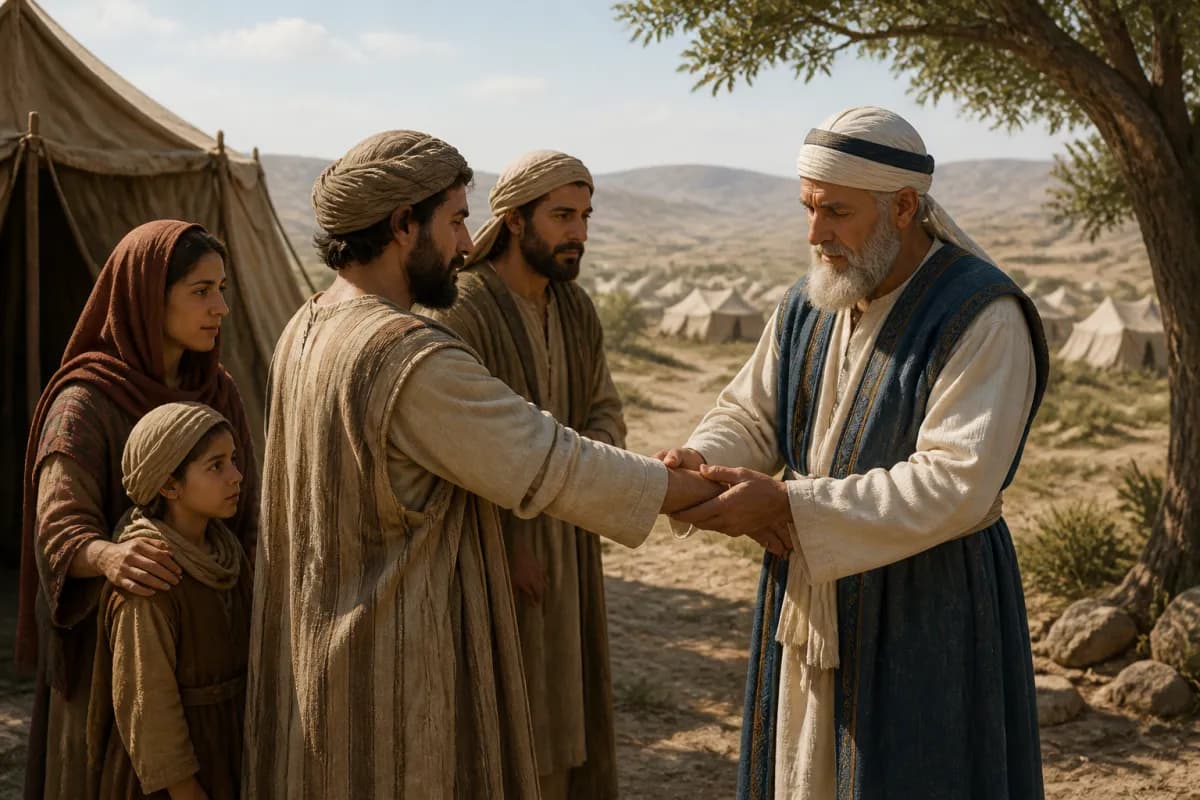
Leviticus 14:1–32 gives a healed person a carefully staged return from outside the camp to the tent of meeting. Birds, cedarwood, scarlet yarn, hyssop, washing, oil, blood, and offerings make restoration visible before God and the people. Jesus fulfills this movement by cleansing the unclean and bringing outsiders into the worshiping family through His saving work.
- In this study
- 32 verses · 5 movements
Leviticus 14
14:1The LORD spoke to Moses, saying,
14:2“This shall be the law of the leper in the day of his cleansing: He shall be brought to the priest,
14:3and the priest shall go out of the camp. The priest shall examine him. Behold, if the plague of leprosy is healed in the leper,
14:4then the priest shall command them to take for him who is to be cleansed two living clean birds, cedar wood, scarlet, and hyssop.
14:5The priest shall command them to kill one of the birds in an earthen vessel over running water.
14:6As for the living bird, he shall take it, the cedar wood, the scarlet, and the hyssop, and shall dip them and the living bird in the blood of the bird that was killed over the running water.
14:7He shall sprinkle on him who is to be cleansed from the leprosy seven times, and shall pronounce him clean, and shall let the living bird go into the open field.
14:8“He who is to be cleansed shall wash his clothes, and shave off all his hair, and bathe himself in water; and he shall be clean. After that he shall come into the camp, but shall dwell outside his tent seven days.
14:9It shall be on the seventh day, that he shall shave all his hair off his head and his beard and his eyebrows. He shall shave off all his hair. He shall wash his clothes, and he shall bathe his body in water. Then he shall be clean.
14:10“On the eighth day he shall take two male lambs without defect, one ewe lamb a year old without defect, three tenths of an ephah of fine flour for a meal offering, mixed with oil, and one log of oil.
14:11The priest who cleanses him shall set the man who is to be cleansed, and those things, before the LORD, at the door of the Tent of Meeting.
14:12“The priest shall take one of the male lambs, and offer him for a trespass offering, with the log of oil, and wave them for a wave offering before the LORD.
14:13He shall kill the male lamb in the place where they kill the sin offering and the burnt offering, in the place of the sanctuary; for as the sin offering is the priest’s, so is the trespass offering. It is most holy.
14:14The priest shall take some of the blood of the trespass offering, and the priest shall put it on the tip of the right ear of him who is to be cleansed, and on the thumb of his right hand, and on the big toe of his right foot.
14:15The priest shall take some of the log of oil, and pour it into the palm of his own left hand.
14:16The priest shall dip his right finger in the oil that is in his left hand, and shall sprinkle some of the oil with his finger seven times before the LORD.
14:17The priest shall put some of the rest of the oil that is in his hand on the tip of the right ear of him who is to be cleansed, and on the thumb of his right hand, and on the big toe of his right foot, upon the blood of the trespass offering.
14:18The rest of the oil that is in the priest’s hand he shall put on the head of him who is to be cleansed, and the priest shall make atonement for him before the LORD.
14:19“The priest shall offer the sin offering, and make atonement for him who is to be cleansed because of his uncleanness. Afterward he shall kill the burnt offering;
14:20then the priest shall offer the burnt offering and the meal offering on the altar. The priest shall make atonement for him, and he shall be clean.
14:21“If he is poor, and can’t afford so much, then he shall take one male lamb for a trespass offering to be waved, to make atonement for him, and one tenth of an ephah of fine flour mixed with oil for a meal offering, and a log of oil;
14:22and two turtledoves, or two young pigeons, such as he is able to afford; and the one shall be a sin offering, and the other a burnt offering.
14:23“On the eighth day he shall bring them for his cleansing to the priest, to the door of the Tent of Meeting, before the LORD.
14:24The priest shall take the lamb of the trespass offering, and the log of oil, and the priest shall wave them for a wave offering before the LORD.
14:25He shall kill the lamb of the trespass offering. The priest shall take some of the blood of the trespass offering and put it on the tip of the right ear of him who is to be cleansed, and on the thumb of his right hand, and on the big toe of his right foot.
14:26The priest shall pour some of the oil into the palm of his own left hand;
14:27and the priest shall sprinkle with his right finger some of the oil that is in his left hand seven times before the LORD.
14:28Then the priest shall put some of the oil that is in his hand on the tip of the right ear of him who is to be cleansed, and on the thumb of his right hand, and on the big toe of his right foot, on the place of the blood of the trespass offering.
14:29The rest of the oil that is in the priest’s hand he shall put on the head of him who is to be cleansed, to make atonement for him before the LORD.
14:30He shall offer one of the turtledoves, or of the young pigeons, which ever he is able to afford,
14:31of the kind he is able to afford, the one for a sin offering, and the other for a burnt offering, with the meal offering. The priest shall make atonement for him who is to be cleansed before the LORD.”
14:32This is the law for him in whom is the plague of leprosy, who is not able to afford the sacrifice for his cleansing.
CONTEXTUAL OVERVIEW
Leviticus 13 determined whether an affliction made a person unclean; Leviticus 14 begins only after healing has occurred. The priest does not heal the person. He goes outside the camp to verify the change and then guides a return that is social, ritual, and worshipful. Restoration is not merely the absence of symptoms.
The movement is striking: outside the camp, then inside the camp but outside the tent, then finally before the Lord at the sanctuary. Each stage gives form to the truth that God Himself makes a way for a separated person to come home.
HISTORICAL AND LITERARY CONTEXT
The first rite uses two clean birds, cedarwood, scarlet yarn, and hyssop. One bird is killed over fresh water; the other is released into the open field after being dipped with the other materials. The text does not explain every symbolic element, so responsible interpretation should not turn each item into a hidden code. The unmistakable result is cleansing and release.
On the eighth day the person brings guilt, sin, and burnt offerings. Blood from the guilt offering and oil are placed on the right ear, thumb, and big toe, echoing priestly consecration in Leviticus 8. The poor person receives a reduced scale of offerings without receiving a reduced restoration.
SECTION-BY-SECTION ANALYSIS
- The priest goes out · Leviticus 14:3The first official movement is toward the excluded person, before that person can come to the sanctuary.
- The released bird · Leviticus 14:7The rite visibly joins cleansing with release into the open field.
- Blood and oil · Leviticus 14:17Ear, hand, and foot are marked for a restored life of hearing, acting, and walking before God.
CHRIST IN THIS PASSAGE
The Gospels deliberately connect Jesus’ healings to this chapter. After cleansing a man with a skin disease, Jesus commands him to show himself to the priest and offer what Moses commanded. Jesus honors the law’s public restoration while revealing the authority that no ritual could supply: He makes the unclean clean.
The passage also provides a strong pattern for Christ’s saving mission. He comes to people outside the circle of belonging, bears the cost of their restoration, and brings them near to God. His sacrifice does not merely adjust a ritual status; it forgives sin, gives the Spirit, and makes former outsiders members of God’s household.
REFLECTION
Many people know what it is to be physically better yet still uncertain whether they truly belong again: after illness, addiction, shame, incarceration, or public failure. Leviticus 14 refuses a shallow return. It provides witnesses, time, cleansing, and a real welcome back into worship.
Jesus calls His church to be a truthful place of restoration. Do not erase the seriousness of harm, but do not make permanent outsiders of those whom Christ is healing. Pray for wisdom to build patient pathways of repentance, care, accountability, and belonging.
Original Hebrew Word Study
Leviticus 14:7
טָהֵר
taher · H2891
Usually translated: to cleanse or declare clean
Taher means to cleanse or declare clean. The ceremony publicly restores a healed person from exclusion to fellowship with the people and their worship.
Follow the Scripture trail
From Outside to Worship: Cleansing from Skin Disease in the larger story
The connection: The healed person’s journey from outside the camp to the sanctuary dramatizes God’s desire to restore the excluded. Jesus accomplishes that saving welcome, cleansing sinners and bringing them into lasting fellowship with the Father and His people.
Respond to the passage
Consider one person whose return to community needs more than a quick word of welcome. Ask Jesus for a wise, concrete way to support restoration with truth, patience, and practical care.
- Why does the priest meet the healed person outside the camp?
- What does the staged movement from outside the camp to the sanctuary communicate about restoration?
- How does Jesus’ command in Mark 1 keep His healing connected to public restoration rather than private experience alone?
Prayer
Lord Jesus, You seek those who are outside and bring them near. Cleanse what is broken in me, make me faithful in the slow work of restoration, and use Your people as a welcoming witness to Your saving grace. Amen.