Passage Study
Life Belongs to God: The Sacredness of Blood
Leviticus 17:1–17:16
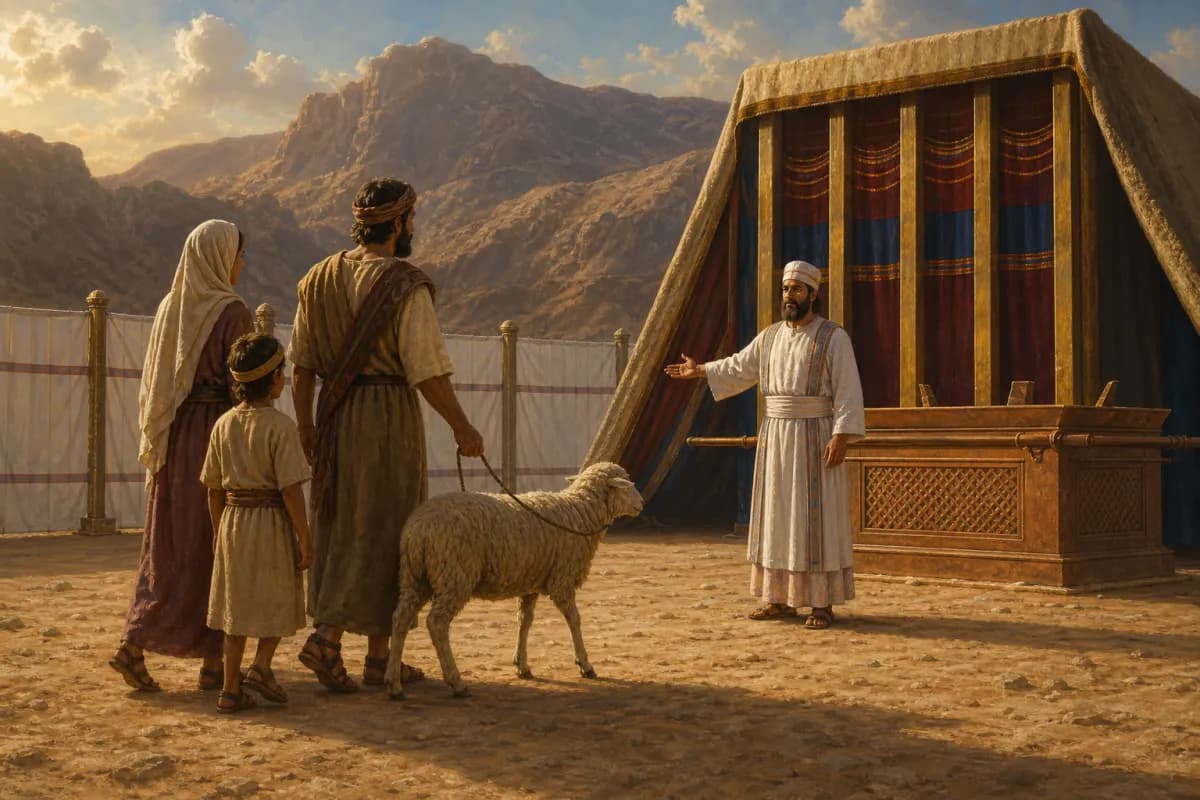
Leviticus 17:1–16 requires Israel to bring sacrificial animals to the sanctuary and forbids the eating of blood. God gives the reason: the life is in the blood, and He has given it on the altar for atonement. The passage guards worship from rival gods and teaches that reconciliation is God’s gift, fulfilled in the life Jesus willingly gives for the world.
- In this study
- 16 verses · 5 movements
Leviticus 17
17:1The LORD spoke to Moses, saying,
17:2“Speak to Aaron, and to his sons, and to all the children of Israel, and say to them, ‘This is the thing which the LORD has commanded:
17:3Whatever man there is of the house of Israel who kills a bull, or lamb, or goat in the camp, or who kills it outside the camp,
17:4and hasn’t brought it to the door of the Tent of Meeting to offer it as an offering to the LORD before the LORD’s tabernacle: blood shall be imputed to that man. He has shed blood. That man shall be cut off from among his people.
17:5This is to the end that the children of Israel may bring their sacrifices, which they sacrifice in the open field, that they may bring them to the LORD, to the door of the Tent of Meeting, to the priest, and sacrifice them for sacrifices of peace offerings to the LORD.
17:6The priest shall sprinkle the blood on the LORD’s altar at the door of the Tent of Meeting, and burn the fat for a pleasant aroma to the LORD.
17:7They shall no more sacrifice their sacrifices to the goat idols, after which they play the prostitute. This shall be a statute forever to them throughout their generations.’
17:8“You shall say to them, ‘Any man there is of the house of Israel, or of the strangers who live as foreigners among them, who offers a burnt offering or sacrifice,
17:9and doesn’t bring it to the door of the Tent of Meeting to sacrifice it to the LORD, that man shall be cut off from his people.
17:10“‘Any man of the house of Israel, or of the strangers who live as foreigners among them, who eats any kind of blood, I will set my face against that soul who eats blood, and will cut him off from among his people.
17:11For the life of the flesh is in the blood. I have given it to you on the altar to make atonement for your souls; for it is the blood that makes atonement by reason of the life.
17:12Therefore I have said to the children of Israel, “No person among you may eat blood, nor may any stranger who lives as a foreigner among you eat blood.”
17:13“‘Whatever man there is of the children of Israel, or of the strangers who live as foreigners among them, who takes in hunting any animal or bird that may be eaten, he shall pour out its blood, and cover it with dust.
17:14For as to the life of all flesh, its blood is with its life. Therefore I said to the children of Israel, “You shall not eat the blood of any kind of flesh; for the life of all flesh is its blood. Whoever eats it shall be cut off.”
17:15“‘Every person that eats what dies of itself, or that which is torn by animals, whether he is native-born or a foreigner, shall wash his clothes, and bathe himself in water, and be unclean until the evening. Then he shall be clean.
17:16But if he doesn’t wash them, or bathe his flesh, then he shall bear his iniquity.’”
CONTEXTUAL OVERVIEW
Leviticus 17 turns from the annual cleansing of chapter 16 to the ordinary handling of animal life. Israel may not slaughter an ox, lamb, or goat for food as if life were merely private property. Animals intended for such slaughter are brought before the Lord, where their peace-offering blood is placed on the altar.
The chapter’s center is verse 11: life is in the blood, and God has given blood on the altar to make atonement. Blood is not a magical substance and Israel is not invited to fear it superstitiously. It represents life given under God’s authority, so it must not be treated as common food.
HISTORICAL AND LITERARY CONTEXT
Israel had lived amid cultures in which sacrifice could be joined to local gods and spirits. The command explicitly rejects sacrifices to goat-demons, severing worship from rival loyalties and bringing Israel’s offerings before the Lord at the tent of meeting. Covenant faithfulness requires public allegiance to the God who redeemed them.
The rule includes resident aliens as well as native Israelites. A hunted animal’s blood is poured out and covered with earth, and anyone who eats an animal found dead follows a washing procedure. The law combines reverence for life, communal worship, and realistic instructions for life in the land.
SECTION-BY-SECTION ANALYSIS
- One altar · Leviticus 17:6Israel’s sacrifices are gathered before the Lord rather than dispersed among private or rival shrines.
- Life in the blood · Leviticus 17:11Blood stands for the life God owns and gives as His appointed means of atonement.
- Shared obligation · Leviticus 17:14Native Israelite and resident alien are both accountable to honor the holiness of life.
CHRIST IN THIS PASSAGE
Leviticus 17 supplies an essential category for understanding Jesus’ death: atonement is not an achievement extracted from God but a provision He gives. Jesus speaks of His blood in covenant terms at the Last Supper, and the apostles proclaim forgiveness through His self-giving death. His blood means His life offered freely for sinners, not a ritual object detached from His person.
Jesus’ saving mission also gathers scattered worshipers to the one true God. He gives His life to create a people from every nation who reject rival loyalties and draw near to the Father. The command’s seriousness about blood therefore magnifies the costliness and generosity of Christ’s cross.
REFLECTION
Modern readers may find food restrictions distant, yet the passage confronts a familiar temptation: using what God has made while forgetting that it belongs to Him. Life, bodies, food, and worship are not raw material for self-rule. Gratitude begins by receiving them as gifts under God’s authority.
Let the cross correct both carelessness and despair. Your sin is serious enough to require Christ’s life, and His grace is generous enough to forgive the believer who comes to Him. Honor the giver of life in your choices and speak of Jesus’ sacrifice as God’s welcome to those far from Him.
Original Hebrew Word Study
Leviticus 17:11
נֶפֶשׁ
nephesh · H5315
Usually translated: life or living person
Nephesh is life. The blood belongs to God because it represents life, and He gives it on the altar as His appointed means of atonement.
Follow the Scripture trail
Life Belongs to God: The Sacredness of Blood in the larger story
The connection: Leviticus 17 teaches Israel that life belongs to God and that He alone provides the blood of atonement. Jesus gives His own life for sinners, gathering them from false worship into forgiveness and fellowship with the Father.
Respond to the passage
Thank Jesus for the costly grace of His cross. Identify one area where you have treated God’s gifts as your own possession, and bring it under His grateful, life-giving rule.
- Why does the chapter link the prohibition of blood to both life and atonement?
- What rival loyalties does the command to bring sacrifices to one altar confront?
- How does Jesus’ covenant blood make forgiveness a gift rather than a human achievement?
Prayer
Father, all life belongs to You. Thank You for giving Your Son, whose life was offered for our forgiveness. Turn me from false loyalties and teach me to honor You with grateful reverence. Amen.