Passage Study
Holy in the Ordinary: Love of God and Neighbor
Leviticus 19:1–19:37
Leviticus 19:1–37 unfolds God’s command, “You shall be holy, for I the Lord your God am holy,” across worship, family life, harvest, justice, speech, sexuality, business, and care for the vulnerable. Holiness is not withdrawal from ordinary life but faithful love within it. Jesus fulfills this vision by embodying God’s holiness and forming a people who love God and neighbor through His saving grace.
- In this study
- 37 verses · 5 movements
Leviticus 19
19:1The LORD spoke to Moses, saying,
19:2“Speak to all the congregation of the children of Israel, and tell them, ‘You shall be holy; for I, the LORD your God, am holy.
19:3“‘Each one of you shall respect his mother and his father. You shall keep my Sabbaths. I am the LORD your God.
19:4“‘Don’t turn to idols, nor make molten gods for yourselves. I am the LORD your God.
19:5“‘When you offer a sacrifice of peace offerings to the LORD, you shall offer it so that you may be accepted.
19:6It shall be eaten the same day you offer it, and on the next day. If anything remains until the third day, it shall be burned with fire.
19:7If it is eaten at all on the third day, it is an abomination. It will not be accepted;
19:8but everyone who eats it shall bear his iniquity, because he has profaned the holy thing of the LORD, and that soul shall be cut off from his people.
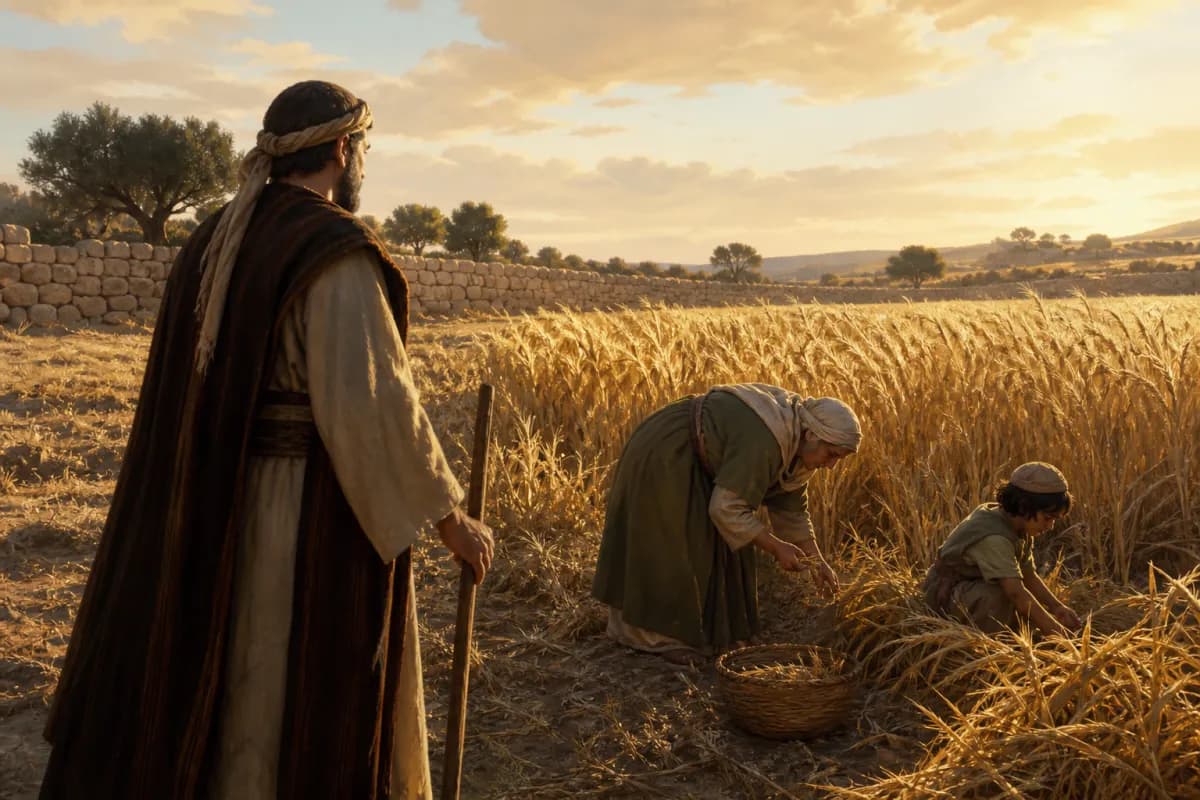
19:9“‘When you reap the harvest of your land, you shall not wholly reap the corners of your field, neither shall you gather the gleanings of your harvest.
19:10You shall not glean your vineyard, neither shall you gather the fallen grapes of your vineyard. You shall leave them for the poor and for the foreigner. I am the LORD your God.
19:11“‘You shall not steal. “‘You shall not lie. “‘You shall not deceive one another.
19:12“‘You shall not swear by my name falsely, and profane the name of your God. I am the LORD.
19:13“‘You shall not oppress your neighbor, nor rob him. “‘The wages of a hired servant shall not remain with you all night until the morning.
19:14“‘You shall not curse the deaf, nor put a stumbling block before the blind; but you shall fear your God. I am the LORD.
19:15“‘You shall do no injustice in judgment. You shall not be partial to the poor, nor show favoritism to the great; but you shall judge your neighbor in righteousness.
19:16“‘You shall not go around as a slanderer among your people. “‘You shall not endanger the life of your neighbor. I am the LORD.
19:17“‘You shall not hate your brother in your heart. You shall surely rebuke your neighbor, and not bear sin because of him.
19:18“‘You shall not take vengeance, nor bear any grudge against the children of your people; but you shall love your neighbor as yourself. I am the LORD.
19:19“‘You shall keep my statutes. “‘You shall not cross-breed different kinds of animals. “‘You shall not sow your field with two kinds of seed; “‘Don’t wear a garment made of two kinds of material.
19:20“‘If a man lies carnally with a woman who is a slave girl, pledged to be married to another man, and not ransomed or given her freedom; they shall be punished. They shall not be put to death, because she was not free.
19:21He shall bring his trespass offering to the LORD, to the door of the Tent of Meeting, even a ram for a trespass offering.
19:22The priest shall make atonement for him with the ram of the trespass offering before the LORD for his sin which he has committed; and the sin which he has committed shall be forgiven him.
19:23“‘When you come into the land, and have planted all kinds of trees for food, then you shall count their fruit as forbidden. For three years it shall be forbidden to you. It shall not be eaten.
19:24But in the fourth year all its fruit shall be holy, for giving praise to the LORD.
19:25In the fifth year you shall eat its fruit, that it may yield its increase to you. I am the LORD your God.
19:26“‘You shall not eat any meat with the blood still in it. You shall not use enchantments, nor practice sorcery.
19:27“‘You shall not cut the hair on the sides of your head or clip off the edge of your beard.
19:28“‘You shall not make any cuttings in your flesh for the dead, nor tattoo any marks on you. I am the LORD.
19:29“‘Don’t profane your daughter, to make her a prostitute; lest the land fall to prostitution, and the land become full of wickedness.
19:30“‘You shall keep my Sabbaths, and reverence my sanctuary; I am the LORD.
19:31“‘Don’t turn to those who are mediums, nor to the wizards. Don’t seek them out, to be defiled by them. I am the LORD your God.
19:32“‘You shall rise up before the gray head and honor the face of the elderly; and you shall fear your God. I am the LORD.
19:33“‘If a stranger lives as a foreigner with you in your land, you shall not do him wrong.
19:34The stranger who lives as a foreigner with you shall be to you as the native-born among you, and you shall love him as yourself; for you lived as foreigners in the land of Egypt. I am the LORD your God.
19:35“‘You shall do no unrighteousness in judgment, in measures of length, of weight, or of quantity.
19:36You shall have just balances, just weights, a just ephah, and a just hin. I am the LORD your God, who brought you out of the land of Egypt.
19:37“‘You shall observe all my statutes and all my ordinances, and do them. I am the LORD.’”
CONTEXTUAL OVERVIEW
Leviticus 19 opens with one of Scripture’s broadest pictures of holiness. The Lord’s own character reaches a field’s edges, a marketplace scale, a courtroom, an employee’s wages, an elderly neighbor, and a foreign resident. Israel’s worship cannot be separated from the way its people handle power, speech, money, and need.
The command to be holy is immediately followed by familiar practices: honor parents, keep Sabbaths, and reject idols. The chapter therefore refuses an invented spirituality that seeks God in ceremonies while neglecting ordinary faithfulness. The God who redeemed Israel from Egypt claims every sphere of its shared life.
HISTORICAL AND LITERARY CONTEXT
This chapter follows the purity and sexual-boundary laws and opens the collection often called the holiness code. Its instructions address Israel as a covenant people living in the land. Some rules govern sanctuary offerings or ancient social arrangements; its enduring moral center is displayed in the repeated call to imitate the Lord’s character in concrete relationships.
The refrain “I am the Lord” appears throughout. It is not a decorative signature. God’s identity as Creator, Redeemer, and covenant Lord is the reason that a farmer leaves gleanings, an employer pays promptly, a judge refuses partiality, and a merchant uses honest weights.
SECTION-BY-SECTION ANALYSIS
- Gleaning · Leviticus 19:9Fields are not harvested to their last edge so that the poor and resident alien can gather food with dignity.
- Love without revenge · Leviticus 19:18Holiness rejects grudges and revenge and commands love for the neighbor in their place.
- Honest measures · Leviticus 19:35Faithfulness before God reaches commercial practices that others may never see.
CHRIST IN THIS PASSAGE
Jesus identifies love for God and love for neighbor as the law’s great commandments, explicitly citing Leviticus 19:18. He does not shrink holiness into private feeling; He fulfills it through obedient love, mercy toward outsiders, truthfulness, and self-giving service. His life reveals what the character of God looks like in human flesh.
Christ’s saving mission gives this command its deepest hope. He bears the judgment of the loveless and idolatrous so that forgiven people can be renewed by His Spirit. Believers do not love neighbors to purchase adoption; they love because in Jesus they have been brought near to the holy God and made members of His family.
REFLECTION
Leviticus 19 makes holiness measurable in ordinary decisions. It asks what happens to the person who has less leverage when you set a price, tell a story, make a schedule, or use a field, platform, or business. The neighbor is not an abstraction; the chapter names the poor, employee, disabled, aged, and stranger.
Ask Jesus to make your love practical this week. Pay what is owed, tell the truth when it costs you, leave room for someone with less power, and refuse a grudge. Such acts do not replace the gospel; they make visible the grace of the Savior who first loved us.
Original Hebrew Word Study
Leviticus 19:2
קָדוֹשׁ
qadosh · H6918
Usually translated: holy; set apart for God
Qadosh is holy. Israel’s holiness grows from God’s own character and therefore reaches worship, family life, business, justice, speech, and love of neighbor.
Follow the Scripture trail
Holy in the Ordinary: Love of God and Neighbor in the larger story
The connection: The holy God who rescued Israel calls His people to show His character in worship, justice, mercy, and daily speech. Jesus fulfills this love and saves people to become a visible community of His holy, neighbor-seeking grace.
Respond to the passage
Choose one person who has less power, access, or social ease than you. Ask Jesus how His love can take practical form through truthfulness, generosity, welcome, or protection this week.
- Why does Leviticus 19 connect holiness to fields, wages, courts, speech, and scales?
- How does the exodus explain the chapter’s concern for the poor and resident alien?
- What changes when Christian neighbor-love is a response to Christ’s grace rather than a way to earn God’s favor?
Prayer
Holy Lord, make Your character visible in my ordinary life. Forgive the ways I love selectively, and through Jesus teach me to seek justice, speak truth, welcome the vulnerable, and love my neighbor as myself. Amen.