Passage Study
The Grain Offering: Ordinary Labor Given to God
Leviticus 2:1–2:16
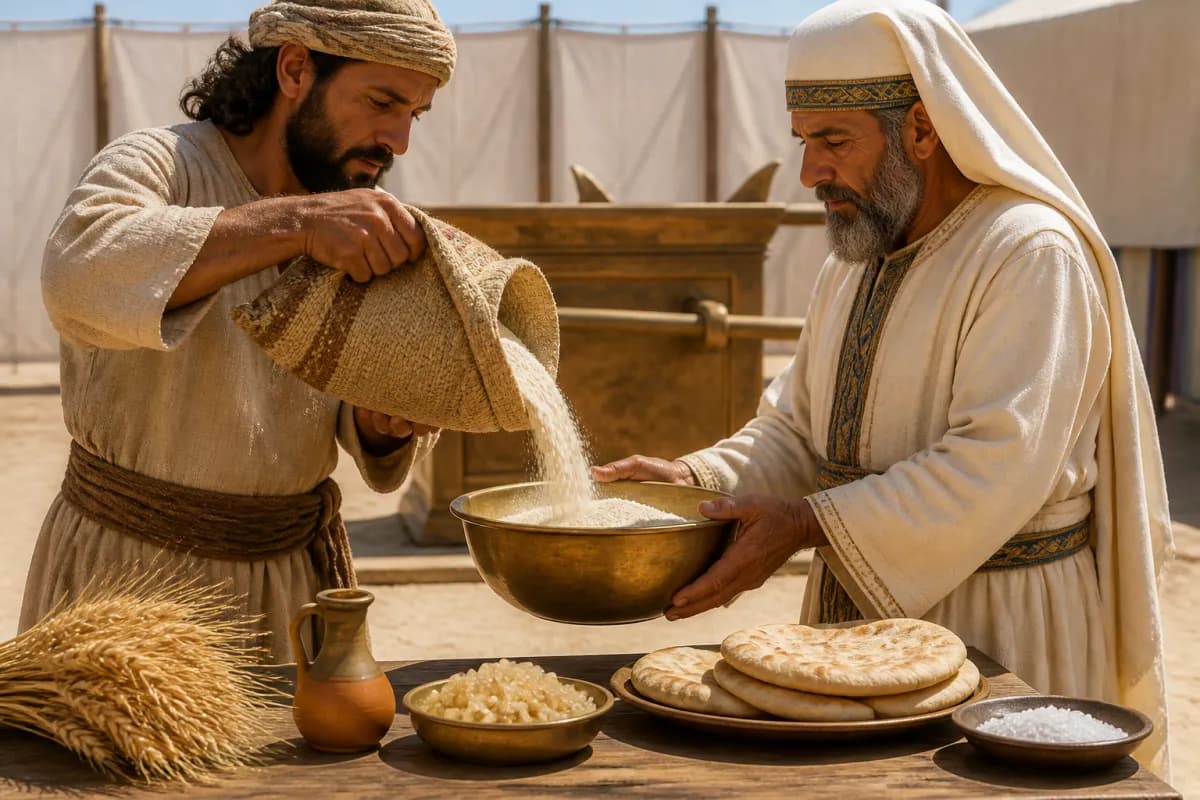
Leviticus 2:1–16 receives flour, oil, frankincense, and baked grain as a gift before the Lord. This bloodless offering does not replace the sacrifices that deal with sin; it presents the fruit of the land and the worshiper’s labor in thankful devotion. Its salt, absence of leaven and honey on the altar, and memorial portion teach Israel to honor God with ordinary provision, a pattern fulfilled as Jesus gathers a grateful people to live for God’s glory.
- In this study
- 16 verses · 5 movements
Leviticus 2
2:1“‘When anyone offers an offering of a meal offering to the LORD, his offering shall be of fine flour. He shall pour oil on it, and put frankincense on it.
2:2He shall bring it to Aaron’s sons, the priests. He shall take his handful of its fine flour, and of its oil, with all its frankincense, and the priest shall burn its memorial on the altar, an offering made by fire, of a pleasant aroma to the LORD.
2:3That which is left of the meal offering shall be Aaron’s and his sons’. It is a most holy part of the offerings of the LORD made by fire.
2:4“‘When you offer an offering of a meal offering baked in the oven, it shall be unleavened cakes of fine flour mixed with oil, or unleavened wafers anointed with oil.
2:5If your offering is a meal offering made on a griddle, it shall be of unleavened fine flour, mixed with oil.
2:6You shall cut it in pieces, and pour oil on it. It is a meal offering.
2:7If your offering is a meal offering of the pan, it shall be made of fine flour with oil.
2:8You shall bring the meal offering that is made of these things to the LORD. It shall be presented to the priest, and he shall bring it to the altar.
2:9The priest shall take from the meal offering its memorial, and shall burn it on the altar, an offering made by fire, of a pleasant aroma to the LORD.
2:10That which is left of the meal offering shall be Aaron’s and his sons’. It is a most holy part of the offerings of the LORD made by fire.
2:11“‘No meal offering which you shall offer to the LORD shall be made with yeast; for you shall burn no yeast, nor any honey, as an offering made by fire to the LORD.
2:12As an offering of first fruits you shall offer them to the LORD, but they shall not rise up as a pleasant aroma on the altar.
2:13Every offering of your meal offering you shall season with salt. You shall not allow the salt of the covenant of your God to be lacking from your meal offering. With all your offerings you shall offer salt.
2:14“‘If you offer a meal offering of first fruits to the LORD, you shall offer for the meal offering of your first fruits fresh heads of grain parched with fire and crushed.
2:15You shall put oil on it and lay frankincense on it. It is a meal offering.
2:16The priest shall burn as its memorial part of its crushed grain and part of its oil, along with all its frankincense. It is an offering made by fire to the LORD.
CONTEXTUAL OVERVIEW
After the whole burnt offering, Leviticus turns to grain: fine flour, cakes, wafers, and roasted firstfruits. The transition matters. God’s worship is not concerned only with dramatic moments of sacrifice; it also gathers the ordinary produce of fields, mills, ovens, and households into thankful acknowledgment of His generosity.
The grain offering is offered alongside the sacrificial system but contains no blood. It therefore should not be treated as an independent remedy for guilt. Its emphasis is gift, remembrance, priestly provision, and covenant faithfulness. The worshiper’s daily bread is returned to the Giver with reverence.
HISTORICAL AND LITERARY CONTEXT
The Hebrew word minchah can describe a gift presented to a superior. In this chapter the gift is deliberately refined: fine flour mixed with oil and accompanied by frankincense. The priest removes a memorial portion for the altar, while the remainder sustains the priests within the holy precincts. Worship and the material care of those who serve at the sanctuary are joined without confusion.
The chapter’s food imagery is precise. Leaven and honey are not burned in the offering made by fire, while salt is required with every grain offering. The text does not give a full symbolic explanation for every ingredient. Its clearest concern is obedience: God defines the terms of worship, even in the familiar materials of the kitchen and field.
SECTION-BY-SECTION ANALYSIS
- Memorial portion · Leviticus 2:2A portion ascends at the altar as a concrete act of remembrance before God; the offering is not a vague expression of gratitude.
- Priestly share · Leviticus 2:13The remaining grain supports the priests, showing that God’s provision for worship also cares for those appointed to serve.
- Salt of the covenant · Leviticus 2:1Salt accompanies the gift as a required covenant sign, binding ordinary food to Israel’s pledged relationship with the Lord.
CHRIST IN THIS PASSAGE
The grain offering does not directly predict that Jesus is flour, oil, or every other ingredient. It contributes a durable biblical pattern: God receives the fruit of human work as grateful worship within His covenant. Jesus fulfills God’s covenant faithfulness perfectly and gives Himself for His people; through Him, their ordinary labor can be offered to God rather than turned inward for self-glory.
Christ’s saving mission also changes the ground of gratitude. The believer does not offer the work of his hands to cancel guilt. Jesus has dealt decisively with sin through His cross. Freed by that grace, His people can receive bread, income, skill, and work as gifts from the Father and use them for love of neighbor and the spread of the gospel.
REFLECTION
Much of life resembles grain rather than spectacle: preparing meals, earning income, learning a trade, and giving attention to small responsibilities. Leviticus 2 says those ordinary things belong before God. Gratitude becomes concrete when we recognize that the materials and strength behind our work are received before they are offered.
Jesus frees us from both pride and resentment in labor. We cannot boast as if we made ourselves, and we need not treat daily work as meaningless when it is done in His name. Christian generosity, honest work, and care for those who serve the church become fitting responses to the God who has given us His Son.
Original Hebrew Word Study
Leviticus 2:1
מִנְחָה
minchah · H4503
Usually translated: gift or grain offering
Minchah is a gift brought before a superior. The grain offering presents the fruit of ordinary labor to the Lord as an act of grateful worship.
Follow the Scripture trail
The Grain Offering: Ordinary Labor Given to God in the larger story
The connection: The grain offering trains God’s people to return ordinary provision to Him in covenant gratitude. Jesus, the bread of life and faithful covenant Son, rescues sinners by grace and sends them back into daily work as grateful witnesses of the Father’s generosity.
Respond to the passage
Receive today’s work, food, and resources as gifts from God. Thank Jesus for dealing with your guilt, then choose one practical way to use what He has entrusted to you for the good of a neighbor and the honor of His name.
- Why is it important that the grain offering presents ordinary produce and labor rather than blood for atonement?
- What do the memorial portion, priestly share, and salt of the covenant show about worship in Leviticus 2?
- Where are you tempted either to boast in your work or to dismiss it as spiritually unimportant, and how does Christ redirect that response?
Prayer
Generous Father, every good gift and every ability to work comes from You. Thank You for Jesus, who has reconciled me to You by grace. Teach me to receive daily provision with humility and to use it in love, generosity, and faithful witness. Amen.