Passage Study
Counted Days and a Shared Harvest: The Feast of Weeks
Leviticus 23:15–23:22
Leviticus 23:15–22 tells Israel to count seven weeks from the firstfruits offering and then celebrate a new grain offering with two leavened loaves, sacrifices, rest, and provision for the poor. The feast turns harvest into grateful worship and neighbor-love. Pentecost in Acts gives the clearest Christ-centered development: the risen Jesus pours out the Spirit and gathers people from many peoples into one new community.
- In this study
- 8 verses · 5 movements
Leviticus 23
23:15“‘You shall count from the next day after the Sabbath, from the day that you brought the sheaf of the wave offering: seven Sabbaths shall be completed.
23:16The next day after the seventh Sabbath you shall count fifty days; and you shall offer a new meal offering to the LORD.
23:17You shall bring out of your habitations two loaves of bread for a wave offering made of two tenths of an ephah of fine flour. They shall be baked with yeast, for first fruits to the LORD.
23:18You shall present with the bread seven lambs without defect a year old, one young bull, and two rams. They shall be a burnt offering to the LORD, with their meal offering and their drink offerings, even an offering made by fire, of a sweet aroma to the LORD.
23:19You shall offer one male goat for a sin offering, and two male lambs a year old for a sacrifice of peace offerings.
23:20The priest shall wave them with the bread of the first fruits for a wave offering before the LORD, with the two lambs. They shall be holy to the LORD for the priest.
23:21You shall make proclamation on the same day that there shall be a holy convocation to you. You shall do no regular work. This is a statute forever in all your dwellings throughout your generations.
23:22“‘When you reap the harvest of your land, you must not wholly reap into the corners of your field. You must not gather the gleanings of your harvest. You must leave them for the poor and for the foreigner. I am the LORD your God.’”
CONTEXTUAL OVERVIEW
The Feast of Weeks follows the first sheaf of Leviticus 23:9–14. Israel does not merely react to a full storehouse; it counts its way from the first harvest toward a larger public thanksgiving. The waiting makes provision memorable: day after day, the people live on a harvest that remains God’s gift.
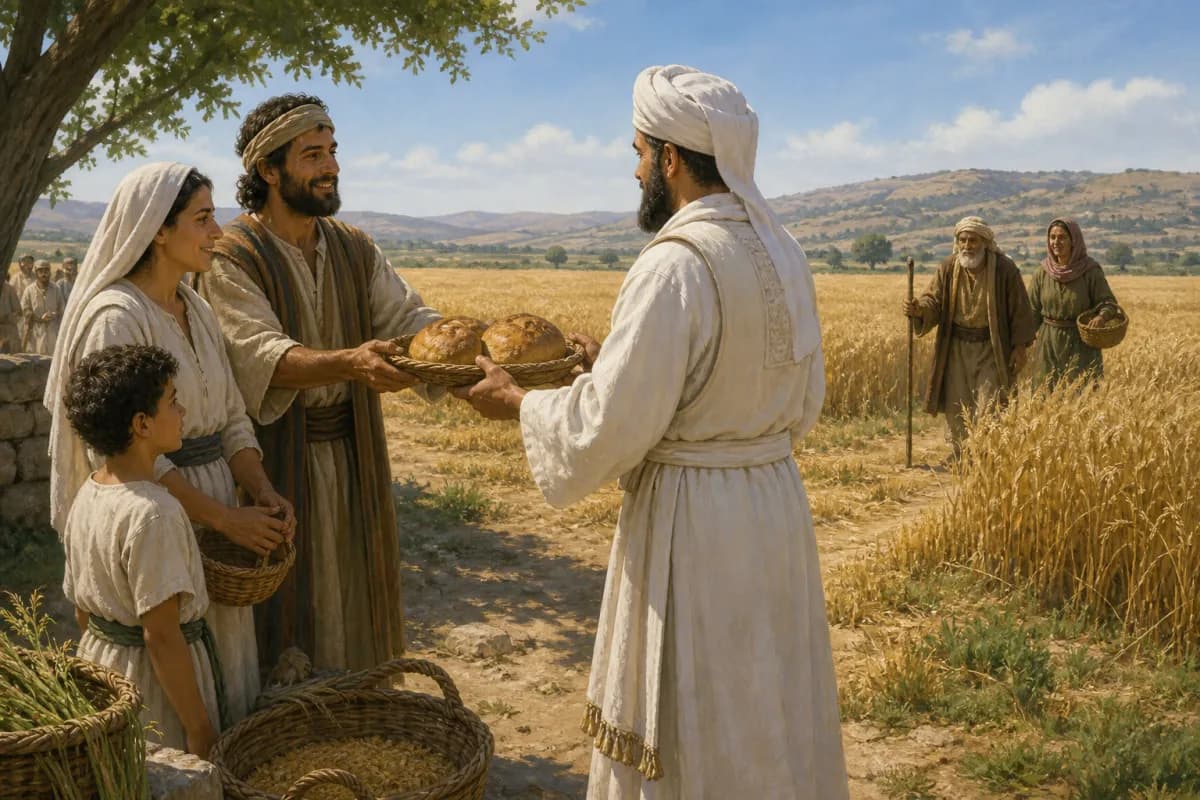
The final command about gleaning is not an appendix. The same God who receives the new grain offering commands landowners to leave part of their increase for the poor and resident alien. Worship reaches the field’s edge, where gratitude becomes tangible mercy.
HISTORICAL AND LITERARY CONTEXT
This agricultural feast belongs to Israel’s settled life in the promised land. The count begins from the firstfruits presentation during the Passover season and culminates fifty days later, which is why the later Greek name Pentecost means fiftieth. The text itself calls it a new grain offering and places it among the Lord’s appointed festivals.
Two loaves baked with leaven are waved before the Lord alongside animal sacrifices. Their use does not overturn the earlier prohibition of leaven on the altar; the loaves are presented as firstfruits for the priests rather than burned as an altar offering. The details preserve both holiness and the goodness of ordinary bread.
SECTION-BY-SECTION ANALYSIS
- Seven complete weeks · Leviticus 23:15The numbered days train Israel to wait for God’s provision instead of treating increase as automatic.
- Two loaves · Leviticus 23:17Bread from the new harvest is publicly returned to God in thanksgiving before it becomes ordinary consumption.
- The field’s edge · Leviticus 23:22The poor and resident alien are included in the harvest’s joy through an enforceable act of generosity.
CHRIST IN THIS PASSAGE
Acts 2 deliberately locates the outpouring of the Spirit at Pentecost. The connection does not make every sacrifice or loaf a private code for Jesus, but it does show the risen Christ advancing His saving mission at Israel’s harvest feast. He pours out the promised Spirit and begins gathering a people from many languages into one worshiping community.
The feast’s concern for shared provision also fits the fruit of Christ’s mission. Those made one by His death and Spirit are taught to care for one another, especially those in need. Grace does not turn generosity into a price of acceptance; it makes mercy a fitting response to the Lord who has given His Son and every good gift.
REFLECTION
Counting days can feel slow when work, healing, or provision is unfinished. The Feast of Weeks teaches believers to mark God’s faithfulness over time rather than only noticing dramatic outcomes. Thank Him for ordinary bread, paychecks, skills, and people who have sustained you along the way.
Then look toward the edge of your own field: the money, time, influence, or attention that you usually keep for yourself. Ask Jesus to make your gratitude visible in practical care for someone with less security, and let that mercy become a quiet witness to His generous kingdom.
Original Hebrew Word Study
Leviticus 23:15
שָׁבֻעוֹת
shavuot · H7620
Usually translated: weeks
Shavuot means weeks. The counted weeks connect firstfruits to a fuller harvest celebration, training Israel to see provision as a gift that unfolds in God’s appointed time.
Follow the Scripture trail
Counted Days and a Shared Harvest: The Feast of Weeks in the larger story
The connection: The Feast of Weeks celebrates a harvest received from God and shared with the vulnerable. At Pentecost the risen Jesus pours out His Spirit, creating a harvest community whose worship and generosity display His saving mission.
Respond to the passage
Thank Jesus for the provision you have received over time. Identify one person at the edge of your ordinary circle and offer concrete help without using generosity to gain recognition.
- Why does Leviticus join harvest thanksgiving to leaving grain for the poor and resident alien?
- What does the counted period between firstfruits and Weeks teach about waiting?
- How does Acts 2 show Jesus extending this feast’s hope without simply repeating its ritual laws?
Prayer
Risen Lord Jesus, thank You for giving Your Spirit and gathering people into Your family. Teach me to receive Your gifts with gratitude, wait with trust, and share what I have with people in need. Make Your generosity visible through my life. Amen.