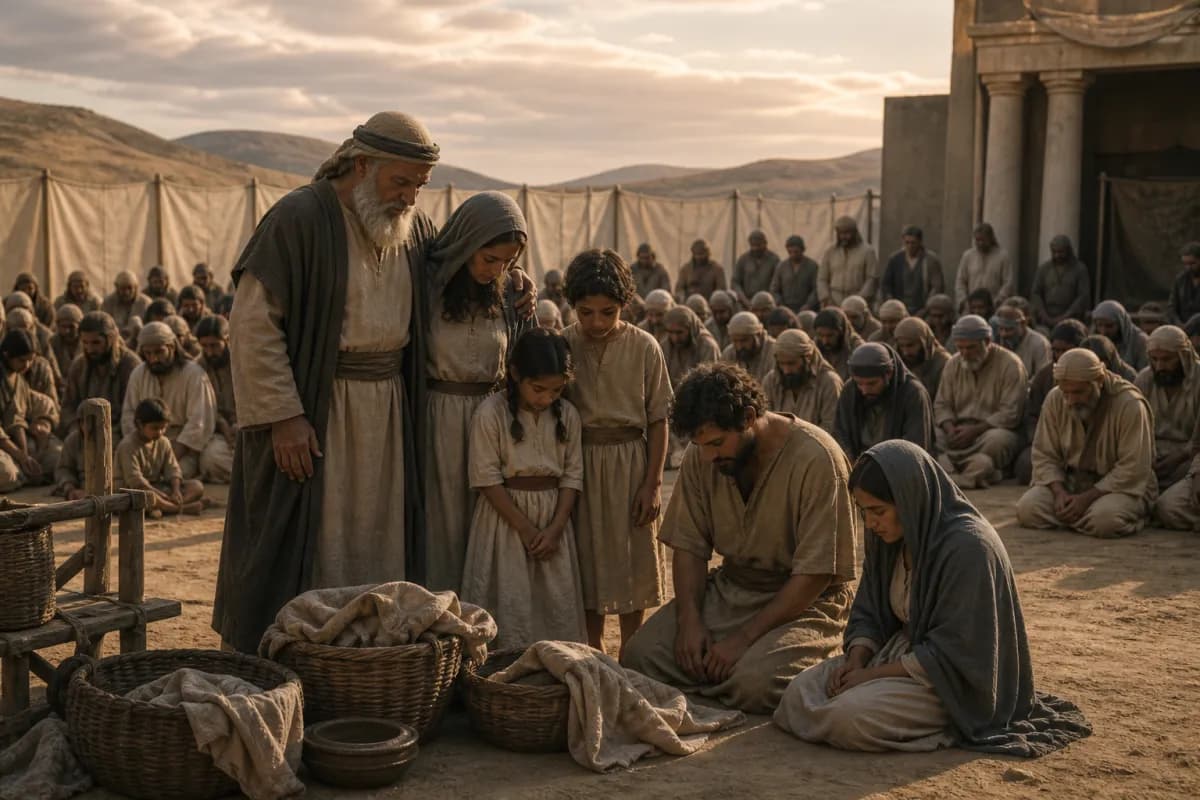
Passage Study
Humbled Before Mercy: The Day of Atonement Observance
Leviticus 23:26–23:32
Leviticus 23:26–32 sets the Day of Atonement within Israel’s calendar: the people humble themselves, cease work, and receive atonement before the Lord. Leviticus 16 explains the priestly rites; this passage shows how the whole community responds. Jesus fulfills the day’s saving hope through His once-for-all sacrifice, giving repentant sinners real access to God rather than a merely annual reprieve.
- In this study
- 7 verses · 5 movements
Leviticus 23
23:26The LORD spoke to Moses, saying,
23:27“However on the tenth day of this seventh month is the day of atonement. It shall be a holy convocation to you. You shall afflict yourselves and you shall offer an offering made by fire to the LORD.
23:28You shall do no kind of work in that same day, for it is a day of atonement, to make atonement for you before the LORD your God.
23:29For whoever it is who shall not deny himself in that same day shall be cut off from his people.
23:30Whoever does any kind of work in that same day, I will destroy that person from among his people.
23:31You shall do no kind of work: it is a statute forever throughout your generations in all your dwellings.
23:32It shall be a Sabbath of solemn rest for you, and you shall deny yourselves. In the ninth day of the month at evening, from evening to evening, you shall keep your Sabbath.”
CONTEXTUAL OVERVIEW
Leviticus 23 does not repeat the high priest’s actions from chapter 16. Instead it turns toward the gathered people. While atonement is made before the Lord, Israel humbles itself and rests. The nation is taught that cleansing is not a reward for busyness or religious self-confidence; it is received with repentance and dependence.
The warnings are severe because the day concerns covenant life in the presence of the holy God. To carry on as if atonement were unnecessary is to reject the mercy God has provided. The command is solemn, but it is not hopeless: God Himself has made a way for His people to be cleansed.
HISTORICAL AND LITERARY CONTEXT
This observance falls ten days after the trumpet memorial and five days before the Feast of Booths. The sequence moves from summons to humbling to celebration. It keeps Israel’s joy from becoming superficial, because life before God must face sin honestly and receive His mercy on His appointed terms.
The phrase often rendered “humble yourselves” has been understood in Jewish practice to include fasting, though the passage itself stresses a humbled posture and abstaining from work. It does not tell Israel to engineer atonement. The people cease their ordinary striving while the priestly system dramatizes God’s provision for their sin.
SECTION-BY-SECTION ANALYSIS
- Humble yourselves · Leviticus 23:27The community takes sin seriously rather than defending itself before the God who knows it fully.
- No ordinary work · Leviticus 23:28Rest declares that atonement is God’s provision, not human achievement.
- Before the Lord · Leviticus 23:26The day concerns restored covenant fellowship with the holy God who dwells among His people.
CHRIST IN THIS PASSAGE
Hebrews explains that Jesus entered the true holy place once for all by His own blood, securing eternal redemption. The annual Day of Atonement trained Israel to need cleansing; Christ brings that need to fulfillment through a sacrifice that does not need repetition. His cross deals with guilt at its root and opens a living way to the Father.
The fitting response remains humility, but not despair. Repentance does not add to Christ’s finished work; it is how sinners stop hiding and receive the mercy He purchased. Jesus’ saving mission therefore creates a people who confess sin truthfully, rest in His grace, and invite others to the same reconciliation.
REFLECTION
Some people avoid confession by staying busy. Others mistake shame for repentance and keep punishing themselves after God has offered mercy. This day confronts both patterns: stop, tell the truth before God, and receive the atonement He gives. That posture still belongs at the center of Christian prayer and worship.
Set aside a quiet period to name one concrete sin before Jesus without excuse. Trust His sufficient sacrifice, seek forgiveness from anyone you have harmed where appropriate, and rest from the urge to make yourself acceptable. Then speak of His mercy to someone who believes their guilt has placed them beyond hope.
Original Hebrew Word Study
Leviticus 23:27
עָנָה
anah · H6031
Usually translated: to humble or afflict oneself
Anah means to humble or afflict oneself. The people respond to atonement with repentance and dependence, receiving God’s cleansing rather than celebrating themselves.
Follow the Scripture trail
Humbled Before Mercy: The Day of Atonement Observance in the larger story
The connection: The Day of Atonement teaches Israel to humble itself and receive the cleansing God provides. Jesus fulfills that saving provision once for all, freeing His people to confess honestly, rest in grace, and announce reconciliation to the world.
Respond to the passage
Stop striving to hide or repair yourself before God. Confess one real sin to Jesus, receive His mercy, and take the next reconciliatory step that love requires.
- Why does the observance emphasize the people’s humility and rest rather than repeating the priestly actions of Leviticus 16?
- How does the annual rhythm keep celebration from becoming shallow?
- How does Christ’s once-for-all sacrifice change the way Christians practice confession?
Prayer
Lord Jesus, thank You for bearing sin and opening the way to the Father. Give me honest repentance without despair, confidence in Your finished work, and courage to pursue reconciliation where I have caused harm. Amen.