Passage Study
Joy in Temporary Shelters: The Feast of Booths
Leviticus 23:33–23:44
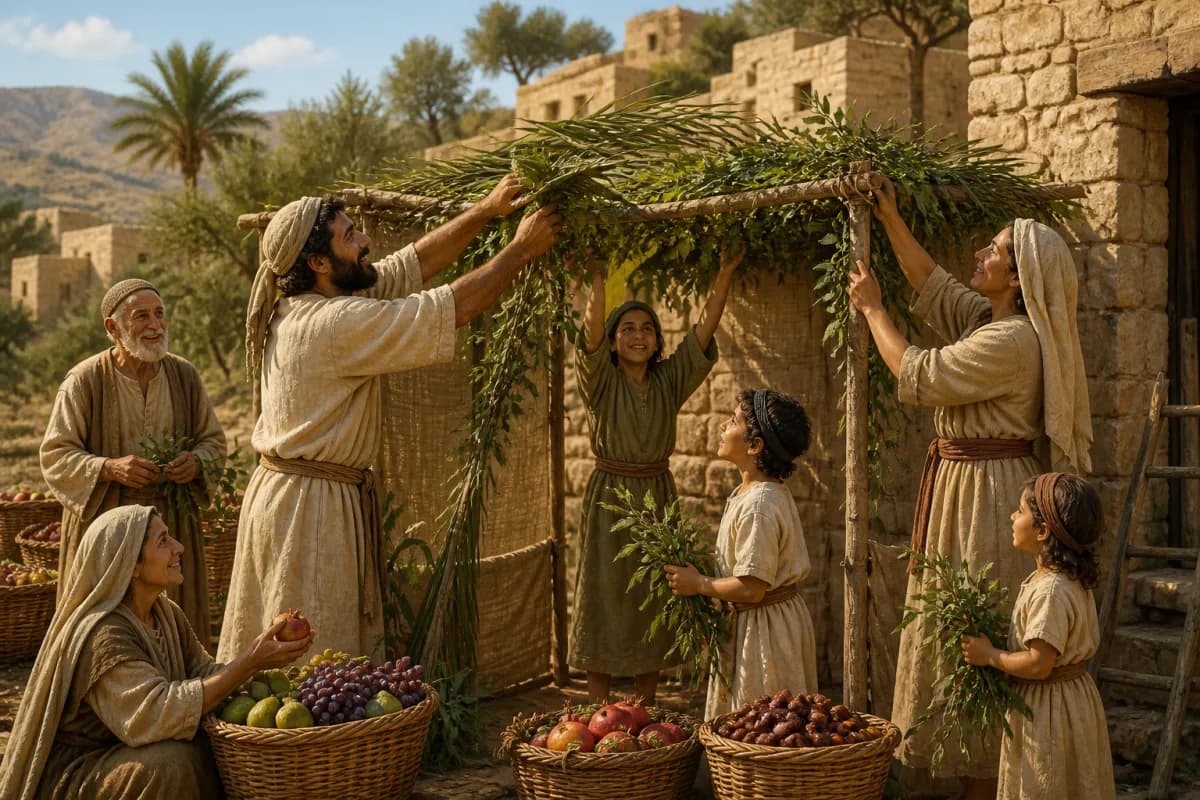
Leviticus 23:33–44 commands Israel to rejoice for seven days at the end of harvest and to live in booths so later generations remember the Lord’s wilderness care. The feast holds abundance and vulnerability together: God gave the harvest, and God sustained His people before they possessed a permanent home. Jesus fulfills its hope as God dwelling among His people and promises a final home in God’s renewed creation.
- In this study
- 12 verses · 5 movements
Leviticus 23
23:33The LORD spoke to Moses, saying,
23:34“Speak to the children of Israel, and say, ‘On the fifteenth day of this seventh month is the feast of booths for seven days to the LORD.
23:35On the first day shall be a holy convocation. You shall do no regular work.
23:36Seven days you shall offer an offering made by fire to the LORD. On the eighth day shall be a holy convocation to you. You shall offer an offering made by fire to the LORD. It is a solemn assembly; you shall do no regular work.
23:37“‘These are the appointed feasts of the LORD which you shall proclaim to be holy convocations, to offer an offering made by fire to the LORD, a burnt offering, a meal offering, a sacrifice, and drink offerings, each on its own day—
23:38in addition to the Sabbaths of the LORD, and in addition to your gifts, and in addition to all your vows, and in addition to all your free will offerings, which you give to the LORD.
23:39“‘So on the fifteenth day of the seventh month, when you have gathered in the fruits of the land, you shall keep the feast of the LORD seven days. On the first day shall be a solemn rest, and on the eighth day shall be a solemn rest.
23:40You shall take on the first day the fruit of majestic trees, branches of palm trees, and boughs of thick trees, and willows of the brook; and you shall rejoice before the LORD your God seven days.
23:41You shall keep it as a feast to the LORD seven days in the year. It is a statute forever throughout your generations. You shall keep it in the seventh month.
23:42You shall dwell in temporary shelters for seven days. All who are native-born in Israel shall dwell in temporary shelters,
23:43that your generations may know that I made the children of Israel to dwell in temporary shelters when I brought them out of the land of Egypt. I am the LORD your God.’”
23:44So Moses declared to the children of Israel the appointed feasts of the LORD.
CONTEXTUAL OVERVIEW
The Feast of Booths comes after the harvest has been gathered. Israel is commanded to rejoice, yet it rejoices while leaving ordinary houses to dwell in temporary shelters. The embodied memory prevents abundance from rewriting the nation’s story. The God who provides a settled land is the God who carried His people when they had none.
The week ends with a solemn assembly, and the chapter closes by naming the festivals together. Israel’s year is not simply a cycle of work and consumption. It is a rehearsed story of redemption, provision, repentance, joy, and dependence before the Lord.
HISTORICAL AND LITERARY CONTEXT
Booths are temporary shelters made from branches. The command links them to Israel’s exodus-era dwelling in booths, though the passage does not attempt to settle every historical detail about their form. Its main claim is clear: the generations who enjoy the land must remember the Lord’s sustaining presence in the wilderness.
This feast is also called the feast of ingathering elsewhere in the Torah because it occurs when the produce is gathered in. The combination is deliberate. Israel celebrates a real harvest but does not make the harvest its god; it remembers that land, food, shelter, and future depend on the Lord’s covenant faithfulness.
SECTION-BY-SECTION ANALYSIS
- After ingathering · Leviticus 23:34The feast receives a completed harvest as a gift from God rather than a trophy of human control.
- Seven days of joy · Leviticus 23:40Israel is commanded to celebrate before the Lord, who is the source and goal of its gladness.
- Temporary booths · Leviticus 23:42The fragile shelters keep the exodus wilderness in the memory of a people living in more secure homes.
CHRIST IN THIS PASSAGE
John says that the Word became flesh and dwelt among us, using language that evokes God’s tabernacling presence. The Feast of Booths does not directly predict each event in Jesus’ life, but its central themes converge in Him: God comes near to a pilgrim people, provides living water, and gathers worshipers into lasting joy.
Jesus also speaks publicly during Booths in John 7, offering living water to the thirsty. His saving mission answers the deeper insecurity the booths preserve in memory. By His death and resurrection He brings sinners to God, and by His Spirit He gives them a foretaste of the final dwelling God promises with His people.
REFLECTION
Comfort can make us forget both our dependence and our neighbors’ vulnerability. Booths calls Christians to enjoy God’s gifts without treating a house, account, career, or reputation as permanent shelter. Gratitude becomes healthier when it remembers the wildernesses from which God has carried us.
Celebrate something good God has given you, then make your joy hospitable. Share a meal, give toward someone’s housing or food need, or welcome a lonely person into your home. Let the way you enjoy provision show that your deepest home is with Christ and that His kingdom is open to others.
Original Hebrew Word Study
Leviticus 23:42
סֻכָּה
sukkah · H5521
Usually translated: booth or temporary shelter
Sukkah is a temporary shelter. Israel lives in booths to remember that the Lord sustained them in the wilderness and that security comes from His presence, not permanent structures.
Follow the Scripture trail
Joy in Temporary Shelters: The Feast of Booths in the larger story
The connection: Booths teaches Israel to rejoice in God’s harvest while remembering the wilderness where He sustained them. Jesus comes as God with us, gives living water to the thirsty, and leads His people toward the permanent home of God’s renewed creation.
Respond to the passage
Thank God for one form of present provision without treating it as permanent security. Turn that gratitude outward by making one act of hospitality or practical help part of your celebration.
- Why does the feast combine joy over harvest with seven days in temporary shelters?
- How does the command to remember the wilderness guard Israel against entitlement?
- What does John’s use of dwelling language help us see about Jesus and God’s presence?
Prayer
Lord Jesus, thank You for coming near and giving me a lasting home in Your grace. Keep me grateful without becoming self-secure, generous with what I have received, and hopeful for the day God dwells with His people forever. Amen.