Passage Study
Remembered Rescue: Passover and Unleavened Bread
Leviticus 23:5–23:8
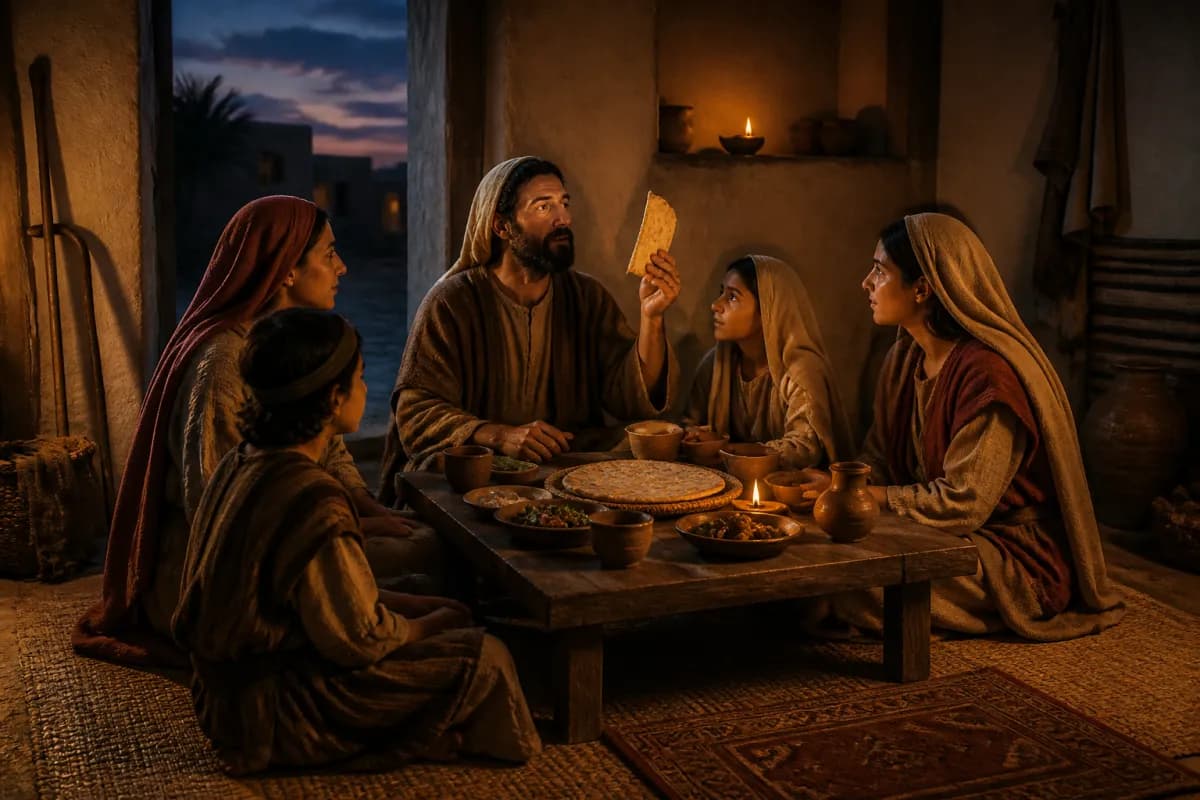
Leviticus 23:4–8 places Passover and the seven-day Festival of Unleavened Bread at the beginning of Israel’s annual calendar. The feast remembers the Lord’s rescue from Egypt and gathers the people for worship, rest, and offerings. Jesus fulfills this deliverance pattern as the Passover Lamb whose death brings forgiveness and forms a people freed to serve God.
- In this study
- 4 verses · 5 movements
Leviticus 23
23:5In the first month, on the fourteenth day of the month in the evening, is the LORD’s Passover.
23:6On the fifteenth day of the same month is the feast of unleavened bread to the LORD. Seven days you shall eat unleavened bread.
23:7In the first day you shall have a holy convocation. You shall do no regular work.
23:8But you shall offer an offering made by fire to the LORD seven days. In the seventh day is a holy convocation. You shall do no regular work.’”
CONTEXTUAL OVERVIEW
After the weekly Sabbath, Leviticus names the first annual festival: Passover at twilight, followed immediately by Unleavened Bread. Israel’s year begins with rescue, not achievement. Before harvest celebrations or national memory, the people are commanded to remember the night when the Lord brought them out from slavery.
The passage’s brevity assumes the fuller Passover story in Exodus. It highlights the calendar form of remembrance: one evening set apart for Passover, then a seven-day feast marked by unleavened bread, assemblies, rest, and offerings. Deliverance is not meant to become a private memory; it shapes the worshiping life of the whole people.
HISTORICAL AND LITERARY CONTEXT
Passover first belongs to the exodus, when Israel marked its homes with lamb’s blood and the Lord struck Egypt’s firstborn while sparing those households. Unleavened bread remembers the urgency of departure, when there was no time for dough to rise. Leviticus places that history inside a recurring covenant calendar.
The feast is called the Lord’s appointed time, not merely Israel’s national anniversary. Its practices preserve a public confession: the people exist because God acted to deliver them. The first and seventh days cease ordinary work, allowing the feast to interrupt economic life and renew the community’s identity before the Lord.
SECTION-BY-SECTION ANALYSIS
- At twilight · Leviticus 23:5The appointed evening keeps Passover attached to the specific rescue by which the Lord formed Israel as His people.
- Seven days · Leviticus 23:6The extended feast lets deliverance shape household life rather than becoming a single passing ceremony.
- Holy assemblies · Leviticus 23:7Rest at the beginning and end gives the whole community time to remember and worship together.
CHRIST IN THIS PASSAGE
The New Testament makes a direct connection between Passover and Jesus. The Gospels place His death in Passover’s setting, and Paul calls Christ our Passover lamb. The correspondence is not a loose illustration: the exodus pattern of judgment passing over a people sheltered by God’s provision reaches its fulfillment in Christ’s self-giving death for sinners.
Jesus’ saving mission liberates people from more than oppressive circumstances. He delivers them from sin’s guilt and mastery so they may belong to God. The bread imagery also becomes a call to sincerity and truth: those redeemed by the Lamb are formed into a new community whose shared life displays the freedom He has won.
REFLECTION
Passover asks what story organizes our memory. We easily build identity around our efforts, injuries, or anxieties. Israel’s calendar begins with the Lord’s rescue, and Christian worship returns again and again to Christ’s death and resurrection because grace, not self-construction, is the beginning of God’s people.
Remember Jesus’ saving death with grateful specificity. Share the gospel with someone by telling how He meets real guilt and bondage, and let the freedom you have received show itself in truthfulness, forgiveness, and a life no longer ruled by what once enslaved you.
Original Hebrew Word Study
Leviticus 23:5
פֶּסַח
pesach · H6453
Usually translated: Passover
Pesach is Passover. The first annual feast roots Israel’s calendar in God’s rescue from Egypt, so worship begins with remembering deliverance He accomplished.
Follow the Scripture trail
Remembered Rescue: Passover and Unleavened Bread in the larger story
The connection: Passover fixes Israel’s calendar on the Lord’s rescue from slavery. Jesus fulfills that deliverance as the Passover Lamb who bears judgment, forgives sin, and gathers a truthful people for His saving mission.
Respond to the passage
Name one old bondage, guilt, or false identity that you keep treating as final. Thank Jesus for His saving death, receive His forgiveness, and take one concrete step of truthfulness that fits the freedom He gives.
- Why does Israel’s annual calendar begin with the remembrance of redemption?
- How do the first and seventh holy assemblies make Passover a community practice rather than a private memory?
- What does Paul mean when he connects Christ our Passover with sincerity and truth?
Prayer
Lord Jesus, Passover Lamb, thank You for bearing the judgment my sin deserved and bringing me into Your people. Free me from the patterns that enslave me, make me truthful, and help me tell others of Your rescuing grace. Amen.