Passage Study
The First Sheaf Before God: Firstfruits and Hope
Leviticus 23:9–23:14
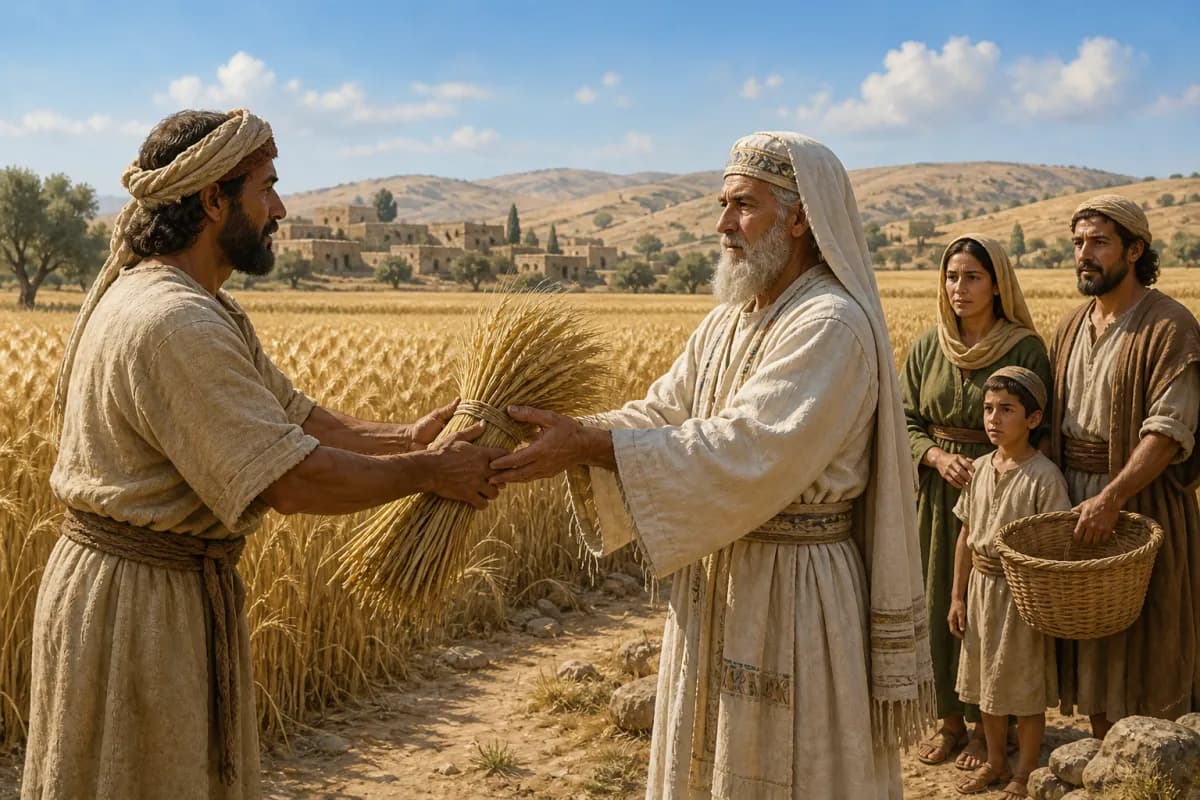
Leviticus 23:9–14 commands Israel, once it enters the land, to bring the first sheaf of harvest to the priest before eating from the new crop. The rite declares that land, harvest, and future come from the Lord’s gift. Jesus’ resurrection is the New Testament’s direct firstfruits fulfillment: His risen life guarantees the coming harvest of those who belong to Him.
- In this study
- 6 verses · 5 movements
Leviticus 23
23:9The LORD spoke to Moses, saying,
23:10“Speak to the children of Israel, and tell them, ‘When you have come into the land which I give to you, and shall reap its harvest, then you shall bring the sheaf of the first fruits of your harvest to the priest.
23:11He shall wave the sheaf before the LORD, to be accepted for you. On the next day after the Sabbath the priest shall wave it.
23:12On the day when you wave the sheaf, you shall offer a male lamb without defect a year old for a burnt offering to the LORD.
23:13The meal offering with it shall be two tenths of an ephah of fine flour mixed with oil, an offering made by fire to the LORD for a pleasant aroma; and the drink offering with it shall be of wine, the fourth part of a hin.
23:14You must not eat bread, or roasted grain, or fresh grain, until this same day, until you have brought the offering of your God. This is a statute forever throughout your generations in all your dwellings.
CONTEXTUAL OVERVIEW
Leviticus 23 now moves from the exodus feast to the first grain harvested in the promised land. The command begins with anticipation: ‘when you enter the land that I am giving you.’ Israel will farm and harvest, but its first act with the new crop must be presenting a sheaf before the Lord.
The firstfruits rite prevents a harvest from becoming a story of human self-sufficiency. Before anyone eats bread, parched grain, or fresh ears from the new crop, the first portion is acknowledged as God’s gift. The whole harvest is received through worship, not possessed as an independent achievement.
HISTORICAL AND LITERARY CONTEXT
This observance belongs to Israel’s agricultural life in the land after the wilderness. The sheaf is presented on the day after the Sabbath within the Passover season, linking first harvest to the calendar of redemption. God who brought Israel out of Egypt now gives fields and food in Canaan.
The rite includes a male lamb, grain mixed with oil, and wine, joining harvest gratitude to the sacrificial system already established in Leviticus. It is not a payment for land or a magical technique to secure abundance. It is covenant acknowledgment that the land and its produce remain the Lord’s gift.
SECTION-BY-SECTION ANALYSIS
- When you enter · Leviticus 23:10The command rests on a future gift of land, making harvest gratitude an act of trust before Israel possesses the fields.
- The first sheaf · Leviticus 23:11The opening portion represents the whole crop and confesses that all provision comes from the Lord.
- Before eating · Leviticus 23:14Waiting to consume the new grain puts worship ahead of possession and gratitude ahead of entitlement.
CHRIST IN THIS PASSAGE
Paul calls the risen Christ ‘the first fruits of those who have died.’ That is a direct and powerful fulfillment of the firstfruits pattern: Jesus’ resurrection is not an isolated wonder but the beginning and guarantee of a larger harvest. Those united to Him will share in resurrection life because the first and decisive portion has already been raised.
Christ’s saving mission therefore gives ordinary gratitude an eternal horizon. The God who supplies crops is also the God who gives His Son and promises bodily resurrection. Believers bring their lives to Him not to secure a future He has withheld, but because Jesus’ resurrection assures them that their labor and faith are not empty.
REFLECTION
Firstfruits challenges the instinct to enjoy everything first and acknowledge God only from what remains. The principle does not impose Israel’s agricultural rite as a Christian formula, but it does ask whether our money, time, work, and gratitude confess that all we possess is received from God.
Let Jesus’ resurrection steady you when results are delayed or loss feels final. Offer God the first attention of your day and the first trust of your plans, then practice generosity as a witness that your future is held by the risen Christ rather than by the size of today’s harvest.
Original Hebrew Word Study
Leviticus 23:10
רֵאשִׁית
reshit · H7225
Usually translated: first, beginning, or firstfruits
Reshit is the first or beginning. Israel brings the first sheaf before enjoying the harvest, confessing that the whole crop belongs to the God who gave the land.
Follow the Scripture trail
The First Sheaf Before God: Firstfruits and Hope in the larger story
The connection: The first sheaf declares that Israel’s land and harvest are gifts from the Lord. Jesus, risen as the firstfruits, fulfills this hope by guaranteeing resurrection life and sending a grateful people into the world with confidence in God’s future.
Respond to the passage
Offer God a deliberate first portion of your attention, resources, or harvest this week as an act of gratitude, not a transaction. When fear about the future rises, remember that Jesus’ resurrection is the beginning of the harvest God has promised.
- Why must Israel present the first sheaf before eating from the new harvest?
- How does the command ‘when you enter the land’ connect firstfruits with God’s promises?
- Why does Paul’s use of firstfruits make the resurrection of Jesus a source of concrete hope?
Prayer
Risen Lord Jesus, You are the firstfruits of the resurrection. Forgive my self-sufficiency, teach me to receive every good gift with gratitude, and make me generous and hopeful because my future is secure in You. Amen.