Passage Study
Light and Bread Before the Lord: Israel’s Continual Worship
Leviticus 24:1–24:9
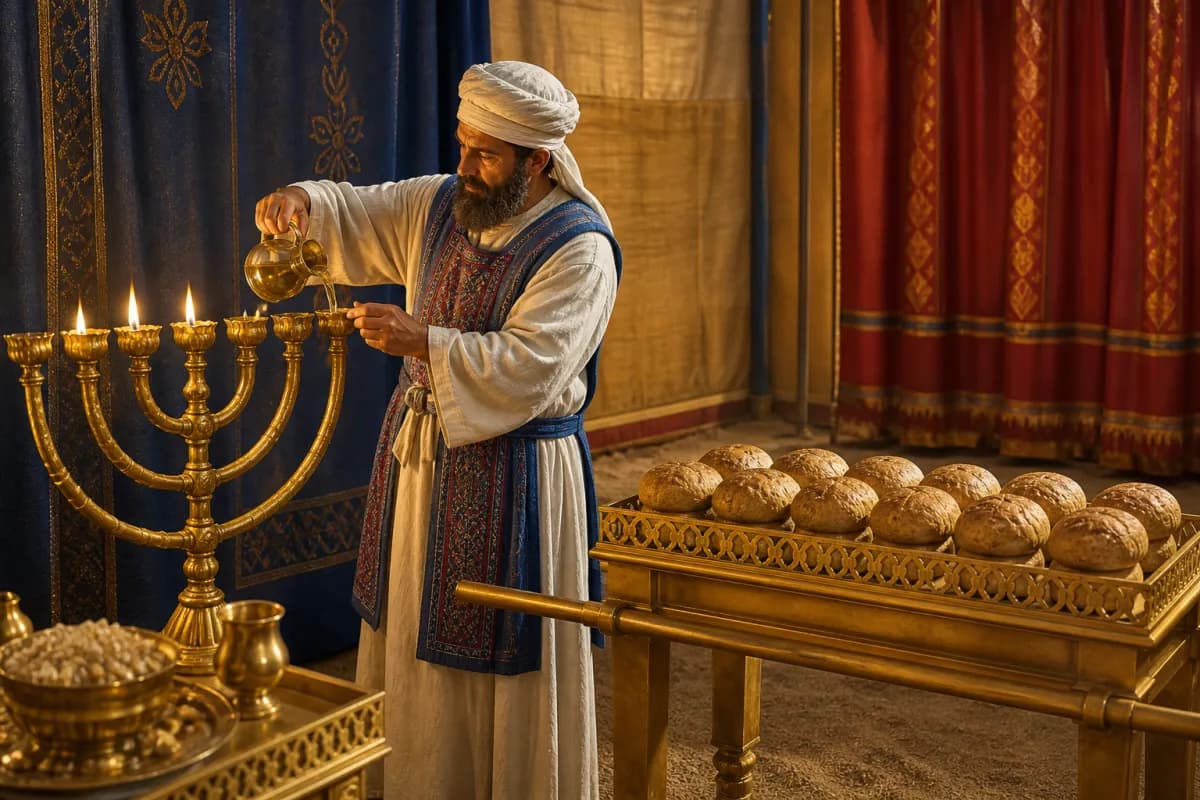
Leviticus 24:1–9 commands pure oil for the continually tended lamp and twelve loaves of bread arranged before the Lord each Sabbath as a lasting covenant sign. The sanctuary displays God’s provision and Israel’s ordered presence before Him. Jesus fulfills these themes as the light of the world and bread of life, bringing people to the Father and forming them into a people who live by His sustaining grace.
- In this study
- 9 verses · 5 movements
Leviticus 24
24:1The LORD spoke to Moses, saying,
24:2“Command the children of Israel, that they bring to you pure olive oil beaten for the light, to cause a lamp to burn continually.
24:3Outside of the veil of the Testimony, in the Tent of Meeting, Aaron shall keep it in order from evening to morning before the LORD continually. It shall be a statute forever throughout your generations.
24:4He shall keep in order the lamps on the pure gold lamp stand before the LORD continually.
24:5“You shall take fine flour, and bake twelve cakes of it: two tenths of an ephah shall be in one cake.
24:6You shall set them in two rows, six on a row, on the pure gold table before the LORD.
24:7You shall put pure frankincense on each row, that it may be to the bread for a memorial, even an offering made by fire to the LORD.
24:8Every Sabbath day he shall set it in order before the LORD continually. It is an everlasting covenant on the behalf of the children of Israel.
24:9It shall be for Aaron and his sons. They shall eat it in a holy place; for it is most holy to him of the offerings of the LORD made by fire by a perpetual statute.”
CONTEXTUAL OVERVIEW
After the festival calendar, Leviticus returns inside the sanctuary. The command concerns a lamp that must not go out and bread set continually before the Lord. These are not decorations. They make visible Israel’s worshiping life before the God who has chosen to dwell among the tribes.
The twelve loaves correspond to the twelve tribes. Israel is represented before the Lord as a whole people, while the weekly renewal keeps their relationship from becoming a forgotten achievement of the past. God provides the means, the order, and the priests who tend the signs of His presence.
HISTORICAL AND LITERARY CONTEXT
The lamps stand in the tent of meeting outside the curtain, and the bread rests on the pure table. Both belong to tabernacle worship shaped by Exodus 25 and 27. Their continual character does not mean the priests literally perform the same action without interruption; it marks a regular, enduring duty before the Lord.
The loaves are replaced each Sabbath, with frankincense as a memorial portion offered to the Lord. The priests eat the prior bread in a holy place. This provision joins public worship to priestly sustenance while maintaining the difference between what is holy and what is casually available.
SECTION-BY-SECTION ANALYSIS
- Clear oil · Leviticus 24:2The oil enables a regularly tended light in the sanctuary, keeping God’s appointed worship from neglect.
- Twelve loaves · Leviticus 24:5The bread places the tribes collectively before the Lord as a covenant people sustained by His provision.
- Each Sabbath · Leviticus 24:7Weekly renewal turns continual worship into a practiced rhythm rather than a vague religious ideal.
CHRIST IN THIS PASSAGE
Jesus explicitly calls Himself the light of the world and the bread of life. Those declarations do not turn the lampstand and twelve loaves into one-to-one predictions, but they identify Him as the reality to which sanctuary light and bread fittingly direct attention: He reveals God, sustains His people, and brings them out of darkness into life.
His saving mission also changes access to God. The bread of the Presence was a holy priestly portion, while through Christ ordinary sinners are welcomed to the Father and nourished by His grace. The church’s worship remains regular and reverent, but its confidence rests in Jesus’ finished priestly work rather than in maintaining sanctuary signs.
REFLECTION
The continual lamp and weekly bread challenge a spirituality built only on occasional intensity. God’s people need steady patterns of Scripture, prayer, gathered worship, and shared service. Such rhythms do not earn God’s presence; they help us receive and display the grace He has already given in Christ.
Ask where your spiritual life has become irregular or private in a way that isolates you from Christ’s people. Re-enter one sustaining practice this week: worship with the church, share a meal with believers, read Scripture with someone else, or bring practical provision to a household under strain.
Original Hebrew Word Study
Leviticus 24:4
תָּמִיד
tamid · H8548
Usually translated: continually or regularly
Tamid means continually. The lamps and bread remain before the Lord as a steady sign of Israel’s ongoing worship and dependence.
Follow the Scripture trail
Light and Bread Before the Lord: Israel’s Continual Worship in the larger story
The connection: The sanctuary’s continual lamp and bread place Israel’s worship and provision before the Lord. Jesus fulfills these themes as the light who reveals God and the bread who gives life, gathering a people sustained for His mission by grace.
Respond to the passage
Receive Jesus as the light and bread you need rather than treating spiritual habits as self-improvement. Choose one regular practice that will keep you connected to His people and make His provision visible to someone else.
- What do the twelve loaves communicate about Israel’s identity before God?
- Why does the passage join the people’s oil with the priest’s tending of the lamps?
- How can Jesus’ words about light and bread deepen Christian worship without erasing the meaning of Leviticus?
Prayer
Lord Jesus, light of the world and bread of life, thank You for bringing me from darkness and sustaining me by grace. Build steady worship in me, bind me to Your people, and make my life a clear witness to Your provision. Amen.