Passage Study
The Holy Name and Equal Justice
Leviticus 24:10–24:23
Leviticus 24:10–23 joins a public violation of the Lord’s name to laws of proportionate justice for the whole community. The passage refuses both contempt for God and private vengeance against people made in His image. Jesus bears the curse of sin and forms a people who honor God’s name while seeking truthful, restrained justice for neighbor and stranger alike.
- In this study
- 14 verses · 5 movements
Leviticus 24
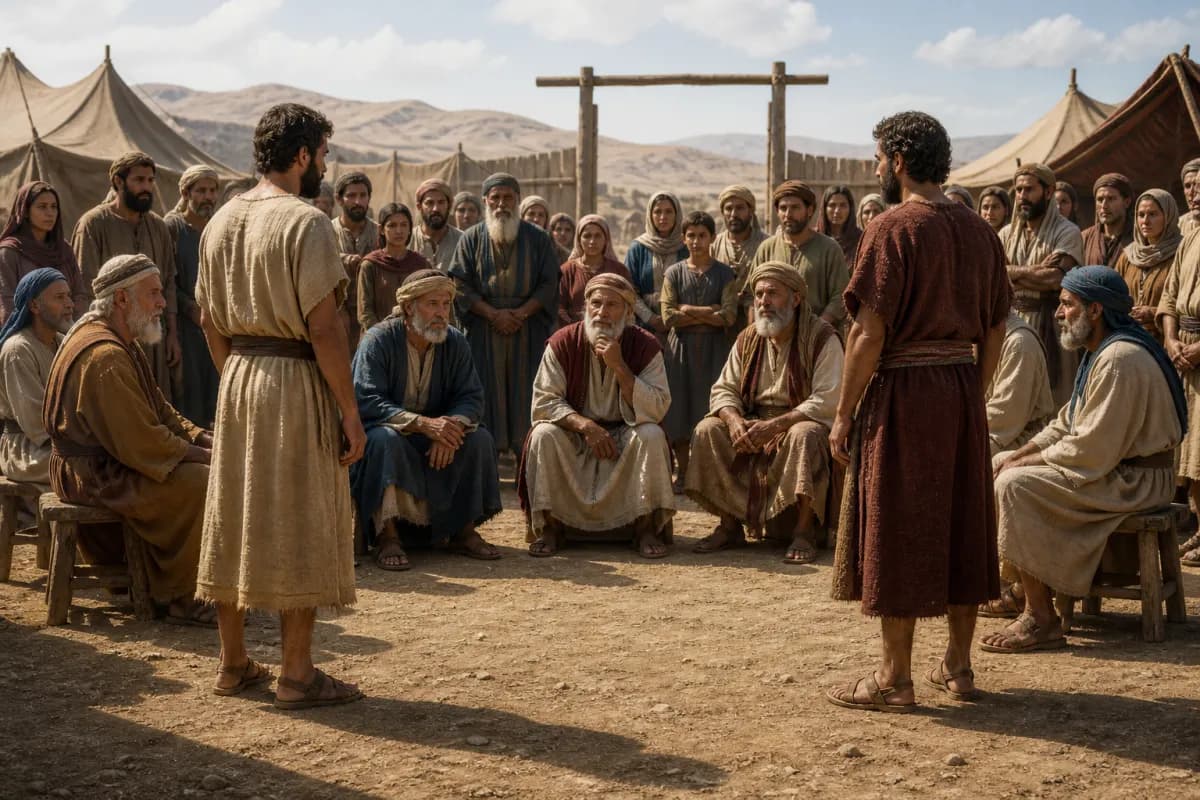
24:10The son of an Israelite woman, whose father was an Egyptian, went out among the children of Israel; and the son of the Israelite woman and a man of Israel strove together in the camp.
24:11The son of the Israelite woman blasphemed the Name, and cursed; and they brought him to Moses. His mother’s name was Shelomith, the daughter of Dibri, of the tribe of Dan.
24:12They put him in custody until the LORD’s will should be declared to them.
24:13The LORD spoke to Moses, saying,
24:14“Bring him who cursed out of the camp; and let all who heard him lay their hands on his head, and let all the congregation stone him.
24:15You shall speak to the children of Israel, saying, ‘Whoever curses his God shall bear his sin.
24:16He who blasphemes the LORD’s name, he shall surely be put to death. All the congregation shall certainly stone him. The foreigner as well as the native-born shall be put to death when he blasphemes the Name.
24:17“‘He who strikes any man mortally shall surely be put to death.
24:18He who strikes an animal mortally shall make it good, life for life.
24:19If anyone injures his neighbor, it shall be done to him as he has done:
24:20fracture for fracture, eye for eye, tooth for tooth. It shall be done to him as he has injured someone.
24:21He who kills an animal shall make it good; and he who kills a man shall be put to death.
24:22You shall have one kind of law for the foreigner as well as the native-born; for I am the LORD your God.’”
24:23Moses spoke to the children of Israel; and they brought him who had cursed out of the camp, and stoned him with stones. The children of Israel did as the LORD commanded Moses.
CONTEXTUAL OVERVIEW
The lamps and bread of Leviticus 24 keep Israel’s worship before the Lord; the next scene brings the Lord’s name into public contempt. A fight breaks out in the camp, and a man curses the Name. Israel does not improvise a penalty in anger. The people place him in custody until they know what the Lord commands.
The resulting instruction reaches beyond one offense. The God whose name is holy also requires justice for human life, injury, and property. The passage holds together reverence upward and responsibility outward: covenant faithfulness cannot honor God with words while treating neighbors or resident aliens as disposable.
HISTORICAL AND LITERARY CONTEXT
The man is identified through both his Israelite mother and Egyptian father, but the law’s final emphasis is not ethnic exclusion. The same legal standard applies to the native and the resident alien. In Israel’s camp, belonging to the community carried real responsibility before the God who had redeemed them from Egypt.
The command to bring the offender outside the camp and have the witnesses lay their hands on his head gives the judgment a public, accountable character. Witnesses do not simply accuse from a distance; their action identifies the testimony on which the case rests. This is a solemn judicial passage, not permission for personal retaliation.
SECTION-BY-SECTION ANALYSIS
- The Name · Leviticus 24:16God’s name represents His revealed character and covenant presence; to curse it is to defy the Lord Himself.
- Witnesses · Leviticus 24:10Public testimony is made accountable before the community, protecting judgment from rumor and private rage.
- One standard · Leviticus 24:22Native Israelite and resident alien stand under the same law, because the Lord is God over the whole covenant community.
CHRIST IN THIS PASSAGE
Leviticus 24 does not make the tragic scene a direct prediction of Jesus. Its enduring themes clarify the gospel: God’s name is holy, human life is weighty, and justice must be true and measured. Jesus embodies perfect reverence for the Father and bears the curse due to sinners so that those who have dishonored God may be forgiven rather than abandoned.
Jesus also rejects personal vengeance. His call to turn the other cheek does not erase public justice or the value of victims; it forbids disciples from making retaliation their master. His saving mission creates a people who can tell the truth about wrong, pursue lawful justice, forgive personal hatred, and invite enemies toward reconciliation with God.
REFLECTION
This passage examines the way we use both God’s name and our power over others. Casual religious language can conceal a heart that treats God as an accessory, while anger can persuade us that our own hurt permits unlimited retaliation. The Lord refuses both distortions.
Bring contempt, angry speech, and vindictive impulses to Jesus. His cross is not an excuse to deny harm; it is the place where God’s holy judgment and mercy meet. Ask Him to make your words reverent, your testimony truthful, and your pursuit of justice marked by love of neighbor.
Original Hebrew Word Study
Leviticus 24:11
נָקַב
naqav · H5344
Usually translated: to curse or speak abusively
Naqav here describes cursing the divine Name. The law guards the Lord’s name and then applies equal justice to resident alien and native alike.
Follow the Scripture trail
The Holy Name and Equal Justice in the larger story
The connection: Leviticus 24 guards the holiness of God’s name and the dignity of human life through public, proportionate justice. Jesus bears sin’s curse and sends forgiven people to honor the Father, seek truth, and offer reconciliation to a wounded world.
Respond to the passage
Ask where your speech has treated God, a neighbor, or an opponent carelessly. Confess it to Jesus, make amends where needed, and choose one way to pursue truth or justice without feeding revenge.
- Why does Israel wait for the Lord’s direction instead of deciding the case immediately?
- How does “eye for eye” limit retaliation when read in its legal setting?
- How does Jesus’ bearing of the curse shape a Christian response to both real wrongdoing and personal injury?
Prayer
Holy Father, forgive the ways I have treated Your name and Your image-bearers lightly. Thank You that Jesus bore the curse of sin to bring me near. Make my speech true, my love courageous, and my pursuit of justice free from revenge. Amen.