Passage Study
Walking with the God Who Dwells Among His People
Leviticus 26:1–26:13
Leviticus 26:1–13 calls Israel away from idols, commands Sabbath keeping and reverence for the sanctuary, and promises rain, harvest, peace, fruitfulness, and God’s dwelling presence as covenant blessing. The goal is not prosperity detached from God but communion with the Redeemer who brought Israel out of slavery. Jesus fulfills faithful obedience and brings His people into the Father’s presence, sending them to live as grateful witnesses rather than consumers of blessing.
- In this study
- 13 verses · 5 movements
Leviticus 26
26:1“‘You shall make for yourselves no idols, and you shall not raise up a carved image or a pillar, and you shall not place any figured stone in your land, to bow down to it; for I am the LORD your God.
26:2“‘You shall keep my Sabbaths, and have reverence for my sanctuary. I am the LORD.
26:3“‘If you walk in my statutes and keep my commandments, and do them,
26:4then I will give you your rains in their season, and the land shall yield its increase, and the trees of the field shall yield their fruit.
26:5Your threshing shall continue until the vintage, and the vintage shall continue until the sowing time. You shall eat your bread to the full, and dwell in your land safely.
26:6“‘I will give peace in the land, and you shall lie down, and no one will make you afraid. I will remove evil animals out of the land, neither shall the sword go through your land.
26:7You shall chase your enemies, and they shall fall before you by the sword.
26:8Five of you shall chase a hundred, and a hundred of you shall chase ten thousand; and your enemies shall fall before you by the sword.
26:9“‘I will have respect for you, make you fruitful, multiply you, and will establish my covenant with you.
26:10You shall eat old supplies long kept, and you shall move out the old because of the new.
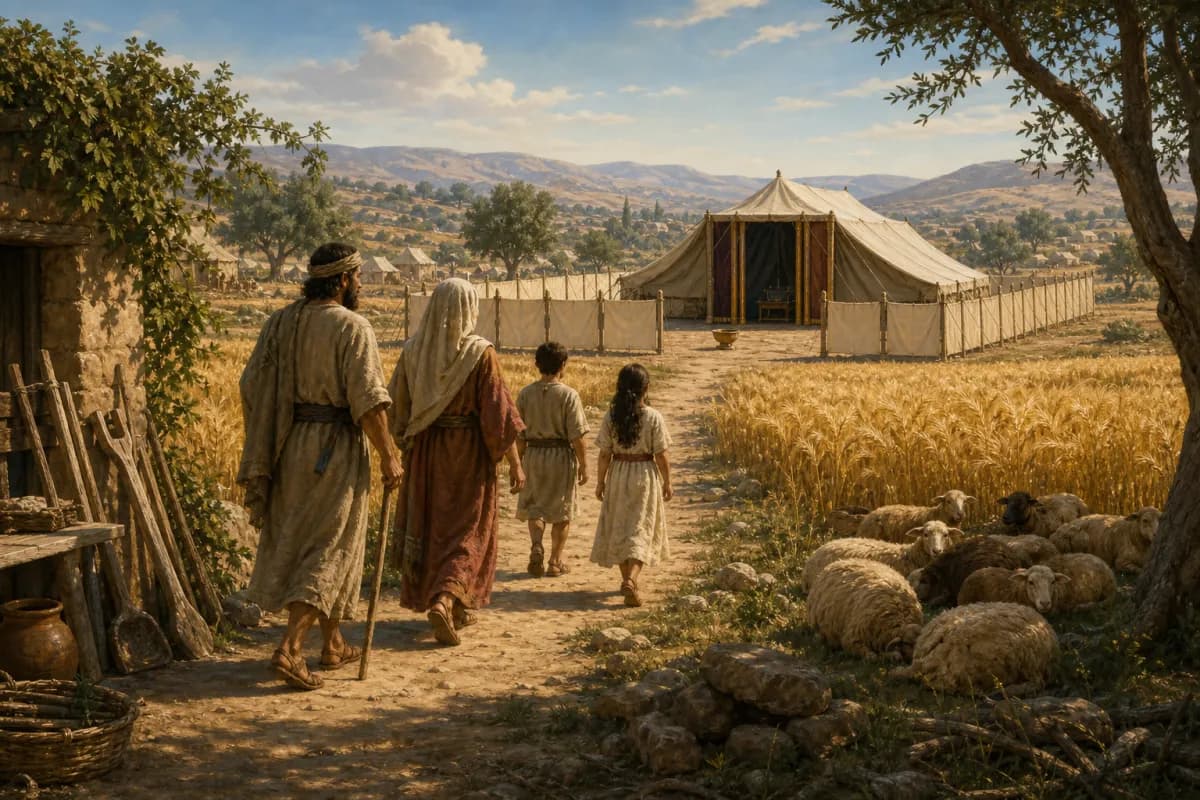
26:11I will set my tent among you, and my soul won’t abhor you.
26:12I will walk among you, and will be your God, and you will be my people.
26:13I am the LORD your God, who brought you out of the land of Egypt, that you should not be their slaves. I have broken the bars of your yoke, and made you walk upright.
CONTEXTUAL OVERVIEW
Leviticus 26 begins the covenant’s closing blessings and warnings by naming rival worship. Israel must not make idols, set up sacred pillars, or bow before carved stones. The issue is not merely religious aesthetics. The people who belong to the Lord cannot seek security, fertility, or guidance from the objects their hands can control.
The promised blessings are concrete: rain, crops, secure dwellings, peace, fruitfulness, and victory. Yet the passage’s climax is not a full storehouse. God says He will place His dwelling among them and walk among them as their God. The gifts serve the relationship; they are not substitutes for it.
HISTORICAL AND LITERARY CONTEXT
These verses stand near the end of Leviticus after laws of worship, purity, justice, sabbath, and Jubilee. The covenant has already shown what life before a holy God requires. The blessings now portray what faithful life in the promised land looks like under the Lord’s care, in contrast to the false promises offered by surrounding idols.
The language echoes the exodus. Israel is addressed as a people whose yoke God broke and whom He led upright. Obedience does not purchase this rescue; it is the fitting life of people already delivered. That order protects the chapter from being read as a formula by which anyone can demand wealth from God.
SECTION-BY-SECTION ANALYSIS
- No idols · Leviticus 26:1Israel may not replace the living Lord with visible objects that appear to offer controllable security.
- Sabbath and sanctuary · Leviticus 26:2Time and worship are ordered around God’s presence, training the people to depend on Him.
- God dwelling among them · Leviticus 26:12Rain, peace, and fruitfulness culminate in covenant communion rather than material self-sufficiency.
CHRIST IN THIS PASSAGE
Jesus fulfills the faithful covenant obedience Israel repeatedly failed to render. He refuses idolatrous shortcuts, trusts the Father, and makes God’s presence known among His people. His saving mission does not promise every believer Israel’s specific land blessings; it brings the greater gift toward which those blessings point: reconciliation with God and the gift of the Spirit.
Through Christ, God makes His dwelling with a people drawn from the nations. This does not turn discipleship into a transaction for health or wealth. It gives believers confidence that neither scarcity nor suffering can separate them from the Lord who has made them His own and will complete His dwelling with them in the new creation.
REFLECTION
The passage exposes contemporary idols precisely where we seek predictable security: money, influence, success, political power, pleasure, or even religious activity. None can carry the weight of being God. They promise control but cannot give the fellowship for which we were made.
Receive Jesus as the Father’s greatest gift rather than treating Him as a route to smaller prizes. Let Sabbath, gathered worship, and ordinary obedience become reminders that you belong to the God who walks with His people. In seasons of abundance, give thanks; in hardship, hold fast to His presence and serve others with hope.
Original Hebrew Word Study
Leviticus 26:3
חֻקָּה
chuqqah · H2708
Usually translated: statute or appointed ordinance
Chuqqah is a statute established by God. Obedience is pictured as walking in His ordinances, a whole-life pattern of trust that receives the covenant blessings He promises.
Follow the Scripture trail
Walking with the God Who Dwells Among His People in the larger story
The connection: Leviticus 26 reveals that the covenant’s richest blessing is the Lord Himself walking with the people He rescued from slavery. Jesus brings that presence near, reconciles sinners to the Father, and sends them as hopeful witnesses of the coming new creation.
Respond to the passage
Identify one source of security that has begun to function like an idol. Turn to Jesus in prayer, and choose a Sabbath, worship, or generosity practice that reorders your trust around God’s presence.
- Why do the commands against idols, Sabbath, and sanctuary stand at the beginning of the blessings?
- What keeps these promises from becoming a universal prosperity formula?
- How does the promise that God will dwell with His people find its fuller realization in Jesus and the new creation?
Prayer
God who walks with Your people, forgive my trust in things that cannot save. Thank You for giving Jesus to bring me near to You. Order my work, worship, and hopes around Your presence, and make my life a witness to Your faithful love. Amen.