Passage Study
The Glory Appears: Aaron’s First Priestly Ministry
Leviticus 9:1–9:24
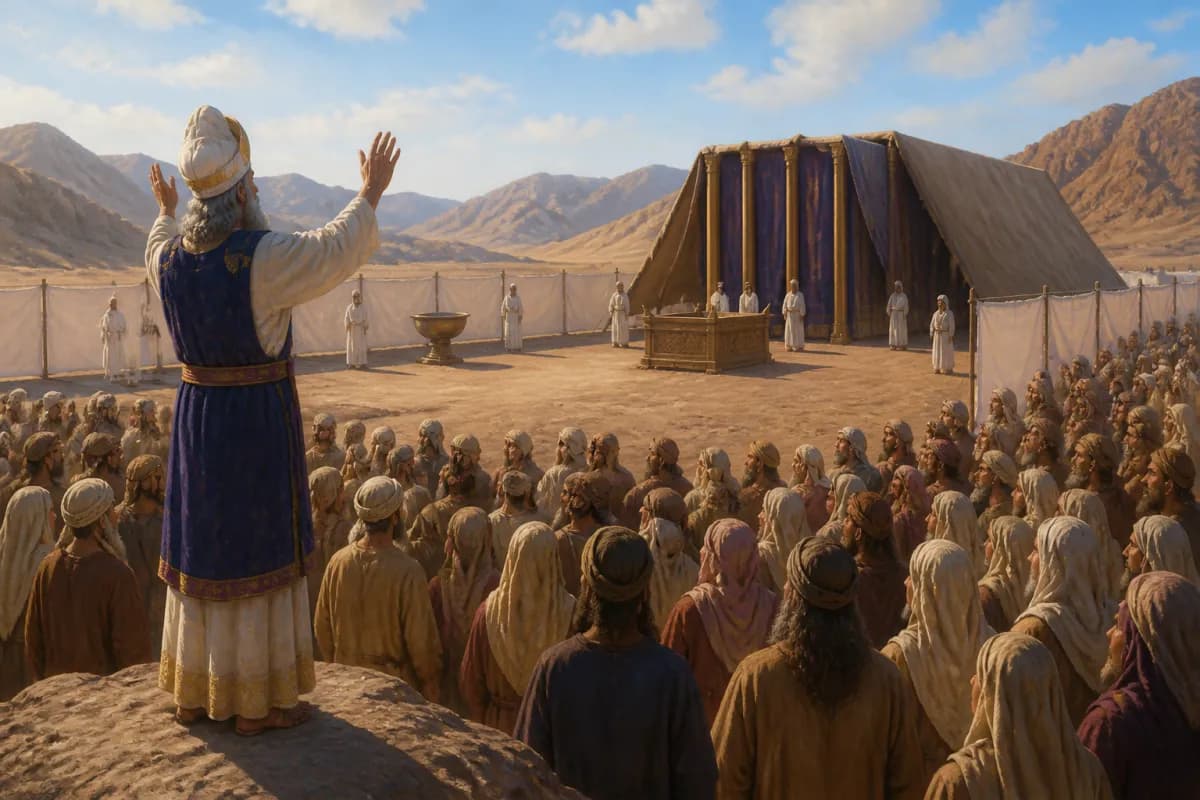
Leviticus 9:1–24 records Aaron’s first public sacrifices after seven days of ordination. He offers for himself and for the people, blesses Israel, and the Lord’s glory appears as fire consumes the offering. God confirms that He Himself provides the way of approach. Jesus brings this saving reality to its fulfillment as the final Priest and sacrifice who opens access to God.
- In this study
- 24 verses · 5 movements
Leviticus 9
9:1On the eighth day, Moses called Aaron and his sons, and the elders of Israel;
9:2and he said to Aaron, “Take a calf from the herd for a sin offering, and a ram for a burnt offering, without defect, and offer them before the LORD.
9:3You shall speak to the children of Israel, saying, ‘Take a male goat for a sin offering; and a calf and a lamb, both a year old, without defect, for a burnt offering;
9:4and a bull and a ram for peace offerings, to sacrifice before the LORD; and a meal offering mixed with oil: for today the LORD appears to you.’”
9:5They brought what Moses commanded before the Tent of Meeting. All the congregation came near and stood before the LORD.
9:6Moses said, “This is the thing which the LORD commanded that you should do; and the LORD’s glory shall appear to you.”
9:7Moses said to Aaron, “Draw near to the altar, and offer your sin offering, and your burnt offering, and make atonement for yourself, and for the people; and offer the offering of the people, and make atonement for them, as the LORD commanded.”
9:8So Aaron came near to the altar, and killed the calf of the sin offering, which was for himself.
9:9The sons of Aaron presented the blood to him; and he dipped his finger in the blood, and put it on the horns of the altar, and poured out the blood at the base of the altar;
9:10but the fat, and the kidneys, and the cover from the liver of the sin offering, he burned upon the altar, as the LORD commanded Moses.
9:11The meat and the skin he burned with fire outside the camp.
9:12He killed the burnt offering; and Aaron’s sons delivered the blood to him, and he sprinkled it around on the altar.
9:13They delivered the burnt offering to him, piece by piece, and the head. He burned them upon the altar.
9:14He washed the innards and the legs, and burned them on the burnt offering on the altar.
9:15He presented the people’s offering, and took the goat of the sin offering which was for the people, and killed it, and offered it for sin, like the first.
9:16He presented the burnt offering, and offered it according to the ordinance.
9:17He presented the meal offering, and filled his hand from there, and burned it upon the altar, in addition to the burnt offering of the morning.
9:18He also killed the bull and the ram, the sacrifice of peace offerings, which was for the people. Aaron’s sons delivered to him the blood, which he sprinkled around on the altar;
9:19and the fat of the bull and of the ram, the fat tail, and that which covers the innards, and the kidneys, and the cover of the liver;
9:20and they put the fat upon the breasts, and he burned the fat on the altar.
9:21Aaron waved the breasts and the right thigh for a wave offering before the LORD, as Moses commanded.
9:22Aaron lifted up his hands toward the people, and blessed them; and he came down from offering the sin offering, and the burnt offering, and the peace offerings.
9:23Moses and Aaron went into the Tent of Meeting, and came out, and blessed the people; and the LORD’s glory appeared to all the people.
9:24Fire came out from before the LORD, and consumed the burnt offering and the fat upon the altar. When all the people saw it, they shouted, and fell on their faces.
CONTEXTUAL OVERVIEW
The seven days of consecration are complete, and the eighth day begins Aaron’s actual ministry. The scene is deliberately public: elders are present, Israel brings its offerings, and Moses explains that the Lord will appear. The aim is not to celebrate Aaron’s achievement but to establish the people’s confidence that God has made a way for them to live before His glory.
Aaron must begin with a sin offering and burnt offering for himself before he ministers for the people. That detail prevents Israel from confusing priestly office with sinlessness. The mediator needs mercy too, which makes the chapter’s final display of divine acceptance both joyful and incomplete until a better priest comes.
HISTORICAL AND LITERARY CONTEXT
Leviticus 9 follows the ordination narrative in chapter 8 and precedes the warning of Nadab and Abihu in chapter 10. Together these chapters show both the gift and danger of drawing near to the holy God. The sacrifices combine sin, burnt, well-being, and grain offerings, bringing cleansing, consecration, fellowship, and grateful tribute into one communal act.
The eighth day often signals a new beginning after a completed period in Israel’s ritual life. Here it is the first day of Aaron’s representative service. Moses and Aaron enter the tent of meeting, then emerge to bless the people; the appearance of glory and the fire that consumes the offering make clear that God, not human ceremony, grants acceptance.
SECTION-BY-SECTION ANALYSIS
- The eighth day · Leviticus 9:1The completed ordination gives way to a new beginning of representative service before God and the congregation.
- Offerings for Aaron and Israel · Leviticus 9:18The priest and the people alike require God’s cleansing provision; office does not eliminate the need for atonement.
- Fire from the Lord · Leviticus 9:24God visibly confirms the altar offering, showing that acceptance is His gift and that His glory is not managed by human skill.
CHRIST IN THIS PASSAGE
Aaron’s first ministry points beyond itself precisely because he must offer for his own sin. Jesus is the greater Priest who has no sin offering to bring for Himself. He offers His own life for His people and enters God’s presence as the risen mediator whose work truly cleanses the conscience.
The fire and glory in Leviticus confirm that God receives the offering He has prescribed. In the gospel, the resurrection publicly vindicates Jesus’ self-offering and announces that His saving mission has opened access to the Father. Those who trust Him come before God with reverence and confidence, not because they control His presence but because Christ has reconciled them.
REFLECTION
We can approach worship as though our preparation, sincerity, or emotional intensity creates God’s welcome. Leviticus redirects us. God initiates the way of approach, provides the sacrifice, and reveals His glory. The response He seeks is humble trust and grateful praise.
Jesus gives believers a firmer hope than a passing religious experience. His finished sacrifice and living intercession mean that people who belong to Him can draw near in prayer, worship, and obedience. His mission also sends them out to bless others with the news that access to God is a gift of grace.
Original Hebrew Word Study
Leviticus 9:6
כָּבוֹד
kavod · H3519
Usually translated: glory or weighty splendor
Kavod is God’s weighty glory. Aaron’s first ministry anticipates the Lord’s visible glory, confirming that sacrifice and blessing serve God’s presence among the people.
Follow the Scripture trail
The Glory Appears: Aaron’s First Priestly Ministry in the larger story
The connection: Aaron’s first ministry shows Israel that divine glory is encountered through the sacrifice and priesthood God supplies. Jesus fulfills that saving pattern by offering Himself, rising in vindication, and bringing His people into the Father’s presence.
Respond to the passage
Approach God today through Jesus with a specific burden, thanksgiving, or confession. Let your prayer begin with His provision rather than an attempt to manufacture spiritual worthiness.
- Why does Aaron offer sacrifices for himself before offering for the people?
- What does the Lord’s fire reveal about the source of Israel’s acceptance?
- How does Christ’s finished work give both reverence and confidence in worship?
Prayer
Father, thank You for providing the way to draw near through Your Son. Keep me from trusting my own religious effort, and fill me with reverence, confidence, and praise through Jesus Christ, our living Priest. Amen.