Passage Study
The First Census: A People Prepared to Go Forward
Numbers 1:17–1:46
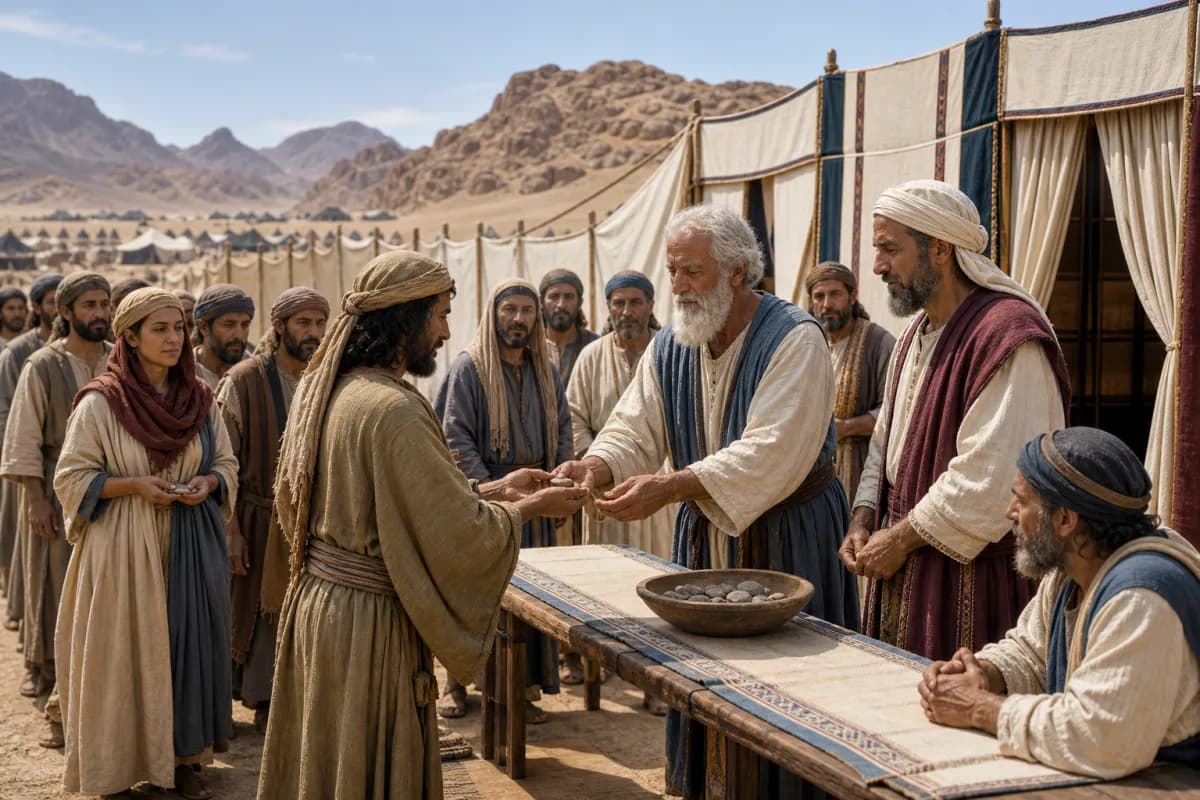
Numbers 1:17–46 records the census of Israel’s tribes, counted by ancestral house and by men ready for military service. The total is large, but the text preserves each tribe’s place in the whole. God is preparing the people He rescued from Egypt to move toward His promise, a journey that ultimately directs readers to Jesus, who gathers a people for His kingdom through His saving work.
- In this study
- 30 verses · 5 movements
Numbers 1
1:17Moses and Aaron took these men who are mentioned by name.
1:18They assembled all the congregation together on the first day of the second month; and they declared their ancestry by their families, by their fathers’ houses, according to the number of the names, from twenty years old and upward, one by one.
1:19As the LORD commanded Moses, so he counted them in the wilderness of Sinai.
1:20The children of Reuben, Israel’s firstborn, their generations, by their families, by their fathers’ houses, according to the number of the names, one by one, every male from twenty years old and upward, all who were able to go out to war:
1:21those who were counted of them, of the tribe of Reuben, were forty-six thousand five hundred.
1:22Of the children of Simeon, their generations, by their families, by their fathers’ houses, those who were counted of it, according to the number of the names, one by one, every male from twenty years old and upward, all who were able to go out to war:
1:23those who were counted of them, of the tribe of Simeon, were fifty-nine thousand three hundred.
1:24Of the children of Gad, their generations, by their families, by their fathers’ houses, according to the number of the names, from twenty years old and upward, all who were able to go out to war:
1:25those who were counted of them, of the tribe of Gad, were forty-five thousand six hundred fifty.
1:26Of the children of Judah, their generations, by their families, by their fathers’ houses, according to the number of the names, from twenty years old and upward, all who were able to go out to war:
1:27those who were counted of them, of the tribe of Judah, were seventy-four thousand six hundred.
1:28Of the children of Issachar, their generations, by their families, by their fathers’ houses, according to the number of the names, from twenty years old and upward, all who were able to go out to war:
1:29those who were counted of them, of the tribe of Issachar, were fifty-four thousand four hundred.
1:30Of the children of Zebulun, their generations, by their families, by their fathers’ houses, according to the number of the names, from twenty years old and upward, all who were able to go out to war:
1:31those who were counted of them, of the tribe of Zebulun, were fifty-seven thousand four hundred.
1:32Of the children of Joseph: of the children of Ephraim, their generations, by their families, by their fathers’ houses, according to the number of the names, from twenty years old and upward, all who were able to go out to war:
1:33those who were counted of them, of the tribe of Ephraim, were forty thousand five hundred.
1:34Of the children of Manasseh, their generations, by their families, by their fathers’ houses, according to the number of the names, from twenty years old and upward, all who were able to go out to war:
1:35those who were counted of them, of the tribe of Manasseh, were thirty-two thousand two hundred.
1:36Of the children of Benjamin, their generations, by their families, by their fathers’ houses, according to the number of the names, from twenty years old and upward, all who were able to go out to war:
1:37those who were counted of them, of the tribe of Benjamin, were thirty-five thousand four hundred.
1:38Of the children of Dan, their generations, by their families, by their fathers’ houses, according to the number of the names, from twenty years old and upward, all who were able to go out to war:
1:39those who were counted of them, of the tribe of Dan, were sixty-two thousand seven hundred.
1:40Of the children of Asher, their generations, by their families, by their fathers’ houses, according to the number of the names, from twenty years old and upward, all who were able to go out to war:
1:41those who were counted of them, of the tribe of Asher, were forty-one thousand five hundred.
1:42Of the children of Naphtali, their generations, by their families, by their fathers’ houses, according to the number of the names, from twenty years old and upward, all who were able to go out to war:
1:43those who were counted of them, of the tribe of Naphtali, were fifty-three thousand four hundred.
1:44These are those who were counted, whom Moses and Aaron counted, and the twelve men who were princes of Israel, each one for his fathers’ house.
1:45So all those who were counted of the children of Israel by their fathers’ houses, from twenty years old and upward, all who were able to go out to war in Israel—
1:46all those who were counted were six hundred three thousand five hundred fifty.
CONTEXTUAL OVERVIEW
The command given at the beginning of Numbers is now carried out. Israel gathers as an assembly, traces its clans and ancestral houses, and is counted tribe by tribe. The scene is deliberately orderly: a people recently freed from slavery is being formed for faithful movement under the Lord’s command.
The census is military in scope, counting men twenty years old and upward who are able to go to war. Yet the narrative does not celebrate force as Israel’s ultimate security. The same book will repeatedly show that numbers cannot replace trust in the Lord. The count records the people God has preserved, not an army that can secure His promise apart from Him.
HISTORICAL AND LITERARY CONTEXT
This first census is framed by Sinai and the approaching journey to Canaan. It supplies the opening structure for the book, while Numbers 26 will later count a new generation after the wilderness judgments. Together the censuses make the book’s tragedy and God’s faithfulness visible: the generation counted here will largely refuse the land, yet God will not abandon His covenant purpose.
The text gives separate totals for twelve tribes and then a final total. Levi is excluded because its work is related to the tabernacle rather than the fighting force. The distinction prevents Israel’s identity from being reduced to warfare. A holy people needs both protection in the wilderness and guarded worship before the God who dwells among them.
SECTION-BY-SECTION ANALYSIS
- Registered by ancestry · Numbers 1:18Israel’s tribes are connected to the promises made to the patriarchs; this is a covenant people with a remembered story.
- Able to go to war · Numbers 1:20The census prepares for a dangerous journey, but the book will insist that victory depends on the Lord’s presence and obedience.
- One total from many tribes · Numbers 1:22The final number joins distinct tribal identities into a single people under God’s covenant.
CHRIST IN THIS PASSAGE
The first census is not a direct prophecy of Christ. It establishes the corporate shape of redemption: the God who saves Israel from slavery gathers them into a people meant to follow Him. Jesus fulfills this saving trajectory by redeeming people from sin and death and creating one new humanity through His cross.
The passage also guards against misplaced confidence. Israel’s large total does not keep it from unbelief later in Numbers; strength without faith cannot inherit God’s promise. Jesus is the faithful representative Israel needed. He obeys the Father where His people fail and gathers those who trust Him into a kingdom whose security rests in His resurrection, not in their numbers or resources.
REFLECTION
Visible resources can encourage us, but they can also quietly become the thing we trust. A full room, a growing budget, a capable team, or personal strength can all be received gratefully while still becoming substitutes for faith. Numbers begins by counting a strong people and will soon reveal how fragile courage is when it is detached from God’s promise.
Jesus does not ask His followers to manufacture confidence from their size. He calls them to trust Him, obey His word, and go where He sends them. The church’s mission is never an invitation to boast in reach or efficiency; it is a summons to rely on the crucified and risen King who is present with His people.
Original Hebrew Word Study
Numbers 1:19
פָּקַד
paqad · H6485
Usually translated: to number, appoint, or attend to
Paqad includes numbering and appointing. The census records men available for service because the Lord knows and orders His people for the journey ahead.
Follow the Scripture trail
The First Census: A People Prepared to Go Forward in the larger story
The connection: Israel’s census records a redeemed people being prepared to follow God into His promise, while the rest of Numbers exposes the need for a faithful representative. Jesus fulfills that need: by His saving death and resurrection He gathers a people who belong to Him and can follow Him in faith.
Respond to the passage
Take an honest inventory of the resources you rely on. Thank God for them, but confess where they have become a substitute for trust. Ask Jesus to make your confidence rest in His presence and promises.
- Why does the passage preserve tribal and family identity instead of reporting only the final total?
- How does the later failure at Kadesh change the way we should read this impressive census?
- What resource are you tempted to treat as your security, and how does Christ redirect that trust?
Prayer
Father, thank You for every resource You provide, but forgive me for trusting gifts more than You. Thank You for Jesus, the faithful Savior I could never be for myself. Teach me to follow Him with humble faith and to serve His mission without boasting. Amen.