Passage Study
A People Who Want to Go Back: Rebellion at Kadesh
Numbers 14:1–14:10
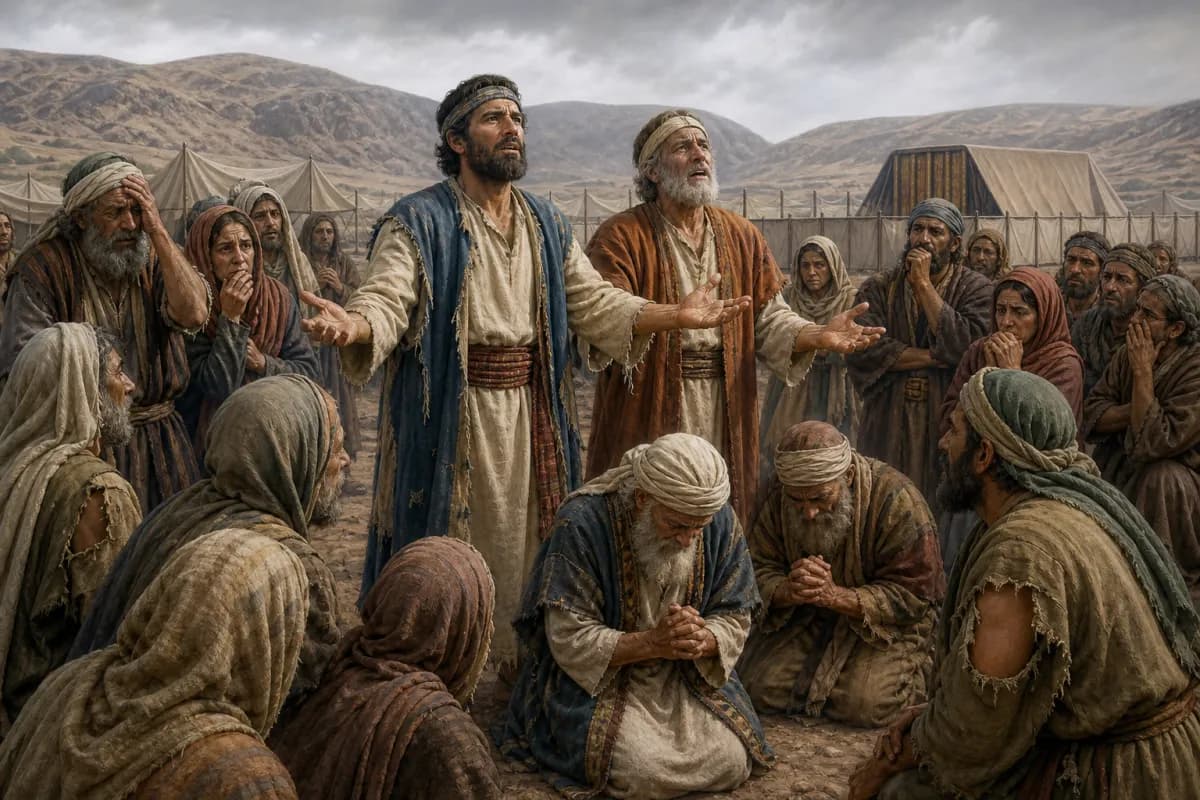
Numbers 14:1–10 shows Israel weeping after the spies’ report, accusing the Lord of bringing them out to die, and proposing a leader who will return them to Egypt. Joshua and Caleb plead for trust, but the congregation is ready to stone them. Jesus delivers His people from the slavery of sin and calls them to follow Him forward in faith rather than return in heart to what once held them captive.
- In this study
- 10 verses · 5 movements
Numbers 14
14:1All the congregation lifted up their voice, and cried; and the people wept that night.
14:2All the children of Israel murmured against Moses and against Aaron. The whole congregation said to them, “We wish that we had died in the land of Egypt, or that we had died in this wilderness!
14:3Why does the LORD bring us to this land, to fall by the sword? Our wives and our little ones will be captured or killed! Wouldn’t it be better for us to return into Egypt?”
14:4They said to one another, “Let’s choose a leader, and let’s return into Egypt.”
14:5Then Moses and Aaron fell on their faces before all the assembly of the congregation of the children of Israel.
14:6Joshua the son of Nun and Caleb the son of Jephunneh, who were of those who spied out the land, tore their clothes.
14:7They spoke to all the congregation of the children of Israel, saying, “The land, which we passed through to spy it out, is an exceedingly good land.
14:8If the LORD delights in us, then he will bring us into this land, and give it to us: a land which flows with milk and honey.
14:9Only don’t rebel against the LORD, neither fear the people of the land; for they are bread for us. Their defense is removed from over them, and the LORD is with us. Don’t fear them.”
14:10But all the congregation threatened to stone them with stones. The LORD’s glory appeared in the Tent of Meeting to all the children of Israel.
CONTEXTUAL OVERVIEW
The fearful report of ten scouts becomes a national revolt. Israel has seen the land’s fruit and heard Caleb’s confidence, yet the congregation spends the night weeping and directs its anguish against Moses, Aaron, and ultimately the Lord. The people do not simply ask for help with a frightening task. They reinterpret the exodus itself as a scheme to destroy them.
Their proposed solution reveals the depth of the rebellion: appoint another leader and return to Egypt. Egypt was the house of slavery from which the Lord rescued them by His power. Fear makes bondage look safer than the promise of God, and the wilderness generation would rather reverse redemption than trust the God who brought them to the border.
HISTORICAL AND LITERARY CONTEXT
Kadesh is the turning point of Numbers. The census, camp arrangement, tabernacle service, and departure from Sinai have all prepared Israel to move toward the land. Numbers 13–14 now show that the decisive obstacle is not a lack of organization or information but unbelief in God’s covenant promise.
Moses and Aaron fall on their faces before the assembly, while Joshua and Caleb tear their clothes in grief. These bodily actions show that the crisis is spiritual and communal. Two men who personally surveyed the same land call it “exceedingly good,” not because they ignore its inhabitants but because they interpret the land through the Lord’s promise and presence.
SECTION-BY-SECTION ANALYSIS
- Return to Egypt · Numbers 14:3The proposal treats former slavery as preferable to a future that requires trusting God.
- The Lord is with us · Numbers 14:10Joshua and Caleb locate courage in God’s presence rather than in Israel’s apparent ability.
- Ready to stone them · Numbers 14:2Unbelief resists correction when God’s word threatens the fearful story it has chosen.
CHRIST IN THIS PASSAGE
Israel’s longing for Egypt exposes a bondage deeper than geography. The New Testament describes sin as a power from which people need liberation, not merely advice. Jesus leads a greater exodus through His death and resurrection, delivering His people from guilt, death, and slavery to sin so that they may belong to God.
Jesus also remains the faithful witness whom people reject. Yet unlike Moses, Joshua, and Caleb, He bears the hostility of His people all the way to the cross. His saving mission does not invite believers to manufacture courage; it gives them a risen Lord whose presence is secure as they follow Him in obedience and bear witness to His kingdom.
REFLECTION
When obedience becomes costly, the past can become falsely attractive. A destructive habit, a compromised relationship, or a life organized without God may seem safer simply because it is familiar. Numbers asks us to recognize that impulse for what it is: a temptation to call slavery safety and to call God’s good leading danger.
Bring your fear plainly to Jesus, then refuse to let fear appoint your direction. Stay close to the people who speak God’s truth, ask for courage to take the next faithful step, and remember that the Savior who freed you is not leading you back into bondage.
Original Hebrew Word Study
Numbers 14:4
מָאַס
maas · H3988
Usually translated: to reject or despise
Maas means to reject. Israel’s wish for another leader is a rejection of the Lord’s purpose, even after He has brought them to the edge of the promised land.
Follow the Scripture trail
A People Who Want to Go Back: Rebellion at Kadesh in the larger story
The connection: At Kadesh, fear makes redeemed Israel want to return to the bondage from which the Lord saved it. Jesus accomplishes the deeper deliverance from sin and death, then leads His people forward by His presence into the obedience and mission of His kingdom.
Respond to the passage
Ask Jesus to expose the place where fear has made an old bondage look safe. Thank Him for the freedom He purchased, seek counsel from a faithful believer, and take one concrete step that follows His word instead of retreating.
- What does Israel’s wish to return to Egypt reveal about the way fear changes memory?
- Why do Joshua and Caleb speak differently after seeing the same land as the other scouts?
- What does Christ’s saving freedom change about a difficult act of obedience today?
Prayer
Lord Jesus, forgive me for treating familiar bondage as safer than Your good leading. Thank You for delivering me from sin and death. Make me trust Your presence, receive correction from Your people, and follow You forward with faith. Amen.