Passage Study
Mercy That Does Not Excuse Unbelief: Moses Intercedes for Israel
Numbers 14:11–14:38
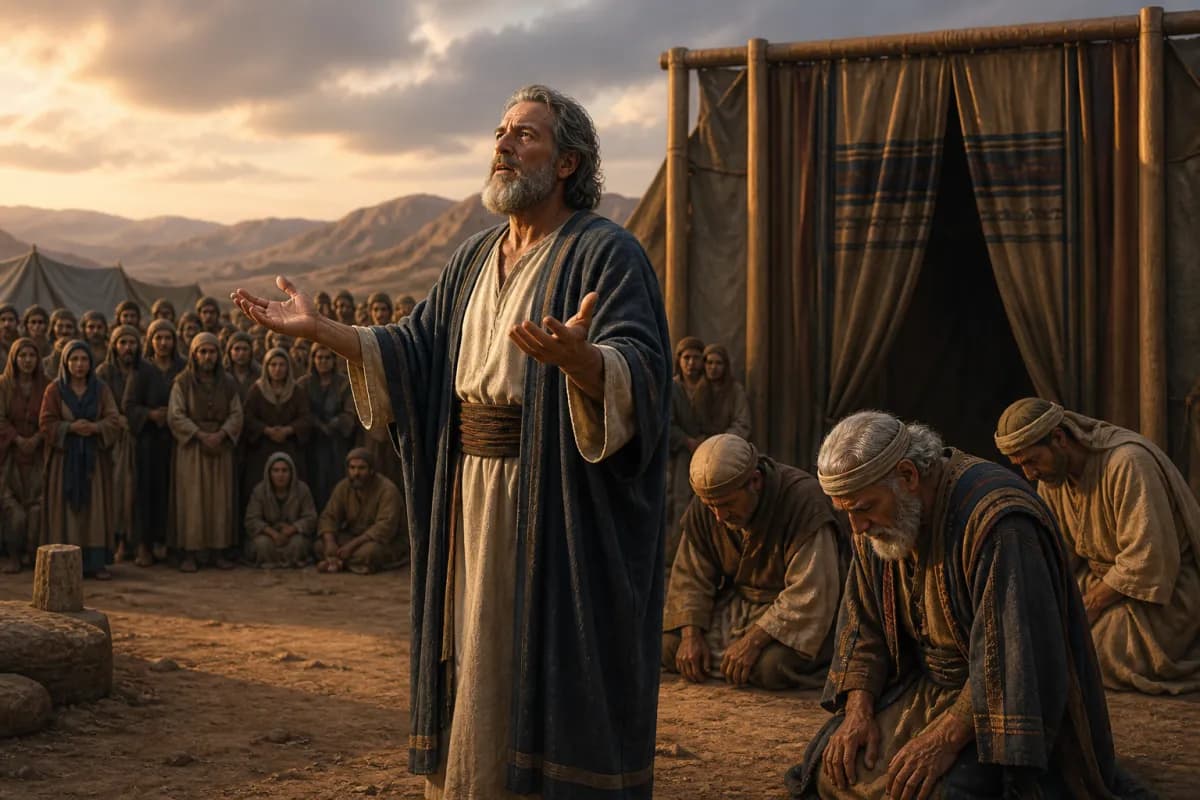
Numbers 14:11–38 records the Lord confronting Israel’s contempt and unbelief after every sign He has given. Moses pleads on the basis of God’s revealed character and the honor of His name; God pardons, yet judges the unbelieving generation to die in the wilderness. Jesus bears sin’s judgment and brings repentant sinners to God, while this passage warns that pardon must never be turned into permission to despise His grace.
- In this study
- 28 verses · 5 movements
Numbers 14
14:11The LORD said to Moses, “How long will this people despise me? How long will they not believe in me, for all the signs which I have worked among them?
14:12I will strike them with the pestilence, and disinherit them, and will make of you a nation greater and mightier than they.”
14:13Moses said to the LORD, “Then the Egyptians will hear it; for you brought up this people in your might from among them.
14:14They will tell it to the inhabitants of this land. They have heard that you LORD are among this people; for you LORD are seen face to face, and your cloud stands over them, and you go before them, in a pillar of cloud by day, and in a pillar of fire by night.
14:15Now if you killed this people as one man, then the nations which have heard the fame of you will speak, saying,
14:16‘Because the LORD was not able to bring this people into the land which he swore to them, therefore he has slain them in the wilderness.’
14:17Now please let the power of the Lord be great, according as you have spoken, saying,
14:18‘The LORD is slow to anger, and abundant in loving kindness, forgiving iniquity and disobedience; and he will by no means clear the guilty, visiting the iniquity of the fathers on the children, on the third and on the fourth generation.’
14:19Please pardon the iniquity of this people according to the greatness of your loving kindness, and just as you have forgiven this people, from Egypt even until now.”
14:20The LORD said, “I have pardoned according to your word;
14:21but in very deed—as I live, and as all the earth shall be filled with the LORD’s glory—
14:22because all those men who have seen my glory and my signs, which I worked in Egypt and in the wilderness, yet have tempted me these ten times, and have not listened to my voice;
14:23surely they shall not see the land which I swore to their fathers, neither shall any of those who despised me see it.
14:24But my servant Caleb, because he had another spirit with him, and has followed me fully, him I will bring into the land into which he went. His offspring shall possess it.
14:25Since the Amalekite and the Canaanite dwell in the valley, tomorrow turn and go into the wilderness by the way to the Red Sea.”
14:26The LORD spoke to Moses and to Aaron, saying,
14:27“How long shall I bear with this evil congregation that complain against me? I have heard the complaints of the children of Israel, which they complain against me.
14:28Tell them, ‘As I live, says the LORD, surely as you have spoken in my ears, so I will do to you.
14:29Your dead bodies shall fall in this wilderness; and all who were counted of you, according to your whole number, from twenty years old and upward, who have complained against me,
14:30surely you shall not come into the land concerning which I swore that I would make you dwell therein, except Caleb the son of Jephunneh, and Joshua the son of Nun.
14:31But I will bring in your little ones that you said should be captured or killed, and they shall know the land which you have rejected.
14:32But as for you, your dead bodies shall fall in this wilderness.
14:33Your children shall be wanderers in the wilderness forty years, and shall bear your prostitution, until your dead bodies are consumed in the wilderness.
14:34After the number of the days in which you spied out the land, even forty days, for every day a year, you will bear your iniquities, even forty years, and you will know my alienation.’
14:35I, the LORD, have spoken. I will surely do this to all this evil congregation who are gathered together against me. In this wilderness they shall be consumed, and there they shall die.”
14:36The men whom Moses sent to spy out the land, who returned and made all the congregation to murmur against him by bringing up an evil report against the land,
14:37even those men who brought up an evil report of the land, died by the plague before the LORD.
14:38But Joshua the son of Nun and Caleb the son of Jephunneh remained alive of those men who went to spy out the land.
CONTEXTUAL OVERVIEW
The Lord’s question reaches beneath Israel’s tears: “How long will this people despise me?” The people have seen the exodus, Sinai, manna, cloud, and repeated mercies, but signs alone have not produced trust. Their refusal at Kadesh is not an innocent miscalculation. It is contempt for the God whose faithfulness they have repeatedly experienced.
Moses does not minimize the rebellion when he intercedes. He appeals to what the Lord Himself has made known: God is slow to anger, abounding in steadfast love, forgiving iniquity and transgression, yet not treating guilt as inconsequential. The prayer seeks both the preservation of Israel and the public honor of God’s name among the nations.
HISTORICAL AND LITERARY CONTEXT
This intercession echoes Moses’ earlier plea after the golden calf. In both scenes, Israel’s survival rests on God’s covenant mercy rather than its deserving. Numbers 14 also adds a decisive judgment for this generation: those counted for service who rejected the land will not enter it, while their children will receive the inheritance the parents dismissed.
The forty years correspond to the forty days of scouting. The judgment is therefore measured and memorable, but it is not merely symbolic. Numbers presents a real generation whose adult members will die in the wilderness while God continues His promise through their children, Joshua, and Caleb.
SECTION-BY-SECTION ANALYSIS
- God’s name · Numbers 14:11Moses asks that the nations see the truth about God’s power and character, not a distorted story about Him.
- Pardon · Numbers 14:19God spares the nation, demonstrating mercy that Israel has not earned.
- Forty years · Numbers 14:34The judgment remembers Israel’s forty days of unbelieving reconnaissance and protects the promise for a new generation.
CHRIST IN THIS PASSAGE
Moses stands before God for a guilty people, but his prayer cannot remove sin’s final burden. Jesus is the greater mediator, whose self-giving death deals decisively with guilt and whose risen life secures His intercession for all who come to God through Him. The cross displays the very holiness and mercy that Moses invokes.
The passage also keeps grace from becoming casual. Christ’s forgiveness creates a people who trust and follow Him; it is never a license to harden the heart. His saving mission brings pardon to real rebels and calls them into persevering faith, because the God who forgives is also worthy of wholehearted trust.
REFLECTION
When we sin, we may either despair that God can forgive or presume that forgiveness means our choices carry no weight. Numbers refuses both errors. God is richly merciful, and Israel’s unbelief remains grievous. Honest repentance receives mercy without asking mercy to rename rebellion as harmless.
Pray Moses’ kind of prayer: appeal to the character God has revealed, confess the real sin, and seek His honor rather than self-protection. Then let Jesus’ costly grace move you toward concrete trust. The Christian hope is not that God overlooks unbelief but that Christ brings sinners to the Father and changes them.
Original Hebrew Word Study
Numbers 14:19
סָלַח
salach · H5545
Usually translated: to forgive or pardon
Salach means to pardon. Moses asks the Lord to forgive according to His steadfast love, appealing to the divine character God has already revealed.
Follow the Scripture trail
Mercy That Does Not Excuse Unbelief: Moses Intercedes for Israel in the larger story
The connection: Moses appeals to God’s holy mercy for a people whose unbelief deserves judgment, and God preserves His covenant purpose through a painful wilderness sentence. Jesus fulfills the mediator’s role completely: His saving death secures pardon, and His living intercession brings repentant sinners into enduring faith.
Respond to the passage
Confess one place where you have treated God’s patience lightly. Come to Jesus for mercy without excuse, thank Him that His sacrifice is sufficient, and choose a specific act of trust that answers the sin you have named.
- Why does Moses appeal both to God’s name among the nations and to God’s revealed character?
- How can the Lord pardon Israel while still judging this generation in the wilderness?
- How does Christ’s intercession give assurance without making obedience optional?
Prayer
Merciful Father, I confess that I have doubted Your goodness and presumed upon Your patience. Thank You for Jesus, whose sacrifice brings pardon and whose intercession does not fail. Give me a soft heart, a living faith, and a life that honors Your name. Amen.