Passage Study
Too Late for Presumption: Defeat at Hormah
Numbers 14:39–14:45
Numbers 14:39–45 shows Israel grieving after the wilderness judgment and then attempting to enter Canaan after the Lord has told them not to go. Moses warns that the Lord will not be with this advance, but the people go anyway and are defeated at Hormah. Jesus calls His people to repentance that listens to His word, not self-directed effort that mistakes regret for faith.
- In this study
- 7 verses · 5 movements
Numbers 14
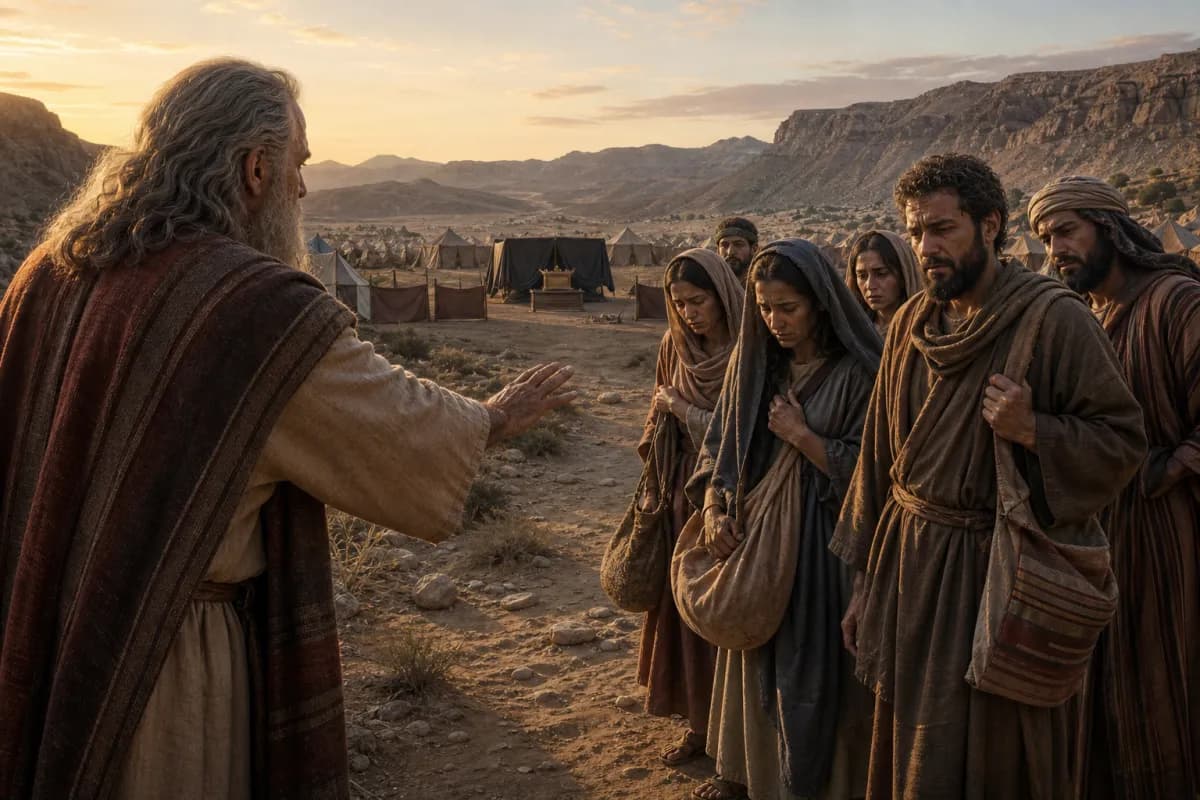
14:39Moses told these words to all the children of Israel, and the people mourned greatly.
14:40They rose up early in the morning and went up to the top of the mountain, saying, “Behold, we are here, and will go up to the place which the LORD has promised; for we have sinned.”
14:41Moses said, “Why now do you disobey the commandment of the LORD, since it shall not prosper?
14:42Don’t go up, for the LORD isn’t among you; that way you won’t be struck down before your enemies.
14:43For there the Amalekite and the Canaanite are before you, and you will fall by the sword because you turned back from following the LORD; therefore the LORD will not be with you.”
14:44But they presumed to go up to the top of the mountain. Nevertheless, the ark of the LORD’s covenant and Moses didn’t depart out of the camp.
14:45Then the Amalekites came down, and the Canaanites who lived in that mountain, and struck them and beat them down even to Hormah.
CONTEXTUAL OVERVIEW
The people hear that their generation will die in the wilderness, and they mourn deeply. Their grief could have become repentance, but the next morning they seize their own remedy: they will go up to the hill country because they have sinned. The words acknowledge guilt, yet the action refuses the specific command God has just given them to turn back toward the wilderness.
This scene is the mirror image of the previous rebellion. When the Lord told Israel to go into the land, they refused through fear. When the Lord tells Israel not to go, they advance through presumption. Both responses place Israel’s judgment above God’s word; one calls fear wisdom, the other calls self-will courage.
HISTORICAL AND LITERARY CONTEXT
Numbers has repeatedly shown that Israel travels under God’s presence. The cloud, the ark, Moses’ leadership, and the ordered camp all testify that this is not a self-directed migration. At Hormah, Moses and the ark of the covenant remain in the camp. Their absence gives visible form to Moses’ warning: the Lord is not with this unauthorized advance.
The place name Hormah will recur in the land’s conquest traditions, but its first appearance here is a place of defeat. The narrative does not celebrate bold action in the abstract. It teaches that courage detached from God’s present command is not faith, even when it uses religious language and follows a previous failure.
SECTION-BY-SECTION ANALYSIS
- They mourned · Numbers 14:39Sorrow is real, but sorrow alone does not become repentance unless it bows to God’s command.
- The ark remained · Numbers 14:44The visible sign of God’s covenant presence does not accompany an action God has forbidden.
- They presumed · Numbers 14:40Presumption can look energetic and religious while still refusing to listen to the Lord.
CHRIST IN THIS PASSAGE
The failure at Hormah teaches that sinners cannot undo rebellion by choosing a heroic act of their own. Jesus alone obeys the Father perfectly, including in the costly path to the cross. His obedience, rather than our attempt to balance the books, is the ground of reconciliation with God.
Jesus’ saving mission also gives repentance its proper shape. He calls people to turn and follow Him, which includes receiving both His forgiveness and His direction. Christian obedience grows from union with the risen Lord; it is not an effort to force God’s presence into plans He has not commanded.
REFLECTION
Regret can be loud and still leave the will untouched. We may rush to repair a failure through a dramatic gesture while avoiding the quieter command God is actually giving: confess, wait, make restitution, receive counsel, or turn in a different direction. Hormah asks whether our grief has made us teachable.
Bring failed plans to Jesus without trying to redeem yourself. He meets repentant people with mercy and leads them in the next faithful step. Ask Him where urgency has become presumption, then practice obedience that listens before it acts.
Original Hebrew Word Study
Numbers 14:44
עָפַל
aphal · H6075
Usually translated: to presume or act arrogantly
Aphal describes Israel’s presumptuous advance. Their attempt to enter after God has said no is not faith; it is disobedience wearing the appearance of courage.
Follow the Scripture trail
Too Late for Presumption: Defeat at Hormah in the larger story
The connection: Israel tries to repair unbelief by acting without the God whose word it has resisted, and the result is defeat. Jesus obeys the Father fully and brings sinners to God by grace, teaching His people that true repentance receives His direction instead of relying on self-chosen religious effort.
Respond to the passage
Before making a dramatic promise to fix a failure, ask Jesus what obedience He is actually calling for now. Receive His forgiveness, seek wise counsel where needed, and take the next step that submits to His word rather than to urgency.
- Why is Israel’s proposed advance after the judgment not the same as faithful repentance?
- What does the ark remaining in the camp communicate about God’s presence?
- Where might regret tempt you toward self-directed effort instead of listening to Christ?
Prayer
Lord Jesus, forgive my attempts to manage failure by my own urgency. Teach me repentance that listens to You. Thank You for Your perfect obedience in my place; lead me by Your word into humble, patient, and faithful action. Amen.