Passage Study
The Red Heifer: Cleansing from Death’s Defilement
Numbers 19:1–19:22
Numbers 19:1–22 provides ashes from a red heifer for cleansing those made unclean by contact with a corpse. The rite teaches Israel that death and God’s holy dwelling cannot be treated casually, while God Himself provides a way back into the camp. Jesus brings the deeper cleansing promised by this pattern: through His sacrificial death He purifies conscience and opens access to God for a people marked by mortal life.
- In this study
- 22 verses · 5 movements
Numbers 19
19:1The LORD spoke to Moses and to Aaron, saying,
19:2“This is the statute of the law which the LORD has commanded. Tell the children of Israel to bring you a red heifer without spot, in which is no defect, and which was never yoked.
19:3You shall give her to Eleazar the priest, and he shall bring her outside of the camp, and one shall kill her before his face.
19:4Eleazar the priest shall take some of her blood with his finger, and sprinkle her blood toward the front of the Tent of Meeting seven times.
19:5One shall burn the heifer in his sight; her skin, and her meat, and her blood, with her dung, shall he burn.
19:6The priest shall take cedar wood, hyssop, and scarlet, and cast it into the middle of the burning of the heifer.
19:7Then the priest shall wash his clothes, and he shall bathe his flesh in water, and afterward he shall come into the camp, and the priest shall be unclean until the evening.
19:8He who burns her shall wash his clothes in water, and bathe his flesh in water, and shall be unclean until the evening.
19:9“A man who is clean shall gather up the ashes of the heifer, and lay them up outside of the camp in a clean place; and it shall be kept for the congregation of the children of Israel for use in water for cleansing impurity. It is a sin offering.
19:10He who gathers the ashes of the heifer shall wash his clothes, and be unclean until the evening. It shall be to the children of Israel, and to the stranger who lives as a foreigner among them, for a statute forever.
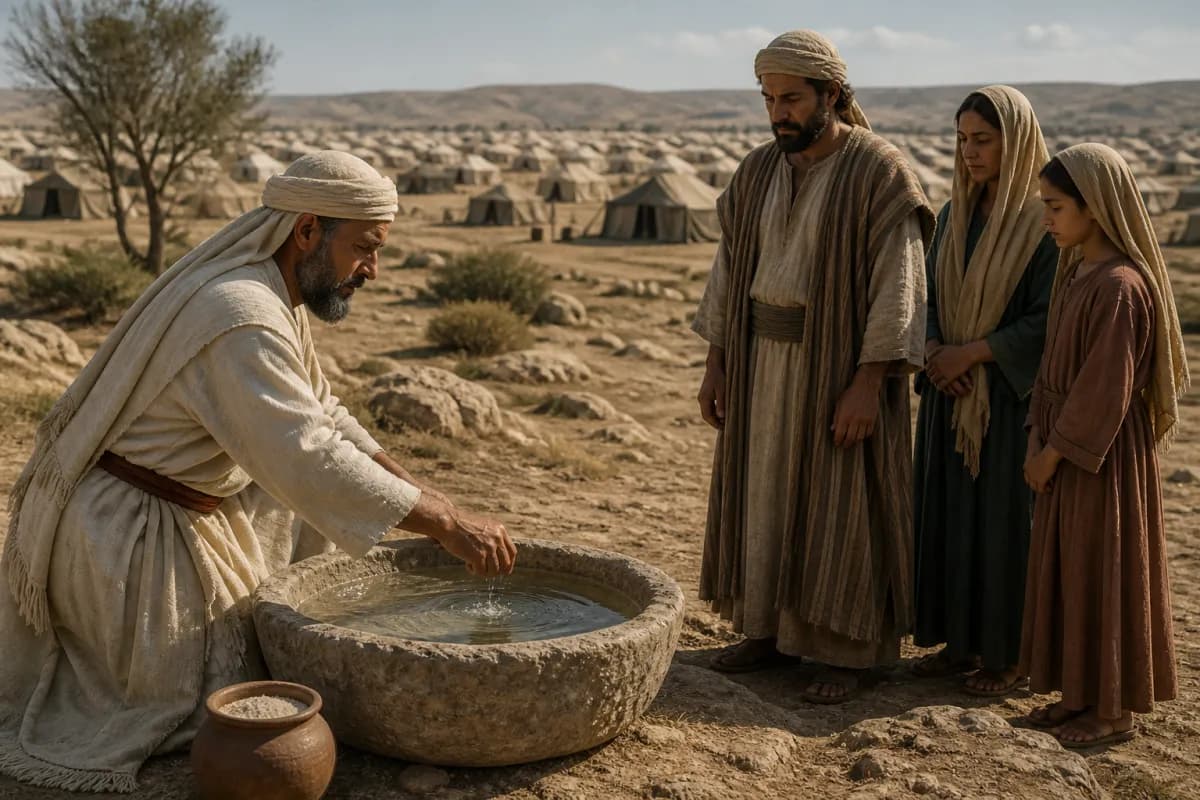
19:11“He who touches the dead body of any man shall be unclean seven days.
19:12He shall purify himself with water on the third day, and on the seventh day he shall be clean; but if he doesn’t purify himself the third day, then the seventh day he shall not be clean.
19:13Whoever touches a dead person, the body of a man who has died, and doesn’t purify himself, defiles the LORD’s tabernacle; and that soul shall be cut off from Israel; because the water for impurity was not sprinkled on him, he shall be unclean. His uncleanness is yet on him.
19:14“This is the law when a man dies in a tent: everyone who comes into the tent, and everyone who is in the tent, shall be unclean seven days.
19:15Every open vessel, which has no covering bound on it, is unclean.
19:16“Whoever in the open field touches one who is slain with a sword, or a dead body, or a bone of a man, or a grave, shall be unclean seven days.
19:17“For the unclean, they shall take of the ashes of the burning of the sin offering; and running water shall be poured on them in a vessel.
19:18A clean person shall take hyssop, dip it in the water, and sprinkle it on the tent, on all the vessels, on the persons who were there, and on him who touched the bone, or the slain, or the dead, or the grave.
19:19The clean person shall sprinkle on the unclean on the third day, and on the seventh day. On the seventh day, he shall purify him. He shall wash his clothes and bathe himself in water, and shall be clean at evening.
19:20But the man who shall be unclean, and shall not purify himself, that soul shall be cut off from among the assembly, because he has defiled the sanctuary of the LORD. The water for impurity has not been sprinkled on him. He is unclean.
19:21It shall be a perpetual statute to them. He who sprinkles the water for impurity shall wash his clothes, and he who touches the water for impurity shall be unclean until evening.
19:22“Whatever the unclean person touches shall be unclean; and the soul that touches it shall be unclean until evening.”
CONTEXTUAL OVERVIEW
Numbers 19 follows the rebellions surrounding the sanctuary and God’s confirmation of Aaron’s priesthood. Israel has learned that unauthorized approach to holiness is deadly; now the chapter addresses an ordinary and unavoidable human reality: contact with death. A corpse does not make someone morally guilty, but it makes that person ritually unclean and unable to move freely in a camp where the living God dwells.
The provision is strikingly merciful. God does not abandon a people because death reaches every family and tent. He supplies ashes that can be mixed with water and applied on the third and seventh days. The ritual teaches that return to fellowship is God’s gift, received through His appointed cleansing rather than managed by denial or human ingenuity.
HISTORICAL AND LITERARY CONTEXT
The heifer is slaughtered and burned outside the camp, and Eleazar handles the blood without carrying out the entire rite at the altar. The chapter carefully distinguishes this from ordinary sacrificial procedure. Its concern is purification from death’s defilement, preserving the holiness of the tabernacle in the center of Israel’s camp.
The passage calls the water mixed with ashes “water for impurity” and says it is for purification from sin. In the ritual vocabulary, cleansing addresses the contamination that bars approach to God; the text does not say that grieving or touching a dead relative is a personal moral offense. The seriousness lies in treating God’s life-giving presence as though death carries no consequence.
Did you know?
The later Mishnah describes children raised in Jerusalem courtyards built over hollow spaces, protecting them from impurity associated with hidden graves. These children fetched water for the red-heifer rite while riding on specially prepared oxen.
Why it matters: The elaborate precautions show how seriously later Jewish practice treated purity in preparing this cleansing water.
SECTION-BY-SECTION ANALYSIS
- Outside the camp · Numbers 19:9The heifer is dealt with away from the sanctuary, while its blood is still directed toward God’s dwelling.
- Third and seventh days · Numbers 19:12Restoration is a deliberate, communal process rather than a private declaration of being clean.
- A way back · Numbers 19:13God provides purification so death’s defilement does not permanently exclude His people from fellowship.
CHRIST IN THIS PASSAGE
Numbers 19 does not give a one-to-one prediction of Jesus, and the red heifer is not the same as an altar sacrifice. Yet Hebrews deliberately recalls its ashes when explaining Christ’s greater work. If the old-covenant rite restored ritual cleanliness, the blood of Christ cleanses the conscience for service to the living God. The comparison preserves both continuity and fulfillment: God has always provided the way of cleansing, and Jesus brings that purpose to its final depth.
Jesus also suffers outside the city gate, bearing reproach so that His people may be brought to God. His saving mission faces the reality this chapter marks: death is not natural fellowship with the Holy One’s life. Through His death and resurrection, Christ forgives sin, conquers death’s claim, and sends a cleansed people to serve and invite others into reconciliation with God.
REFLECTION
Death can make people feel isolated, fearful, or tempted to speak as though loss were final. Numbers does not trivialize it. It names death as incompatible with the holy life of God’s dwelling and then gives Israel a merciful path toward restored fellowship. Christian hope is honest enough to grieve and strong enough to say that Jesus has entered death and defeated it.
Bring grief, fear, and hidden shame to Christ rather than trying to clean yourself by religious effort. Let His completed work draw you into worship and compassionate presence with those who mourn. A church that remembers Jesus’ victory can speak of death truthfully while bearing witness to the resurrection life offered in His name.
Original Hebrew Word Study
Numbers 19:13
טָמֵא
tame · H2931
Usually translated: unclean
Tame means unclean. Contact with death makes a person unclean because death is the opposite of the life that belongs in the presence of the living God.
Follow the Scripture trail
The Red Heifer: Cleansing from Death’s Defilement in the larger story
The connection: The red-heifer rite shows God providing a way for a death-defiled people to return to the fellowship of His holy presence. Jesus brings the lasting cleansing this pattern anticipates, defeating death through His resurrection and sending a purified people to serve the living God.
Respond to the passage
Name before Jesus one grief, fear, or shame that has made you withdraw from God or His people. Thank Him for cleansing that is received by grace, then take one concrete step toward worship, fellowship, or compassionate care for someone who is mourning.
- Why does the chapter distinguish corpse defilement from personal moral guilt?
- What does the third- and seventh-day cleansing process teach about restoration to the camp?
- How does Hebrews use this rite to explain the deeper cleansing Christ provides?
Prayer
Lord Jesus, You entered death and rose in victory so that death will not have the final word over those who belong to You. Cleanse my conscience, meet me in grief, and make me a faithful witness to the life You give. Amen.