Passage Study
The Vow at Hormah: Victory Belongs to the Lord
Numbers 21:1–21:3
Numbers 21:1–3 records a Canaanite king attacking Israel near the Negeb and taking captives. Israel makes a vow that, if the Lord gives the enemy into its hand, the cities will be devoted to destruction. The Lord hears and gives victory, and the place is called Hormah. The passage presents a specific act of divine judgment in Israel’s covenant history; it does not authorize private vengeance. Jesus bears judgment for sinners and sends His people to conquer through gospel witness, not coercion.
- In this study
- 3 verses · 5 movements
Numbers 21
21:1The Canaanite, the king of Arad, who lived in the South, heard that Israel came by the way of Atharim. He fought against Israel, and took some of them captive.
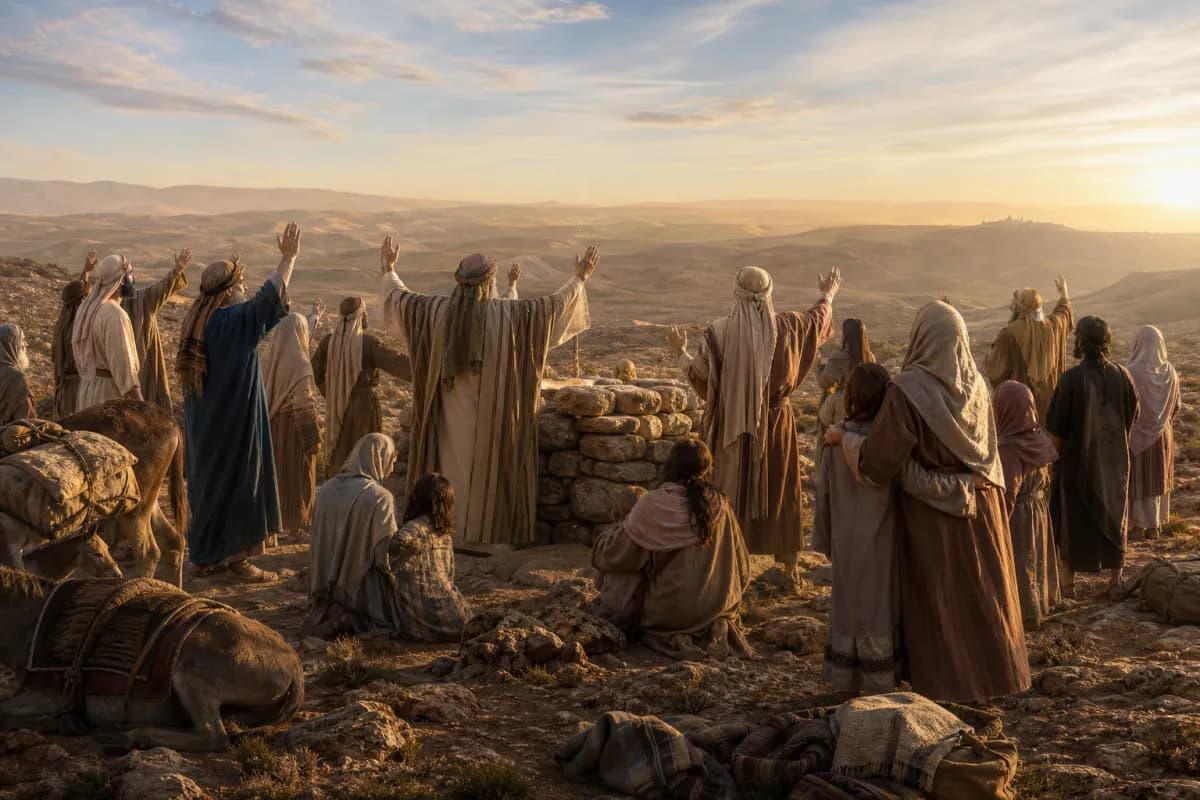
21:2Israel vowed a vow to the LORD, and said, “If you will indeed deliver this people into my hand, then I will utterly destroy their cities.”
21:3The LORD listened to the voice of Israel, and delivered up the Canaanites; and they utterly destroyed them and their cities. The name of the place was called Hormah.
CONTEXTUAL OVERVIEW
Numbers 21 opens after Aaron’s death and at the beginning of a new movement toward the land. A Canaanite king attacks Israel and takes captives. Israel’s response differs sharply from the presumptuous ascent after the first Hormah defeat in Numbers 14. There, the people went up after God said not to go, with neither the ark nor Moses among them. Here they first seek the Lord and make their action dependent on His giving the enemy into their hand.
The name Hormah carries the sense of a thing devoted to destruction. The language is morally weighty and belongs to the particular covenant judgment described in this narrative. Israel is not authorized to enrich itself through the captured cities or turn war into private revenge; it places the outcome under the Lord’s judgment and acknowledges that victory belongs to Him.
HISTORICAL AND LITERARY CONTEXT
The episode is brief, and the exact location of Arad and the route called Atharim remain debated. The text itself gives enough to understand its narrative function: Israel is attacked in the south, and the Lord begins to give victory as the people approach the land. Claims that identify every archaeological site or reconstruct every military movement go beyond what this short account establishes.
The Hebrew verb often translated “devote to destruction” is used in Israel’s Scriptures for something placed wholly under God’s ban. In this case it marks a judicial act commanded within Israel’s land-taking story. It cannot be lifted out of that setting as a general model for Christians, whose Lord rejects the use of the sword to spread His kingdom and sends disciples to make disciples by teaching and baptism.
SECTION-BY-SECTION ANALYSIS
- Captives taken · Numbers 21:1Israel begins under attack and need, not with a narrative of its own invincibility.
- If You will give · Numbers 21:2The vow places the outcome under the Lord’s decision rather than Israel’s military confidence.
- Hormah · Numbers 21:3The name remembers that the cities were devoted to God’s judgment, not claimed as ordinary plunder.
CHRIST IN THIS PASSAGE
This battle is not a direct type of Jesus’ earthly ministry, and its language of judgment must not be turned into a Christian program of violence. It does reveal a biblical reality fulfilled at the cross: evil is serious, God judges it, and salvation cannot come by pretending that rebellion carries no cost. Jesus bears the judgment of sin for all who trust Him, satisfying justice and opening forgiveness.
Jesus then redefines the manner of His people’s mission. He conquers not by taking cities but by laying down His life and rising again. His disciples advance His kingdom through truthful proclamation, sacrificial love, prayer, and patient witness. The victory at Hormah therefore directs Christian readers to depend on God’s power while refusing to confuse the gospel with coercion or personal retaliation.
REFLECTION
The contrast with Numbers 14 is searching. Israel once rushed into battle after God’s word had forbidden it; here it seeks God before acting. Faith is neither passivity nor swagger. It acknowledges danger, asks for God’s help, and refuses to make success an idol or a personal possession.
When conflict threatens, bring the real need to Jesus before reaching for control. Do not baptize anger, ambition, or revenge with biblical language. Trust the crucified and risen King to deal justly with evil, and let your own witness show the surprising power of mercy, truth, and faithful endurance.
Original Hebrew Word Study
Numbers 21:2
חָרַם
charam · H2763
Usually translated: to devote wholly to destruction
Charam means to devote wholly. Israel’s vow places the victory under the Lord’s judgment rather than treating the captured cities as a prize for self-enrichment.
Follow the Scripture trail
The Vow at Hormah: Victory Belongs to the Lord in the larger story
The connection: At Hormah, Israel learns to seek the Lord rather than presume on Him and to receive victory as His judgment rather than private gain. Jesus bears sin’s judgment at the cross and sends His church to overcome through the gospel’s reconciling witness.
Respond to the passage
Bring one conflict or threat to Jesus before acting on it. Ask Him to expose any desire for revenge or self-glory, then choose one response shaped by truth, mercy, and confidence in His final justice.
- How does this episode contrast with Israel’s earlier defeat at Hormah?
- Why does the vow place the cities under God’s judgment rather than make them ordinary spoils?
- How does the cross change the way Christians think about God’s judgment and mission?
Prayer
Lord Jesus, You faced evil without becoming evil and bore judgment so sinners could be forgiven. Keep me from presumption, revenge, and pride. Give me faith to depend on Your power and courage to carry Your gospel with truth, mercy, and peace. Amen.