Passage Study
The Bronze Serpent: Looking to God’s Provision
Numbers 21:4–21:9
Numbers 21:4–9 records Israel’s weary complaint, the judgment of venomous serpents, and God’s surprising provision of a bronze serpent. Those who look at the sign God appoints live. Jesus Himself uses this event to explain His being lifted up for the world’s salvation: rescue is received by trusting the crucified Son, not by denying sin or curing ourselves.
- In this study
- 6 verses · 5 movements
Numbers 21
21:4They traveled from Mount Hor by the way to the Red Sea, to go around the land of Edom. The soul of the people was very discouraged because of the journey.
21:5The people spoke against God and against Moses: “Why have you brought us up out of Egypt to die in the wilderness? For there is no bread, there is no water, and our soul loathes this disgusting food!”
21:6The LORD sent venomous snakes among the people, and they bit the people. Many people of Israel died.
21:7The people came to Moses, and said, “We have sinned, because we have spoken against the LORD and against you. Pray to the LORD, that he take away the serpents from us.” Moses prayed for the people.
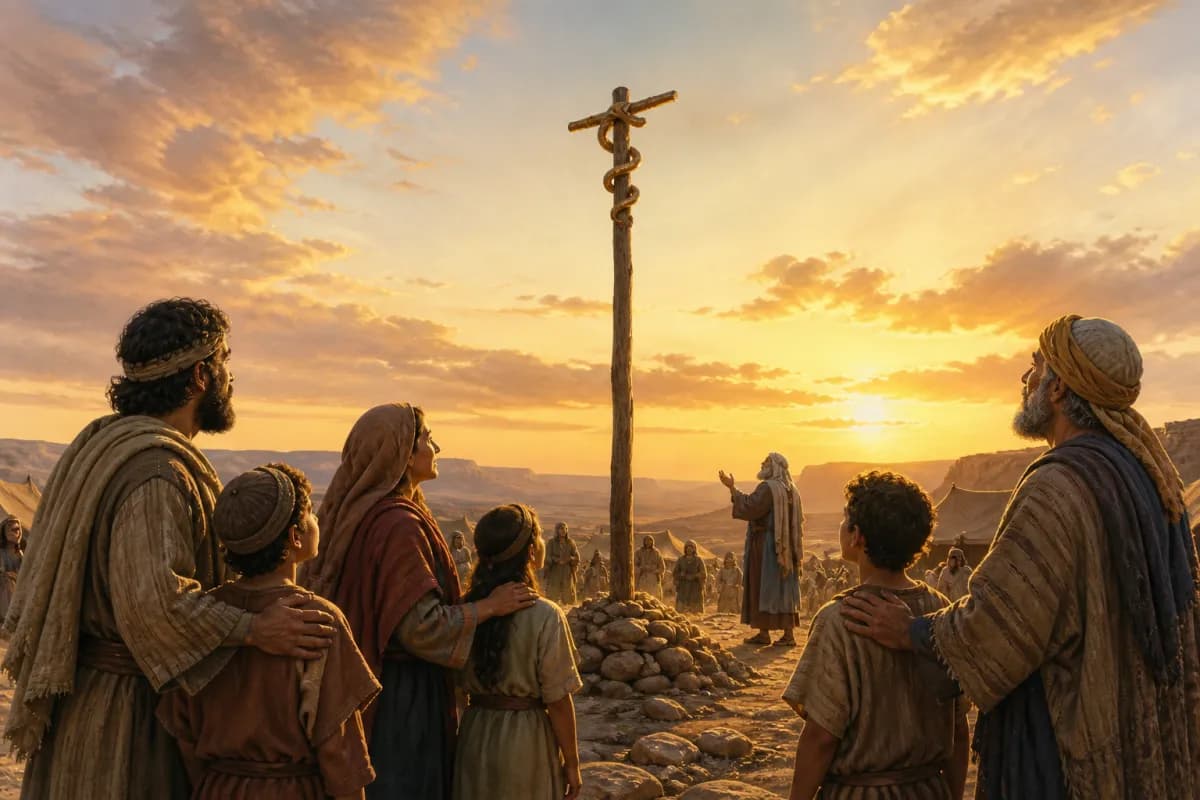
21:8The LORD said to Moses, “Make a venomous snake, and set it on a pole. It shall happen that everyone who is bitten, when he sees it, shall live.”
21:9Moses made a serpent of bronze, and set it on the pole. If a serpent had bitten any man, when he looked at the serpent of bronze, he lived.
CONTEXTUAL OVERVIEW
The journey around Edom feels longer and harder than Israel wants. The people speak against God, reject the manna as “miserable food,” and turn the exodus gift into a cause for contempt. Their complaint is not simple fatigue; it treats the God who has sustained them as their enemy.
The serpents make visible the danger Israel has refused to acknowledge. When the people confess, God does not erase the consequences by pretending their rebellion did not matter. He provides a public means of life, requiring the bitten person to turn attention away from self-help and toward the provision He gives.
HISTORICAL AND LITERARY CONTEXT
This episode follows Aaron’s death and the victory at Hormah. The old generation’s pattern of grumbling has not disappeared, even as the narrative moves nearer to the land. Numbers repeatedly joins distrust of God’s provision to real judgment, yet it repeatedly shows the Lord opening a way of mercy for a people who confess their sin.
The bronze serpent is a unique response to this crisis, not a general biblical instruction to make images for worship. Later, Hezekiah destroys the same object when Israel burns incense to it. The contrast matters: a gift God uses in one moment can become idolatry when people detach it from the God who gave it.
SECTION-BY-SECTION ANALYSIS
- A poisonous complaint · Numbers 21:5Israel’s speech rejects God’s care precisely where the wilderness has made them most dependent on it.
- Confession and intercession · Numbers 21:4The people name their sin, and Moses prays for the very community that has opposed him.
- Look and live · Numbers 21:8God’s appointed sign directs desperate people to receive life as His mercy rather than their achievement.
CHRIST IN THIS PASSAGE
Jesus makes the strongest connection Himself in John 3. As Moses lifted up the serpent, so the Son of Man must be lifted up, so that those who believe may have eternal life. Jesus is not saying that He is morally like the serpent. He is explaining the manner and saving purpose of His cross: the One who bears the judgment of sin is publicly lifted up so that dying people may receive life by faith.
Paul says that God made Christ, who knew no sin, to be sin for us so that we might become God’s righteousness in Him. The bronze serpent therefore serves as a carefully limited pattern of substitutionary rescue. Jesus’ mission reaches a world poisoned by sin and death, calling people to look to His crucified and risen life rather than trust their own repair.
REFLECTION
Impatience can make grace appear small and hardship appear ultimate. This passage invites honesty about complaint without excusing it. When sin has made a mess we cannot reverse, confession is not the end of hope; it is the turning point at which we stop defending ourselves and receive God’s mercy.
Look to Jesus with the particular guilt, fear, or self-salvation project you have been carrying. Then speak His name plainly to someone who assumes Christianity is advice for better people. The gospel is God’s provision of life for people who know they have been bitten by a death they cannot cure.
Original Hebrew Word Study
Numbers 21:6
נָחָשׁ
nachash · H5175
Usually translated: serpent
Nachash is a serpent. The bronze serpent becomes God’s appointed means of healing for those who look in faith, a provision later taken up by Jesus to explain His saving death.
Follow the Scripture trail
The Bronze Serpent: Looking to God’s Provision in the larger story
The connection: Israel’s poisoned rebellion and God’s appointed sign show that life must come from His mercy. Jesus fulfills that saving pattern through His cross: lifted up for sinners, He gives eternal life to all who turn to Him in faith and sends them with His reconciling message.
Respond to the passage
Bring one specific complaint or sin to Jesus without minimizing it. Trust His finished work rather than a plan to make yourself acceptable, and tell one person this week why His cross offers life to people who cannot save themselves.
- How does the people’s complaint distort the gifts God has given them?
- Why does God require the bitten Israelites to look at His appointed sign?
- How does Jesus’ own use of this passage keep the connection to the cross clear and careful?
Prayer
Lord Jesus, forgive my contempt for gifts I have received from Your hand. When sin and fear expose my helplessness, turn my eyes again to Your cross. Give me faith to receive Your life and courage to speak of Your saving mercy. Amen.